

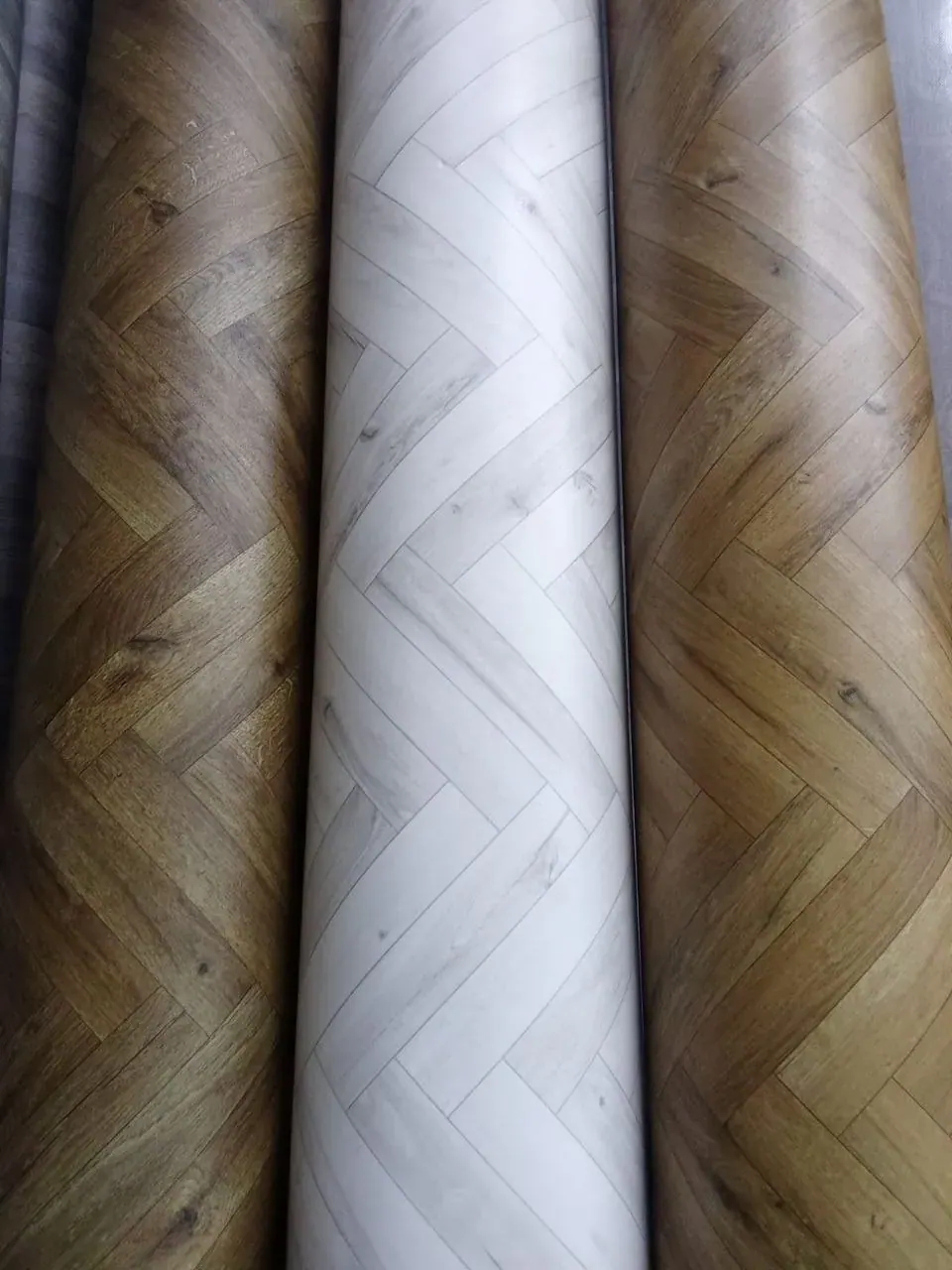
Long wood planks
Long, wide boards make a lounge feel larger and show fewer joints — ideal for bedrooms and open living areas.
SPC is the stiffest member of the vinyl flooring family: a dense stone-plastic core, a click-lock edge and an underlay bonded to the back. We supply and fit it across Riyadh, starting with a free visit to check whether your existing tiles are flat enough.


SPC stands for stone plastic composite: each plank’s core is a dense mix of limestone powder and PVC pressed into one rigid layer. Flexible glue-down vinyl drapes over every bump beneath it; an SPC plank stays stiff and spans small imperfections instead of copying them.
On top sit the printed décor and a clear wear layer; underneath, most products carry a factory-bonded foam pad. The result can usually go straight over sound, flat tiles and stays fairly stable as room temperatures change. For a long corridor or a clinic that needs minimal joints, glued sheet vinyl may suit better.

Two quotes for the “same thickness” can be very different floors. Figures below are common industry ranges, not any one product’s spec.
| Line item | What it means | Why you should care |
|---|---|---|
| Core thickness | The SPC layer alone, excluding the pad — commonly around 4–6 mm | A thicker core bridges grout lines better and sounds less hollow |
| Wear layer | The clear top film; homes often specify roughly 0.3–0.5 mm | It takes shoes and chair legs; retail needs the heavier end |
| Attached underlay | A thin foam pad bonded to the back at the factory | Replaces loose underlay — adding a thick extra pad weakens the joints |
| Locking profile | The shape of the click tongue on long and short edges | A tight lock stops joints opening with heat and foot traffic |
| Edge detail | Micro-bevelled or square edge | Bevels define each plank; square edges are easier to mop |
| Surface texture | Smooth, or embossed to follow the printed grain | Embossed grain looks more like timber and is less slippery |
Want the bigger picture? Read our guide to SPC vs LVT vs sheet vinyl.
A rigid core is forgiving, not magic. We confirm these on site before promising a no-demolition install.
We tap across the floor for hollow or loose tiles. Anything that rocks is fixed or lifted, or its movement ends up in the joints above.
Many manufacturers allow only a few millimetres of deviation over roughly two metres. Beyond that we level.
Narrow grout lines rarely show; wide ones and raised thresholds are filled or ground down.
Ground floors and annexes get a damp check, and we measure the new floor height at every door.
Boxes rest in the room first; planks go down with an expansion gap hidden by new skirting.
Plank size and format change how a room reads as much as colour does.
Long, wide boards make a lounge feel larger and show fewer joints — ideal for bedrooms and open living areas.

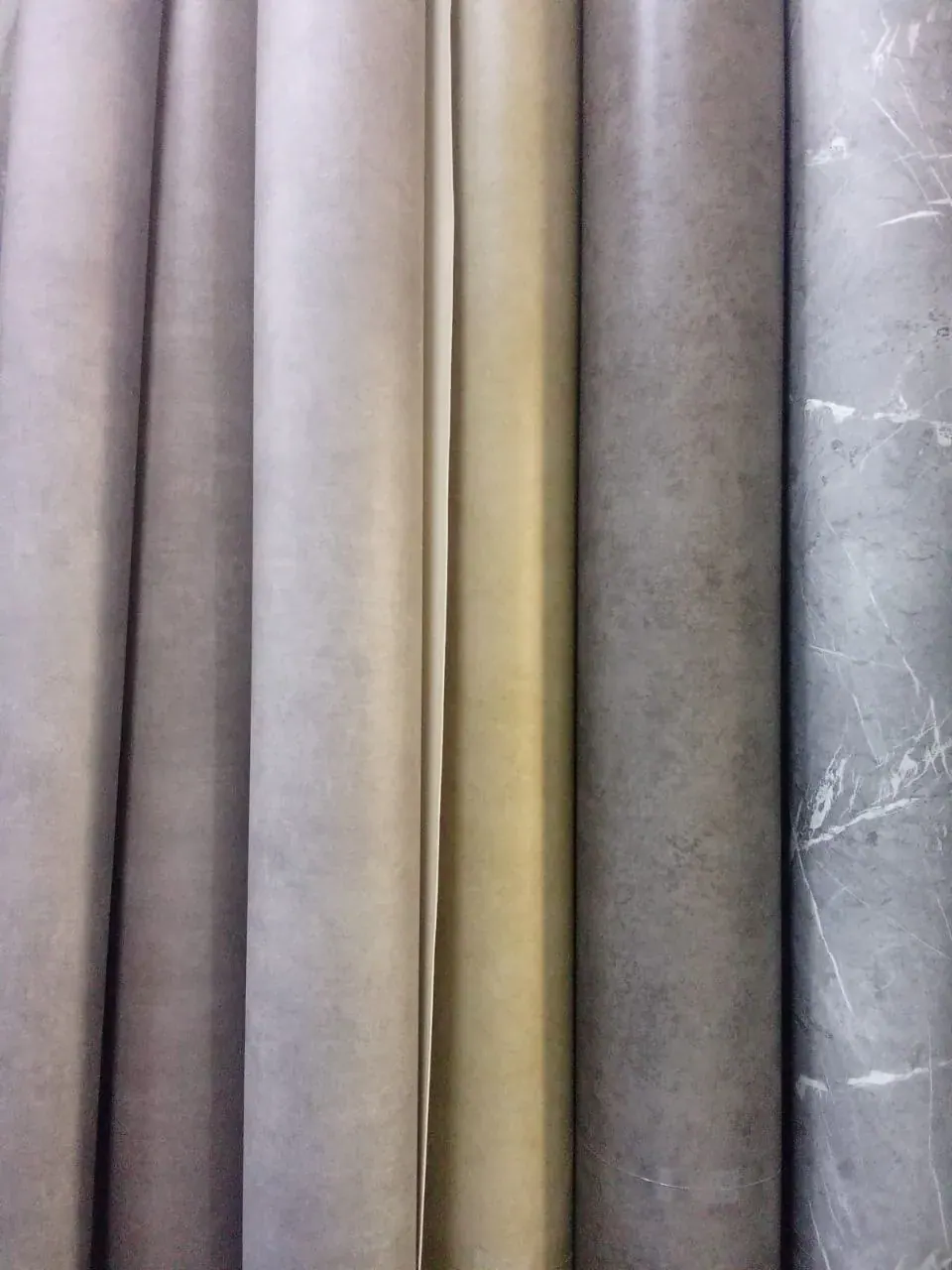
Square or rectangular formats with marble veining for entrances and open kitchens, and warmer underfoot than real stone.

Greyed timber or pale oak in a matt finish hides footprints in offices and small clinics.
Many SPC enquiries in Riyadh come from landlords updating a flat between tenants. Planks go straight over the existing tiles: no rubble, no waiting for screed to cure, and new skirting usually on the same visit.
Our advice: pick a mid-tone wood, which hides dust and light scuffs between tenancies, and keep a spare box from the same batch for repairs. Family districts in the north see similar requests — see our Al Yasmin flooring page.

Enter length and width. Allow 5–10% waste for regular rooms and a little more for rooms with lots of corners; we convert the area into boxes at the inspection.
Usually not. The bonded pad is designed to work alone; thick foam underneath lets planks flex underfoot, straining the click joints until they crack. What is sometimes required is a thin polythene damp barrier over a concrete screed, depending on the manufacturer’s instructions and what we find on site.
We don’t recommend screwing anything heavy through a floating floor: it pins the floor, which then buckles elsewhere. Usually cabinets go in first and the planks run up to them with a small gap behind the kickboard, or the island is fixed to the original floor and the SPC is cut around it.
There is no single right number, but a thicker core generally hides grout lines better and sounds less hollow. The core, the wear layer and the lock quality matter more than total thickness. We also measure clearance under your doors, as a thicker plank may mean trimming some.
The stone core is steadier than flexible vinyl, but direct summer sun through glass heats the surface a lot and can cause fading or joint movement over time. We leave the full expansion gap and recommend blinds or film on sun-facing glazing.
Planks can be unclicked, which is handy for swapping a damaged board near a wall. Moving a whole floor is less certain: some tongues get damaged when released and room sizes rarely match. If you rent and are considering it, tell us upfront so we plan the cuts accordingly.
Both click together and imitate timber, but laminate’s wood-fibre core swells if it soaks up water, while SPC’s stone core ignores moisture. Laminate can feel slightly warmer and is often tougher against scratches; SPC is the safer bet for kitchens and entrances. See our laminate flooring page.
Sweep or vacuum daily, then use a well-wrung mop with a neutral cleaner. The surface doesn’t mind water, but puddles left at joints and along walls can seep down to the screed. Skip steam mops: concentrated heat can weaken the wear layer and bonded pad.


Take a low-angle photo of the floor and send room sizes on WhatsApp, or book a free visit in Riyadh so we can check flatness and suggest the right plank.
Underlay types (foam, cork, moisture membrane) and when you need one before laying parquet or vinyl.
When tiles can take vinyl over them and what we check before laying.
Single-layer vinyl for clinics, hospitals and schools, with heat-welded seams.
Choosing the right vinyl specification
Flooring ideas for rest houses and chalets, from majlis rooms to pool-side areas.
Practical flooring for homes with pets: cleaning, scratches and odours.
What is the difference between glue-down and click vinyl flooring in Riyadh?
Why vinyl bubbles and gaps appear and how they are repaired.
Timber tones and patterns in practical vinyl, and how to choose.
The look of marble and stone with lighter weight and a warmer surface.
Vinyl for stairs in Riyadh: how to cover steps safely with vinyl, stair nosing and anti-slip strips, curved stairs, installation steps and…
Vinyl planks, vinyl tiles, sheet vinyl and herringbone compared for Riyadh: look, joints, waste, kitchens and small rooms. Choose the right…
What decides how long vinyl flooring lasts in Riyadh homes and offices: wear layer, core, heat, subfloor prep and cleaning. Free inspection and a…
How to know a concrete floor is dry enough for parquet, vinyl or laminate: moisture sources, simple checks, manufacturer limits and when to wait.…
What an expansion gap is for parquet, laminate and floating vinyl and why it matters in Riyadh heat: where it goes, how skirting hides it, and common…
Choosing flooring for a laundry room, utility room or store in Riyadh: water and slip resistance, washing machine weight, skirting and drainage. Free…