
Vacuum regularly
Running a vacuum over the rows before dawn or between prayers stops dust building up between fibres. Trapped grit acts like sandpaper and wears the pile from the inside without being noticed.
A mosque carpet is walked on and prayed on many times a day, and it faces fine dust, sweat and shoes. This guide covers the cleaning routine, how to deal with humidity and stains, when to rotate sections, and when replacing is the better choice. If your mosque needs a refresh, we supply and fit mosque carpets in Riyadh after a free site visit.
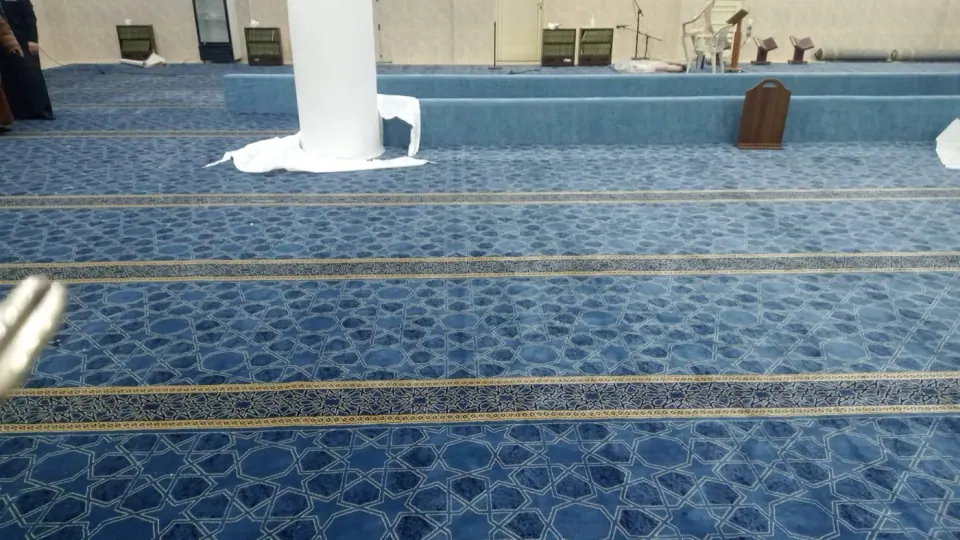
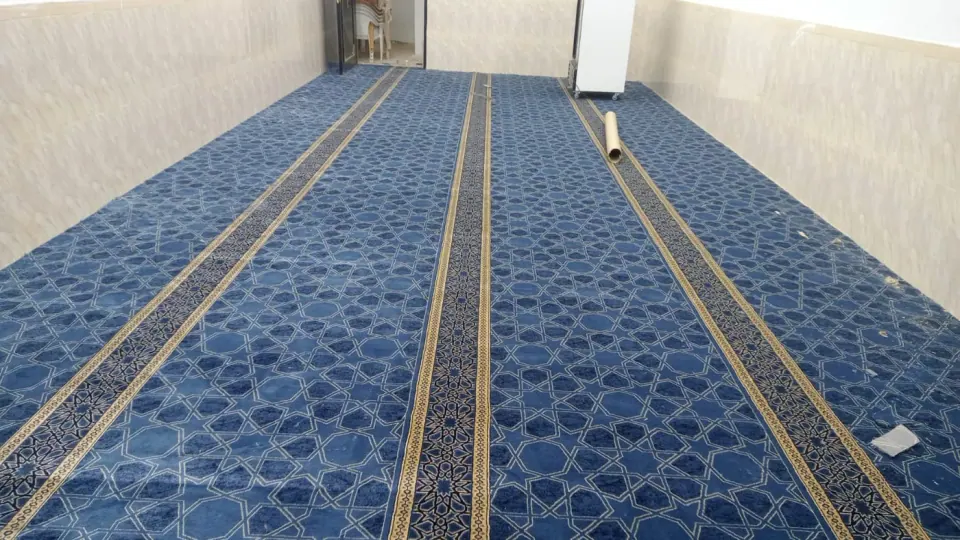
Most wear on mosque carpets comes less from worshippers than from fine dust and sand that arrive on shoes and socks and settle between the fibres. Good care is therefore built on small, steady habits rather than one large clean now and then.
Running a vacuum over the rows before dawn or between prayers stops dust building up between fibres. Trapped grit acts like sandpaper and wears the pile from the inside without being noticed.
A tidy shoe rack and a good door mat remove much of the sand and mud before it reaches the carpet. It is the cheapest protective step a mosque committee can take.
Closed halls hold on to odours and humidity. Opening windows or running ventilation at suitable times reduces smells and protects the carpet backing from mould.
Coffee, tea and hospitality leftovers soak into fibres the longer they sit. Blot with a clean cloth using pressure rather than rubbing so the stain does not spread.
Foam or steam cleaning is planned according to how busy the mosque is and how dusty the season is, with products suited to the fibre. The carpet must dry completely before prayer.
Joins between rolls and the edges along walls are the first places to lift. A monthly look prevents tripping hazards and turns a major repair into a small one.
Mosque carpets are not all the same, and care differs with the material, density and backing. The general rule is to follow the manufacturer's instructions for each product. What follows is general guidance to help you understand what happens inside the carpet.
Most modern mosque carpet is made from synthetic fibres that resist stains reasonably well and vacuum easily. They still hold dust between the strands, which is why pale, flattened patches eventually appear in the front row and at doorways. Regular vacuuming delays this considerably.
Denser carpet tolerates traffic better and recovers its shape after prayer, but it needs stronger suction to reach the base of the fibres. Short pile is easier to clean yet shows wear sooner if neglected. For more on these differences, see our carpet quality and density guide.
The backing holds the fibres in place and stops the carpet stretching. Too much water during cleaning can reach it and the concrete below, producing smells and loosening edges. That is why we prefer cleaning with as little water as possible and ventilating well afterwards.
Mid tones and fine patterns hide dust better than very light or very dark colours, so the space looks clean for longer between cleans. Our mosque carpet colours and designs guide goes further into this choice.
| Likely cause | Suggested action | |
|---|---|---|
| Faded front rows | Heavy foot traffic or sunlight near windows | Rotate sections if possible and shade the windows |
| Damp or musty smell | Incomplete drying after cleaning or moisture from the floor | Lift a small section, check the floor and improve ventilation |
| Raised edges or waves | Carpet movement or weak fixing | Re-fix before it becomes a tripping hazard |
| Flat, hard pile | Worn fibres and packed-in dust | Deep clean, and if it does not improve assess replacement |
| Crooked prayer lines | Rolls have shifted or the carpet has stretched | Realign, or renew the affected strip |
Daily vacuuming and prompt stain treatment are usually enough, with a deep clean in dusty seasons or when the rows are crowded.
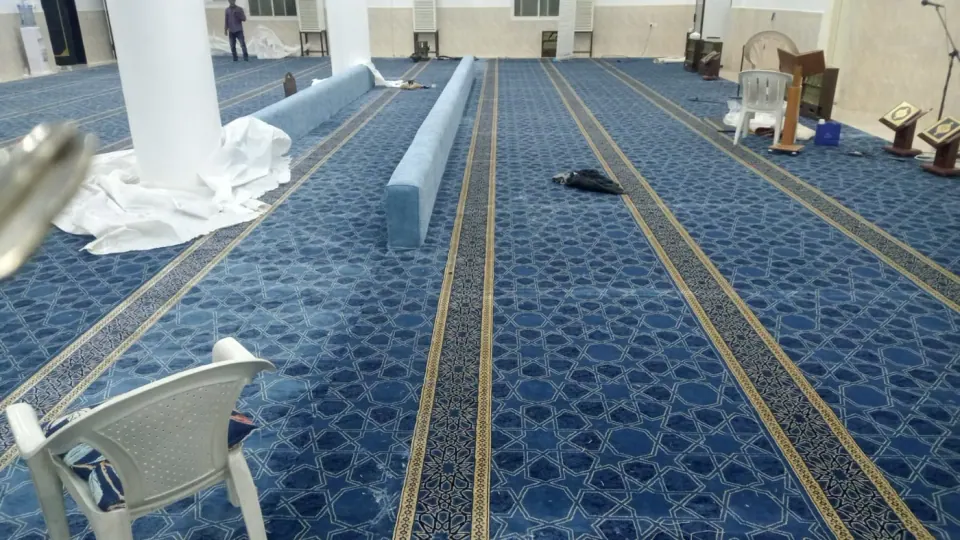
More space and larger numbers call for zoning: entrances, the mihrab area and front rows need more attention than the edges.
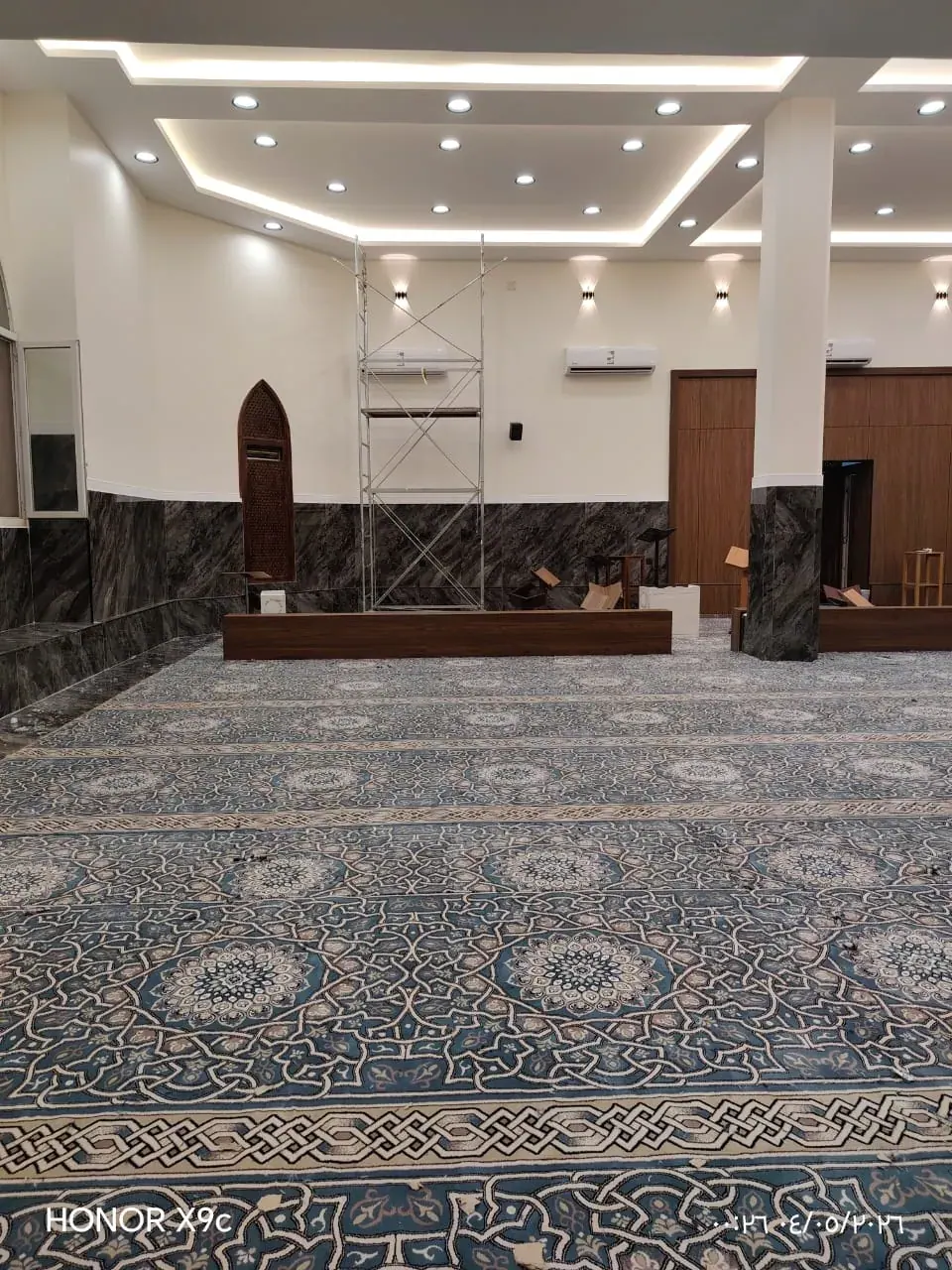
Event and hospitality halls see more spills, so we suggest a cleaning plan separate from the main prayer hall.
Between prayers on a quieter day, leaving enough drying time before the next use.
Thorough vacuuming removes most of the soil and stops it turning to mud when wet.
Each stain is handled by type with a product suited to the fibre, tested on a hidden corner.
Foam or steam with as little water as possible, following the carpet maker's guidance.
Keep air moving until fully dry, then vacuum again to lift the fibres.
Some habits look like cleaning but shorten the life of the carpet. Avoiding them costs nothing.
Excess water seeps into the backing and floor, and strong cleaners can fade colour or leave a sticky film that attracts more dust. Use the least effective amount, rinse the residue and dry well.
Scrubbing pushes the stain deeper and twists the fibres so the spot looks flat. Blotting from the edge towards the centre is safer.
These areas take the most traffic and dust, and neglecting them means they fail before the rest of the hall. A heavier care schedule for them balances the wear.
A leaking air conditioner or roof can cause hidden mould under the carpet. Fix the source first, before any cleaning.
Where a mosque was fitted with rolls or tiles, the most used sections can sometimes be swapped with the least used ones so wear is spread rather than concentrated in the front rows.
If one area is damaged by a burn, spill or tear, a local repair is usually possible when the same carpet or a close match is available. A different batch may show a slight colour difference, so we inspect the site first and explain what can be done.
If wear and waves cover most of the hall, partial fixes keep recurring and cost more than renewal. See our mosque carpet replacement guide.
A smell that stays after cleaning and ventilation usually means moisture in the backing or the floor, and the best step is to lift the carpet and inspect underneath.
When a mosque is extended or the rows are re-planned, full renewal is a chance to choose carpet that is easier to maintain. Fitting details are in mosque carpet installation.
Enter the length and width of the hall to get an approximate area, then send the result on WhatsApp with a photo of the current carpet and we will suggest what suits.
There is no fixed interval that suits everyone. Vacuuming is usually daily, while deep cleaning depends on how many worshippers attend, the dust season and the condition of the carpet. Busy neighbourhood mosques and Friday mosques need a shorter schedule than small prayer rooms.
Wet cleaning with foam or steam is possible using a limited amount of water. Too much reaches the backing and floor, causing smells and weakening the fixing. Follow the manufacturer's guidance and make sure the carpet is completely dry before prayer.
Start immediately by removing the excess with a clean cloth, pressing rather than rubbing, then treat the mark with a product suited to the fibre. Test it first on a hidden corner, and for old or large stains it is wise to ask a specialist.
Fine dust works into the fibres and abrades them, so regular vacuuming and keeping sand out at the entrance are among the most useful steps in a dusty city. Good care delays wear, but it cannot cancel the effect of heavy use.
The most common causes are trapped humidity, incomplete drying after cleaning, or built-up sweat and dust. Begin with ventilation and vacuuming. If the smell remains, check under the carpet because the problem may be in the floor rather than the carpet.
In most cases yes, if the same or a close carpet is available, although a slight colour difference between old and new may show. We confirm what is possible after a photo or a visit to the site.
When damage covers most of the area, when small repairs keep recurring, when smells remain after cleaning and ventilation, or when you want a new layout. The decision should rest on inspection, not on the carpet's age alone.
This page is a care guide. Our main service is supplying and fitting mosque carpet, and we are glad to advise on what suits your current carpet, or to inspect it and suggest a repair or renewal if needed.
Yes. Mid tones and fine patterns hide dust better than very pale or very dark colours, so they look clean for longer between cleans. We can help you choose when you renew.
Send a photo of the current carpet and the approximate hall size on WhatsApp and we will arrange a free site visit inside Riyadh.
What drives the price of mosque carpet and how to compare quotes.
How old carpet is lifted and the floor prepared afterwards.
Why levelling and inspection come before any new installation.
How to read density, weight and pile height when choosing.
Anti-slip, water-resistant floors for mosque facilities.
Serging, binding and made-to-measure