Friction between shoe and fibre
As you walk, charge moves between the sole and the fibres and builds up on your body.
You walk across the carpet, touch a door handle and feel a small shock. That is static electricity, and it is more common in dry air like Riyadh's. It does not mean the carpet is poor, but it depends on the material, the humidity and your shoes. This guide explains the causes and how to reduce it before and after buying.
The effect is simple physics, but the environment amplifies it.
As you walk, charge moves between the sole and the fibres and builds up on your body.
Humidity lets charge leak away; in dry air it stays, so you feel a shock when you touch something.
Some synthetic fibres generate more charge than others, and materials differ in this respect.
Rubber or synthetic soles may raise charging more than others.
AC reduces indoor humidity, so shocks feel more common in air-conditioned rooms.
Handles and metal equipment discharge quickly, so you feel it as a shock.
Manage humidity: Raising relative humidity in the room with a suitable humidifier reduces charging, as long as it does not climb to a level that harms furniture and flooring. Houseplants and moderate ventilation also help.
Choose the right material: Fibres differ in how readily they charge, and some carpets come with anti-static treatment or conductive yarns built in. Ask about this when choosing, and read our carpet fibres guide for the differences.
Regular care: Consistent vacuuming and proper cleaning reduce the dust build-up that makes the problem worse, and some anti-static products give a temporary effect. For general care see our carpet care guide.
Change habits: Touching a metal surface such as a door key with your whole hand before gripping it discharges more gently, and leather soles charge less than synthetic ones.
For sensitive spaces: Server rooms and technical labs need special floors known for resisting static (anti-static flooring), and you should consult a specialist in electrical systems before choosing one, as this goes beyond ordinary carpet.
A general table showing which fix suits which case; results vary by space.
| Humidity control | Treated carpet | Care and products | Technical floor | |
|---|---|---|---|---|
| Effect | Moderate and quick | Best when chosen before buying | Often temporary | High in technical areas |
| Cost | Relatively low | Varies with the material | Low | Higher, needs a specialist |
| When it suits | Homes and offices | New fit-out or replacement | A quick temporary fix | Sensitive equipment rooms |
| Note | Do not over-humidify | Ask about options | Limited effect | Consult a specialist |
The solution differs between a home, an office and an equipment area.
Humidity control and regular care are usually enough; if you are replacing carpet, ask about anti-static options.
Staff, equipment and rolling chairs; anti-static carpet tiles may help. See office carpet.
Electronics are sensitive and rolling chairs add friction. Details in gaming center flooring.
Changing clothes and plastic toys raise charge, so ventilation and humidity help.
Long walks across carpet build charge before you touch a metal door.
Special needs call for specialised floors, and you should refer to experts and approved standards.
Send the carpet type, the room and how bad the problem is on WhatsApp and we will suggest the right fix, from a small adjustment to changing the material.
Is it in the whole room or just at the door? And in which season does it get worse?
Adjust humidification so the room is comfortable without excess moisture.
Ask about the fibre type and anti-static treatment if you are replacing the carpet.
Regular vacuuming, proper cleaning and no products that make it worse.
Watch the result for two weeks, then decide whether to change the material or add another fix.
When choosing carpet for a room with dry air, ask the seller about the fibres and treatments and whether anti-static options exist. Choosing the right material is easier than treating the problem after installation.
Comfort, durability and ease of care matter just as much, so pick the material that balances all of them, and see carpet quality and density to understand the specifications.
The first thing we ask about is timing: do the shocks happen in winter or summer? In rooms air-conditioned all day or everywhere? That helps us tell whether the cause is low humidity, the material or the shoes.
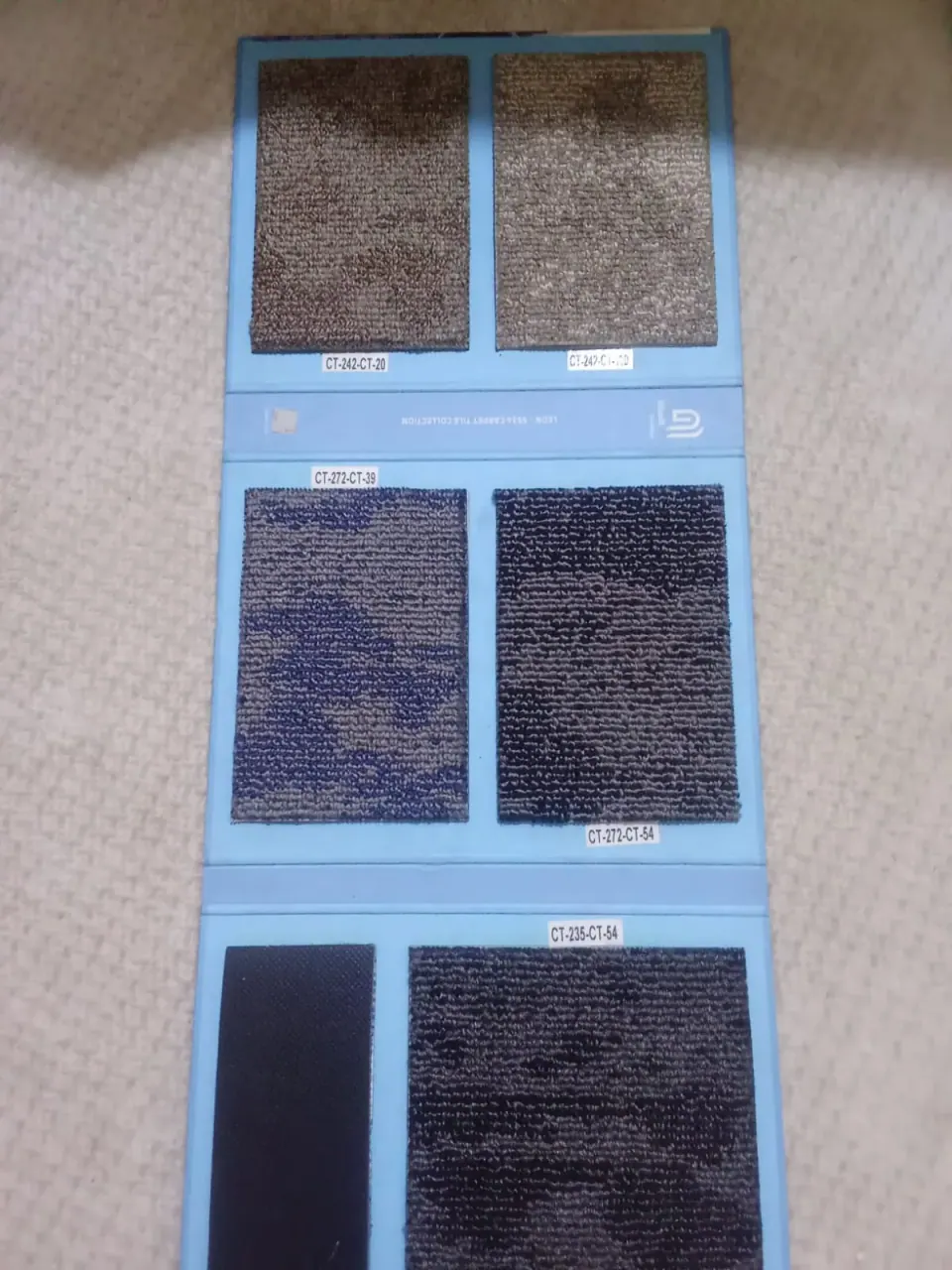
Second, we ask about the carpet: what type, how old, and has it been cleaned with particular products? Sometimes the problem grows after cleaning products leave a film on the fibres, and sometimes a synthetic material is the cause.
In offices we look at the chairs and equipment, since the problem may lie in the casters or the electrical layout, not just the carpet. That is why we do not suggest replacing the floor before confirming the cause, so you do not spend money on a fix that does not address the problem.
If replacing the carpet is the answer, we help you choose a better-suited material and view a sample on site, and we advise airing new carpet well, as in our new carpet smell guide.
We do not quote fixed prices because cost varies with the material, treatment, density and area, and the options available can change. Ask us what is available and we will suggest the best fit for your budget. The general factors are in carpet prices.
If the problem is mild and seasonal, humidity control and care may be enough without changing the floor, which is the cheapest fix and the fastest to try.
Simple steps you can try before any big change.
Rather than gripping a handle tip with one finger, so charge leaks more slowly.
A suitable humidifier eases the problem without overdoing it.
Leather shoes charge less than some synthetic soles.
Built-up dust adds charge and weakens performance.
Some give a temporary effect, so try them on a small area first.
Do not replace the carpet before you know the cause.
The cause may be humidity or shoes, not the carpet.
It can harm furniture and flooring and cause other problems, so moderation is better.
They may leave a film that raises charging and damages the fibres.
You may need to combine humidification, care and material.
Because static charge builds up from friction with the carpet and dry air, then discharges suddenly when you touch a metal surface.
No. Low humidity, shoe type and clothing also play a part, and carpet is one element of the problem.
Options with treatment or conductive yarns exist and vary by material, so ask us what is available.
Yes when used in moderation, because it reduces charging, taking care not to over-humidify.
It can harm some sensitive devices, so rooms with delicate equipment need specialised solutions after consulting an expert.
They give a temporary effect in many cases, and you can try them on a small area first.
It is usually worse in periods of dry air and constant air conditioning, and eases with higher humidity.
Yes. Send the type of activity and equipment on WhatsApp or call us and we will recommend a material for your space. See also our best flooring for Riyadh climate guide.


How to read the specifications
Regular cleaning that protects the fibres
Airing and getting rid of it
Safe methods for common stains
Comfort on cold days
Large areas with a uniform finish
Message us on WhatsApp or call and we will recommend a material suited to Riyadh's dry climate and how you use your room.