
Inlaid, not painted, lines
Permanent lines are strips of white turf cut in and bonded, so they stay crisp, unlike paint. We set the layout out on the ground first to keep lines parallel and corners square.
We supply and install synthetic turf for five- and seven-a-side football, padel courts, school and backyard pitches across Riyadh, including the base and drainage underneath. Book a free visit to see samples and have the pitch measured.


Our main artificial grass in Riyadh page covers pile, density and drainage. A pitch asks for more: boots must grip on the turn, the ball has to bounce predictably, and the surface must survive hours of running and sliding daily without flattening or opening at the seams.
So we never pick sports turf from a catalogue alone. Which sport, how many hours a day, and who plays? An hourly-rental pitch, a school pitch and a villa corner each lead to a different fibre, infill and sub-base.

Figures are common market guidelines and vary by product; we confirm after the survey.
Small-sided pitches typically use a longer pile, often around 40–60 mm, in tough monofilament fibre. Sand goes in first to weigh the carpet down, then rubber infill for grip on the turn. Pitches rented until midnight get denser turf and seams bonded for constant sliding around the goalmouth.
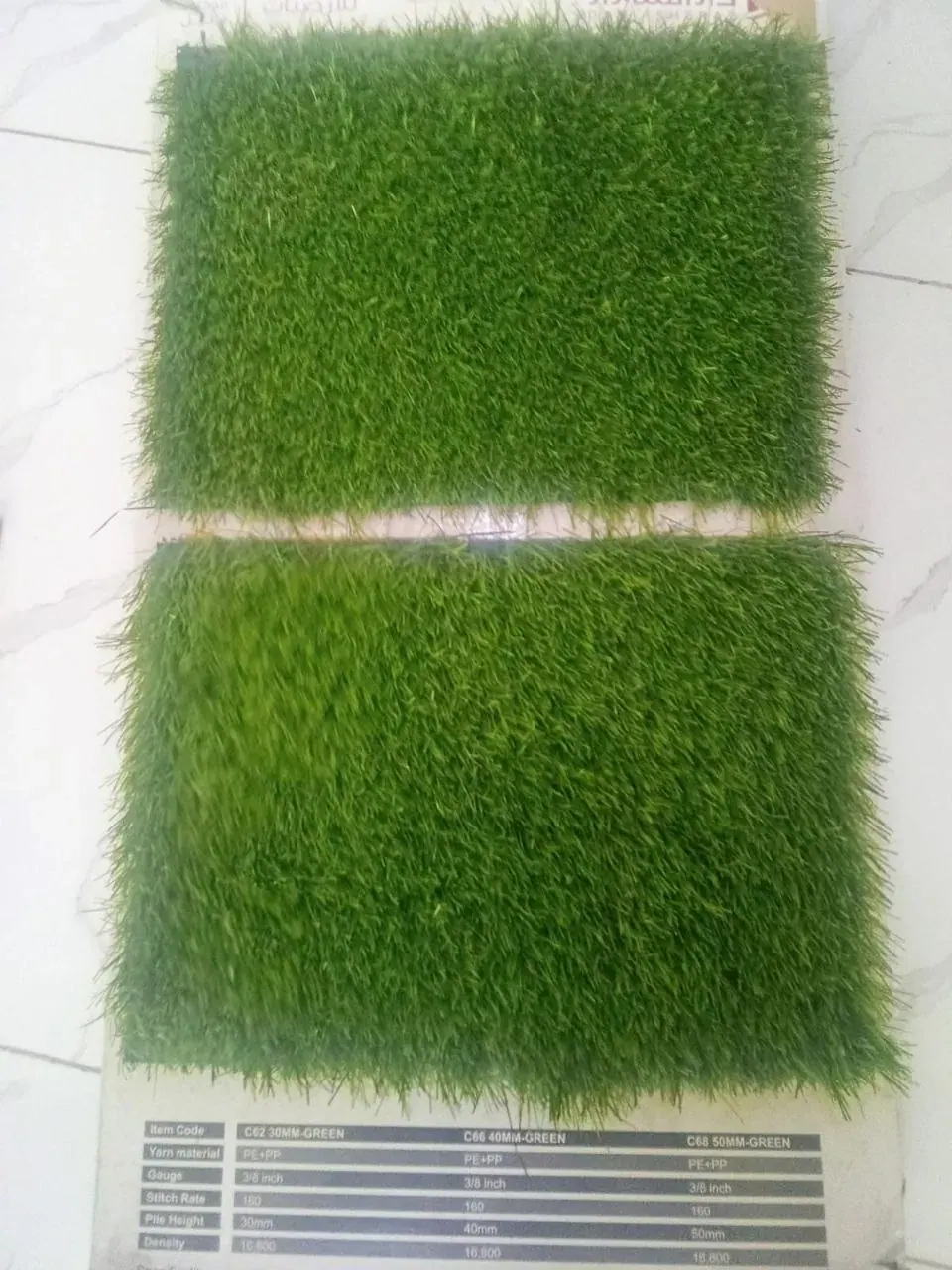
A standard padel court is 20 × 10 m, laid with a very short, crimped fibre that holds sand in place. The sand is the real playing surface: it sets ball speed and bounce and lets players slide sideways. We lay once the glass and mesh are up, checking the slab's fall so wash water doesn't sit in the corners.
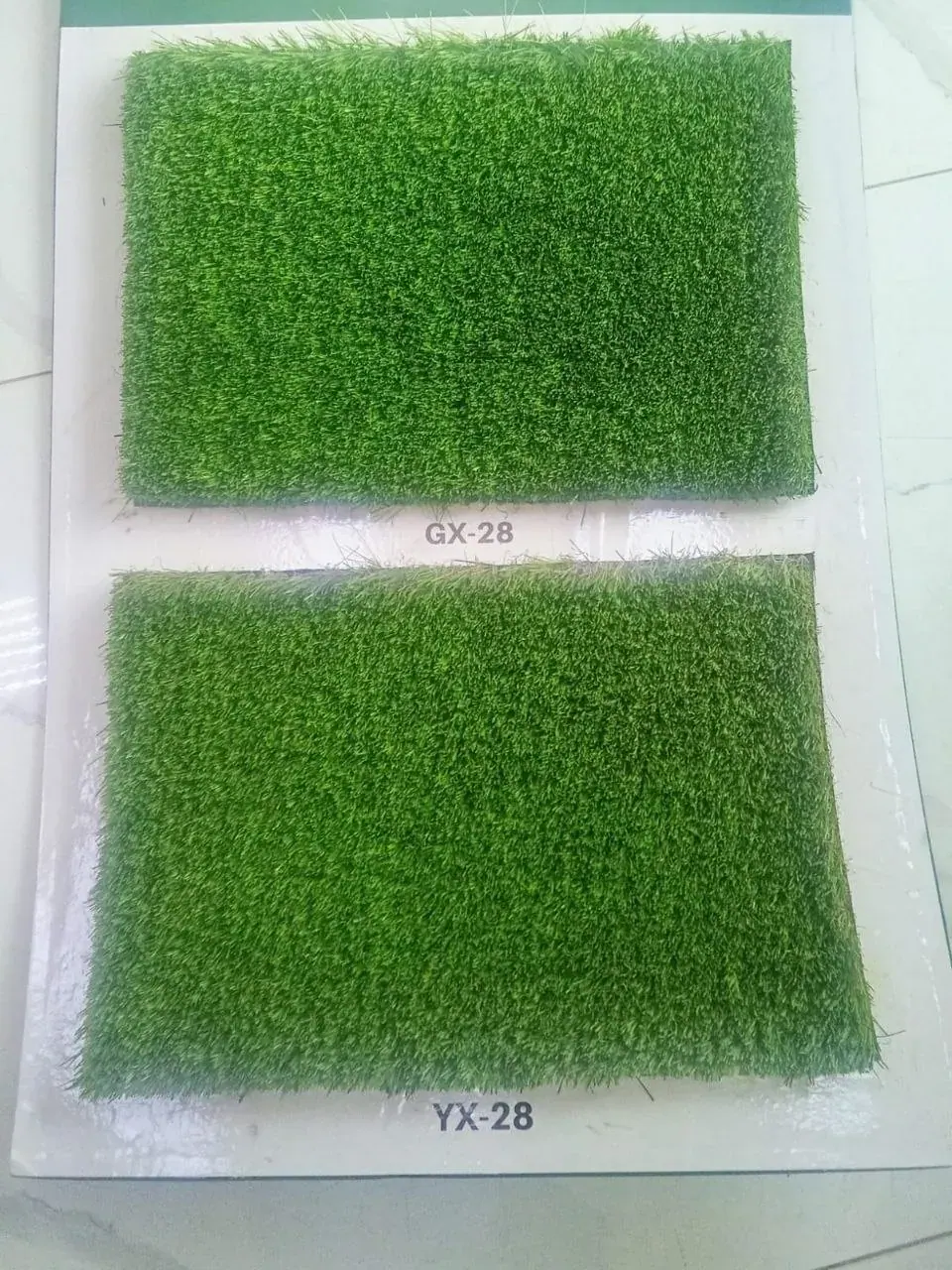
A school yard or villa pitch rarely needs a commercial build. A medium pile with no rubber, or light sand only, is easier to keep clean, and nothing gets tracked into classrooms, the pool or the majlis.
At schools we plan it alongside the little ones' area (see playground and nursery grass and school flooring); at home it can sit beside garden lawn turf with a clean edge.

| Layer | What it does | What we check |
|---|---|---|
| Existing ground | Carries everything above | Weak soil removed, ground compacted |
| Crushed-stone sub-base | Spreads load and drains water | Even depth and a slight fall towards the pitch edges |
| Fine levelling layer | A true surface for the carpet | Flatness checked with a long straightedge |
| Shock pad (optional) | Joint comfort and load spreading | Suggested for heavy use or lower infill |
| Turf carpet | Playing surface and ball behaviour | One pile direction; tightly bonded seams |
| Infill | Holds the carpet down and sets performance | Sand first, then rubber, in brushed passes |
Depths depend on the site and the sport; we spell out the proposed build-up line by line in your quotation.
Permanent lines are strips of white turf cut in and bonded, so they stay crisp, unlike paint. We set the layout out on the ground first to keep lines parallel and corners square.
Sand weighs the carpet down; rubber infill on top adds grip and cushioning. Filling in brushed passes matters more than quantity, since uneven infill leaves hard spots.
Dark rubber infill soaks up sun, so an open pitch is hot at a summer midday. Most Riyadh pitches are busiest after sunset anyway, and watering before daytime games cools it briefly.
Footings for floodlights, netting and cables go in before the turf. Digging afterwards means cutting and re-seaming, so we agree the sequence with your contractor up front.
We measure, confirm sport and hours, and plan rolls so seams avoid high-wear zones.
Excavation, levelling and compaction, then the sub-base at the right fall, or slab preparation on concrete.
Rolls run in one direction, seams are bonded with tape and adhesive, then the lines are cut in and fixed.
Sand, then performance infill, spread in layers and brushed between passes until it settles and the fibres stand.
Brushing and infill top-up instructions, plus a check-up schedule for rental pitches.
Sun alone rarely ends a pitch early; uneven infill does. Goalmouths and the centre circle lose granules first, leaving fibres flat and exposed to friction, so check those zones weekly on commercial pitches.
Brushing lifts the pile and stops infill compacting, and clearing dust after storms keeps drainage working. Catching a lifting seam or loose line early saves a bigger repair later.

Enter the pitch length and width in metres. We keep seams away from mid-pitch, so the quantity may shift slightly after accurate measuring.
Most five-a-side pitches use roughly 40–60 mm turf with sand and rubber infill. Shorter means less infill and easier upkeep; longer feels softer but needs more infill and brushing. We decide once we know the hours, the players' ages and their footwear.
Not always. It helps on heavily used pitches, when the owner wants less rubber infill, or when the turf sits on hard concrete. A pad adds comfort but also cost, so we price it as a separate, clearly explained option.
Official competition pitches are usually subject to field tests and requirements set by the governing body, which is outside what we promise. We build pitches for recreation, training, schools, compounds and hourly rentals. If you have written requirements from an organisation, send them and we will review them honestly before quoting.
It depends on hours of play, but sand keeps drifting towards the corners and walls. On busy courts, check the spread weekly and brush it back, topping up a little when fibres look shiny or the ball skids faster than usual.
Often, yes, but infill makes a pitch heavier than lounge turf, and it takes running and jumping. The building's engineer must confirm load capacity, and waterproofing and drainage need checking. Our rooftop grass page covers the roof side.
Send rough dimensions and the sport on WhatsApp, say whether the ground is soil, concrete or a roof, and add expected hours of use, photos from a few angles and any drawings. We then book a free visit. Before comparing offers, read our artificial grass price factors guide.


Send the dimensions, the sport and a few photos, and we will arrange a free site visit to choose the turf and base build-up.
Which pile height suits a garden, roof or balcony and how density matters.
Water, upkeep and cost compared
Artificial grass for events and exhibitions.
Turf specification, base and installation for padel courts in Riyadh.
What decides grass lifespan and how to extend it in Riyadh sun.
Warm, comfortable vinyl
How artificial grass rolls are joined without a visible seam: pile direction, seaming tape, adhesive and edge fixing in Riyadh heat. Free inspection…
Why artificial grass can smell and how to stop it: drainage, pet urine, food residue and damp roofs. A practical guide from Tiraz Najd in Riyadh.