
Levelness
Dips and bumps show as ripples and spots where water collects. Levelling the ground before laying is the first step.
The beauty of artificial grass starts beneath it. An uneven floor or one without drainage means puddles, ripples, odour and weeds at the edges. Here we explain the preparation steps: levelling, compaction, the stone layer, the membrane and drainage outlets, and what differs between a ground-level garden, a roof, a balcony and a small pitch. We supply and fit grass after a free site visit inside Riyadh.
Artificial grass is a relatively thin layer that follows exactly what lies beneath. Any fault in the ground shows on the surface after fitting, and fixing it then means lifting the grass and redoing the work. Good work therefore starts with the ground, not the green.
Dips and bumps show as ripples and spots where water collects. Levelling the ground before laying is the first step.
Rain, irrigation or washing water must find a way out. Without it puddles and smells form and the adhesive layer suffers.
A compacted base prevents settling over time and keeps the surface level after years of walking and play.
A suitable membrane beneath the layers reduces weeds rising from the soil to the edges and seams.
In many parts of Riyadh the soil is sandy and loose, so it needs good compaction and a stable layer before laying.
Edges defined with a firm material such as a kerb, paving or a frame stop the grass moving and give a tidy look.
Details differ from site to site, but the idea is the same: a level, compacted and well-drained surface. We set the details after the visit according to the type of floor and the use.
Plants, loose soil and debris are removed and the ground is levelled with a slight fall that directs water to a drain or the edges of the site. The exact fall depends on the place, and we measure it with instruments rather than judge by eye.
The ground is compacted and a layer of coarse crushed stone is laid and compacted to a thickness the use decides. It is the basis of stability and drainage in gardens and pitches. Light use may need less than a busy pitch.
It goes over or under the stone according to the design and stops weeds rising while letting water through.
A fine layer is levelled and compacted to give a perfect surface for the grass, which is then laid, cut, joined at the seams and fixed at the edges. The laying steps themselves are in artificial grass installation.
Some types need a light infill between the blades to hold them upright, and some do not, depending on the product instructions and the use.
| Usual base | Drainage and notes | |
|---|---|---|
| Ground-level garden | Levelling, compaction, stone layer and membrane | A fall towards the edges or an existing drain |
| Roof | The waterproofed concrete surface itself, usually without a lot of stone | Use the existing roof outlets and never block them |
| Balcony | The balcony floor itself after cleaning and checking the fall | Leave the water channel open and measure height at the door |
| Small pitch | A stronger, compacted base and a stone layer suited to the load | Good drainage and firmly fixed edges |
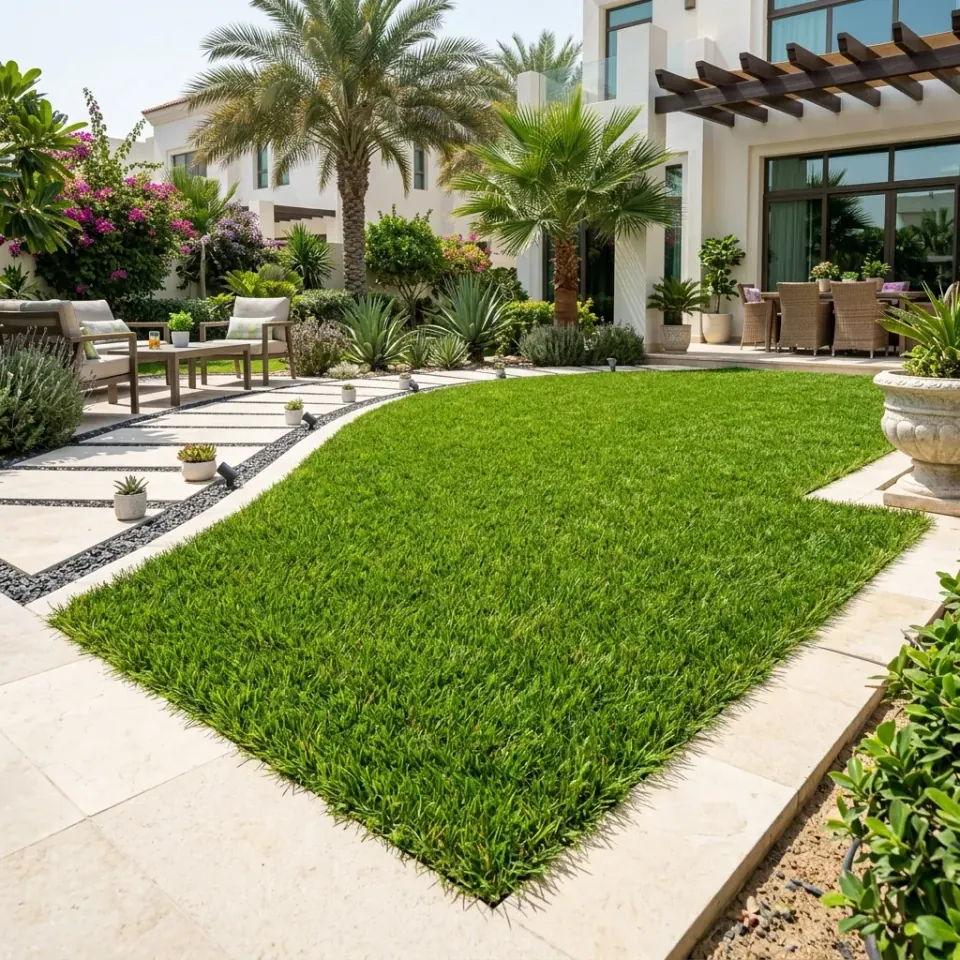
Levelling and compacting the ground and directing water to drains prevents puddles and keeps the surface level; see garden artificial grass.

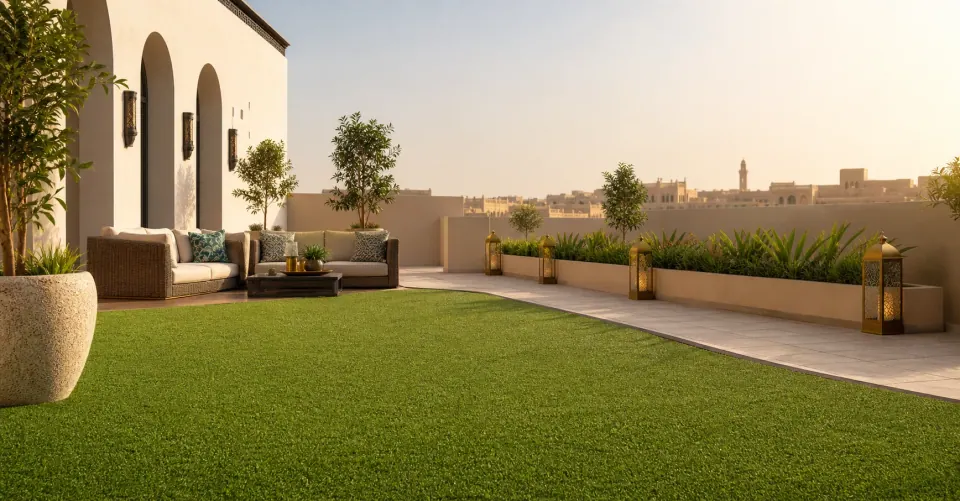
We keep drain outlets clear and avoid overloading; more in rooftop artificial grass.
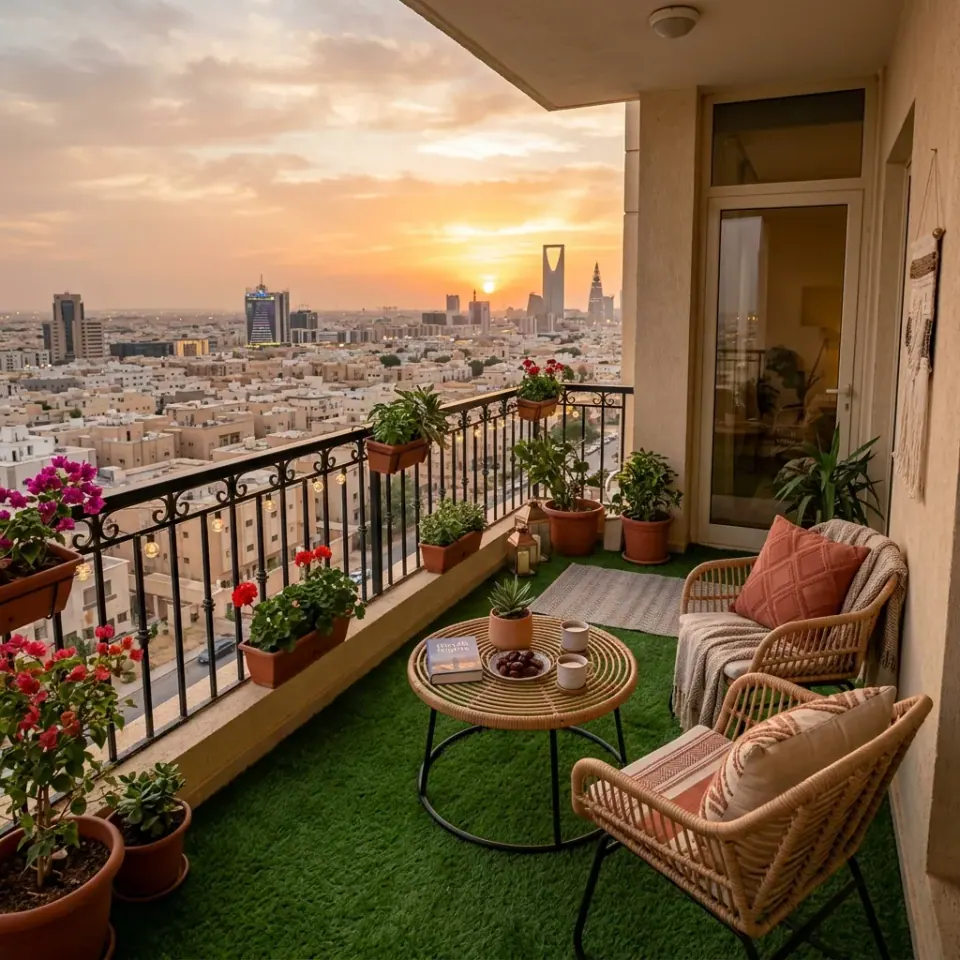
Small spaces need accuracy in measuring and fall. See balcony artificial grass.
We check the fall, drain outlets and soil or concrete and decide the preparation needed.
Remove loose layers, level the ground and compact it to the right fall.
A compacted base layer and a weed membrane according to the site.
Cut the grass, align the blades in one direction and join the seams carefully.
Fix the edges, clean up and test drainage with water before handover.
We give no fixed figures because every site is different, but these are the factors we use to price a quote after the visit.
A level, solid site needs less work than a low sandy plot that needs filling, compacting and levelling.
Large areas usually lower the rate per metre, while hard-to-reach sites such as roofs need effort to carry materials.
The thickness of the stone layer, membrane and edging changes with use; a children's play area differs from an ornamental garden.
Lifting old grass, rubble or shrubs is a separate item that should appear in the quotation.
When we inspect older installations, most complaints are not about the quality of the grass but about what is under it.
Usually a dip in the ground or no fall. It is fixed by re-levelling the affected part and sometimes lifting the grass over it.
These come from an uncompacted base, an uneven floor or expansion without enough edge fixing.
It can come from trapped water or organic matter under the grass. Good drainage and periodic cleaning reduce it. See artificial grass maintenance.
No membrane or weak seam bonding lets weeds appear. We treat it with a suitable layer at preparation.
A good base needs only simple protection to do its job for many years.
Remove leaves and dust that gather at outlets and channels so water is not trapped.
Heavy fixed furniture or large tubs can compress the base over time, so use wide supports.
A light rinse removes dust and odour, while heavy repeated washing on a poorly drained site can cause pooling.
A raised edge or a small gap is dealt with early by fixing it again before it widens and moves.
A building roof has a waterproof layer beneath the floor and must not be punctured or allowed to collect water above it. On roofs we therefore check the concrete fall and drain outlets and keep them open, and lay the grass in a way that does not harm the waterproofing.
If the roof already leaks it is better to treat it before fitting, because grass does not solve a waterproofing problem. It also helps to know what loads and furniture the roof can carry. Roof details are in rooftop artificial grass.

Clear answers to these show the seriousness of the work and help you compare quotes.
Ask them to explain the fall and outlets and show where the water leaves.
Is there compaction, a stone layer and a membrane, or is grass laid directly on the ground?
Fixing, limiting movement and the look at walls and paths.
Poor seam quality shows over time if not done well.
Pile height and density and whether they suit the use. See the heights guide.
Preparation, materials, labour and disposal of debris, and what is charged separately.
A hard floor that is already level, such as a balcony or a concrete roof with the right fall, may need only cleaning and careful laying.
A lightly used garden over compacted soil needs levelling, a stone layer, a membrane and edging.
Children's play areas, small pitches and heavy-use sites need a deeper base. See mini football pitch grass.
Enter the length and width of the site to get its approximate area, then send the result on WhatsApp with photos of the floor and drain outlets.
We do not advise that on most sites. Uncompacted soil settles and ripples appear, and there is no organised drainage. Layered preparation is the safer way. Saving on preparation looks attractive at first but often costs more when work is redone months later.
Yes in many cases, after checking the fall and drainage and cleaning the surface, and a layer beneath may be needed depending on type. In every case we prefer to see the site ourselves rather than rely on description alone.
Outdoor artificial grass has drainage holes in the backing so water passes into the base and then to the edges or drains, which is why fall and base are essential. No existing drain outlet is blocked during installation.
If the base and drainage are sound, water does not collect. If puddles appear, there is usually a dip that needs treating.
Usually not, because the base is solid concrete. What matters is the fall and keeping drains open. We check this during the visit.
It can at seams and edges if no suitable membrane is used, which is why we include a membrane in the preparation of ground-level sites.
It varies with area and ground condition, from a day on small spaces to several days in big gardens. We set the time in the quotation after the visit.
This varies, so the quotation states whether preparation, levelling and debris removal are included or separate.
Yes inside Riyadh. We measure the place, check the floor and drainage, then send a quote by phone or WhatsApp.

Send photos of the site and its approximate size on WhatsApp and we will arrange a free visit inside Riyadh to check the floor and drainage.
How to choose the pile height and density that suit the use.
Cleaning and caring for grass so the floor stays in good shape.
Comparing cost, upkeep and use in the Riyadh climate.
Drainage and slip considerations around swimming pools.