


Rug size guide
How to choose rug size for a majlis, living room, bedroom and dining room.
Fine dust, Arabic coffee and a steady stream of guests are what wear carpet and rugs down in Riyadh homes. Here is a simple routine, quick stain first aid and the mistakes to avoid, so your floor stays good-looking for longer.
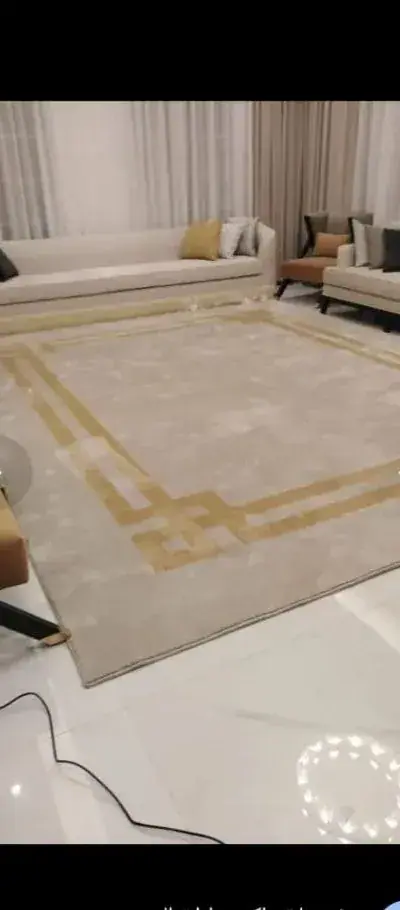

Dust that settles indoors after a sandstorm is more than cosmetic: fine particles sink to the base of the pile and act like sandpaper underfoot, dulling colour and weakening fibres. Regular vacuuming does more for carpet than any cleaning product.
Put a coarse mat outside the door and another inside, and keep both clean. Where guests keep their shoes on, give them a hard-floored zone before the carpet starts. Stairs and corridors take the most abrasion of all — our stair carpet page covers choosing a tough enough material.
As a general guide, home carpet benefits from a deep clean about once a year, and every six months or so in homes with children, pets or a busy majlis. Always follow the care instructions supplied with your carpet.
Hot-water extraction — what most people call steam cleaning — reaches deep but needs drying time and airflow; low-moisture methods dry faster and suit routine upkeep. Either way, the biggest risk is too much water: it can cause shrinkage, odours or brown marks wicking up from the backing. Keep furniture off until fully dry, with plastic tabs under the legs.
Scoop up anything solid with a spoon or plastic card, without pressing it in.
Press a white absorbent cloth from the edge inwards so the stain does not spread.
Dampen lightly, blot, repeat. Very hot water can set some stains.
A few drops of clear washing-up liquid in a glass of water — test it first.
Rinse out soap residue, which attracts dirt, then weigh down a dry towel.
General advice that is safe for most synthetic carpets. Wool and hand-made silk rugs are more delicate — ask a specialist.
| Stain | First move | What helps | Avoid |
|---|---|---|---|
| Arabic coffee and tea | Blot straight away | Lukewarm water, mild soap solution, thorough rinse | Leaving sugar residue |
| Saffron and turmeric | Blot very fast | Cool water and mild solution; may need a pro | Rubbing the dye around |
| Grease and food | Remove the residue | Absorbent powder such as baking soda, vacuum, then mild solution | Hot water first |
| Oud oil and oil perfumes | Blot without pressing | Absorbent powder, then a little soap solution | Pouring alcohol on |
| Ink | Blot with a dry cloth | Cotton pad with rubbing alcohol, tested first | Rubbing or pouring |
| Chewing gum and wax | Freeze with an ice bag | Gentle scraping once hard | Pulling hard |
| Henna | Blot immediately | Cool water and a quick call to a specialist | Waiting for it to dry |
Turn rugs 180° every few months so footfall and sunlight spread evenly — the side nearest the window fades faster under strong Riyadh sun. Curtains or UV-filtering window film help a lot.
An anti-slip underlay on marble or porcelain stops slipping and reduces wear on the back. Use wide cups under sofa and table legs; if the pile is crushed, let an ice cube melt into the dent and lift the fibres with your fingertips. Choosing the right rug starts on our modern rugs or majlis rugs pages.

Mosque carpet is usually vacuumed daily or after busy prayers such as Jumu’ah, working along the prayer lines so the pile stays even. Plan deep cleans for a quieter period so the carpet is fully dry and aired before peak seasons like Ramadan. Once you see bald traffic lanes or exposed backing, it may be time for mosque carpet replacement.
In offices, the beauty of carpet tiles is that a damaged tile can be swapped on its own. In a large majlis, keep a tray or mat under coffee pots and flasks, and vacuum after every gathering.

Rough intervals — adjust them to how many people use the space and to the dust season.
| Task | Bedrooms | Majlis and corridors | Mosques and offices |
|---|---|---|---|
| Vacuuming | Weekly | 2–3 times a week | Usually daily |
| Cleaning door mats | Weekly | Twice a week | Daily |
| Spot and thread check | As noticed | After every gathering | Weekly |
| Rotating rugs | Every few months | Every few months | — |
| Deep clean | About yearly | Every 6–12 months | By footfall, before peak seasons |
| Seams and edges check | Yearly | Every 6 months | Every few months |
Blot straight away with a white cloth, working from the edge inwards, then dampen with lukewarm water and blot again. Follow with a weak solution of clear washing-up liquid and rinse with clean water, because leftover sugar and soap attract dirt. If the coffee contained saffron, act even faster.
Not always. Hot-water extraction works well on many synthetic carpets, but wool and hand-made rugs often need lower heat, less moisture and specialist methods. Check your carpet’s care instructions and ask the cleaning company about their method and drying time.
A common guideline for homes is roughly once a year, or every six to twelve months for a busy majlis or homes with children or pets; mosques and offices depend on footfall. Regular vacuuming in between makes each deep clean easier.
Usually leftover cleaner or sugar attracting fresh dirt, or liquid in the backing wicking back up as it dried. Rinse with a little clean water, blot hard with a towel under a light weight, and call a carpet-cleaning specialist if it keeps returning.
When backing shows through in walkways, crushed pile no longer recovers, odours survive a deep clean, or seams and edges are lifting. WhatsApp us a few photos and we will give you an honest view; if new flooring makes sense we can visit free to measure. Our wall-to-wall carpet page is a good starting point.
Keep claws trimmed, as loop pile snags easily. Deal with accidents fast: remove solids, blot, rinse with a little water, then use a cleaner made for pet stains. Avoid ammonia-based products — the smell can encourage the animal to return to the same spot.
WhatsApp us photos of your current carpet or rug and we will suggest a suitable replacement, with a free site visit anywhere in Riyadh — or use our contact page.
How to choose rug size for a majlis, living room, bedroom and dining room.
Lifting carpet and preparing the floor
Practical flooring for homes with pets: cleaning, scratches and odours.
A practical guide to mosque carpet care in Riyadh: vacuuming, dust, humidity, stains and when to replace.
Is carpet suitable with Riyadh dust and allergies?
How to remove tea, coffee, grease and ink stains from carpet and rugs safely: practical steps, mistakes to avoid…
Why does a new rug or carpet shed fluff? Normal versus abnormal shedding, the right way to vacuum and handle it,…
What does a rug pad do? Felt, rubber and mesh types, how to pick size and thickness, and which pads suit parquet…
Choosing a rug that copes with sand, the trip and storage.
An inspection and buying guide for Persian-style rugs.
When a long pile suits you and how to look after it.
Why does new carpet smell? Causes, how to ventilate properly, how long it lasts and what to…
How to protect parquet, vinyl and carpet from scratches and dents: felt pads, chair…
Serging, binding and made-to-measure
A plan for getting the home, majlis and mosque ready before Ramadan and Eid: rugs, carpet, mosque carpet, cleaning, replacement and timing. Free…
A guide to choosing round and oval rugs for living rooms, dining rooms, bedrooms and entrances in Riyadh: sizes, styling, rug pads and care.…
Why mould or a damp smell appears in carpet in Riyadh: AC leaks, wet cleaning, ground floors. When to clean, when to replace and how to prevent it.