
Kinder on the knees
Pile density and backing matter more for prostration than pile height — older worshippers notice at once.
We supply and install carpet for mosques, musallas and prayer rooms across Riyadh, setting every row square to the qibla. It starts with a free site visit and measurement, then a quote by phone or WhatsApp.
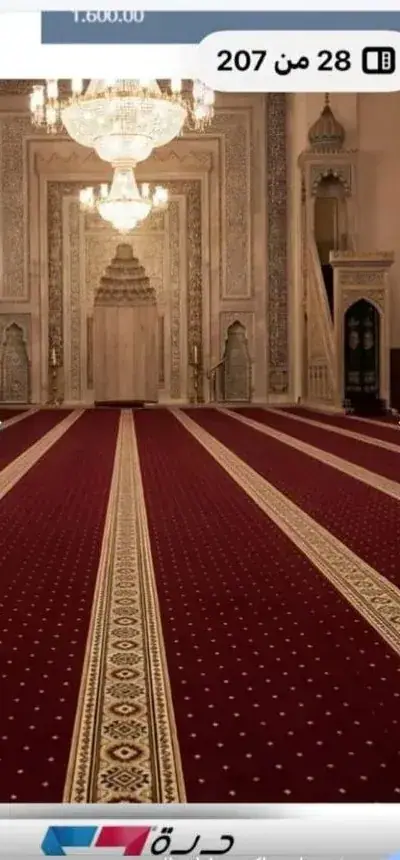
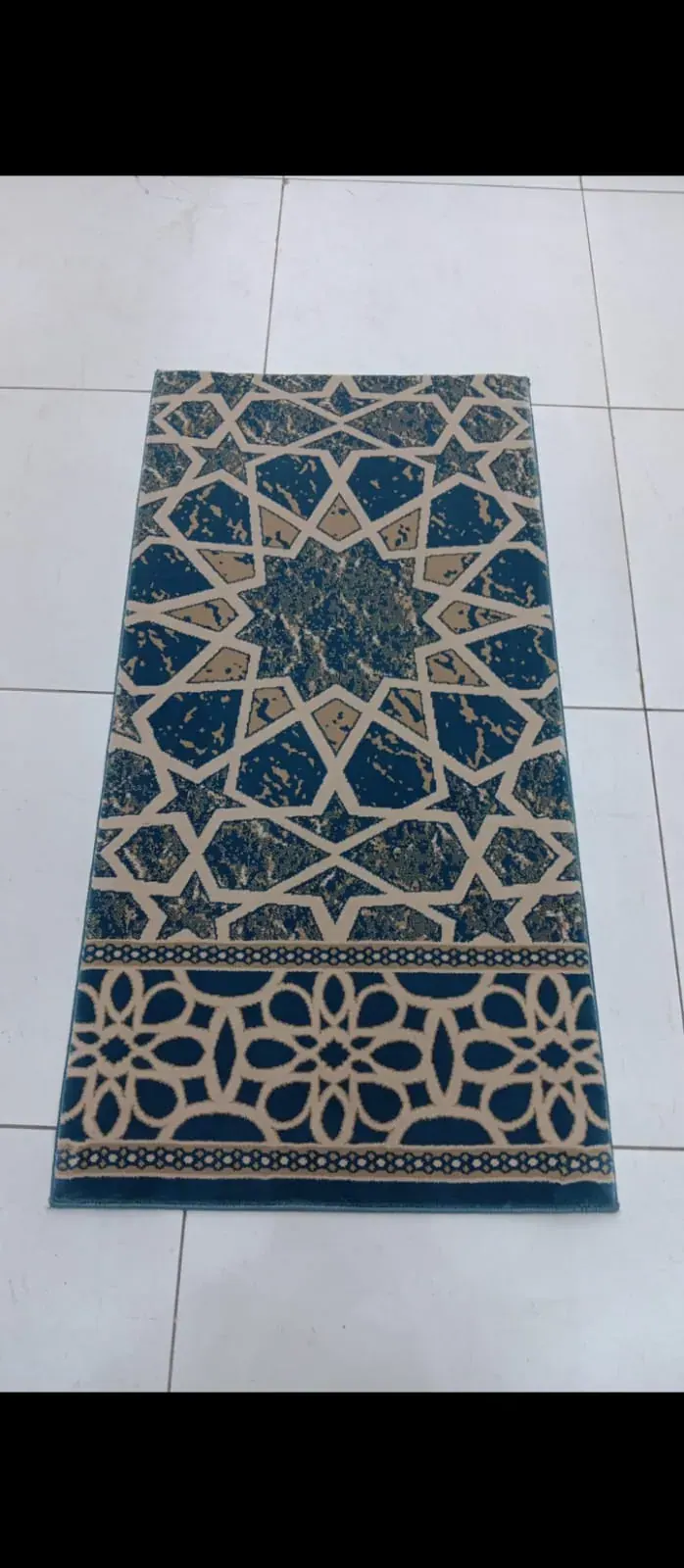
A prayer hall is not a living room. The congregation swells on Fridays and in Ramadan, and every row must run parallel to the qibla wall without drifting — so we plan the rows before we talk colours.
Our mosque carpet Riyadh service covers Friday and neighbourhood mosques, musallas (prayer rooms) in schools, offices, malls and hospitals, and private prayer rooms in villas and istirahas (weekend rest houses). If the prayer room is part of a bigger fit-out, see commercial flooring for projects.

Pile density and backing matter more for prostration than pile height — older worshippers notice at once.
Carpet soaks up echo under high ceilings and domes, so the imam’s recitation carries more clearly.
Vacuum daily or after busy prayers, working along the pile so the printed lines stay crisp.
Book an extraction clean before Ramadan and blot spills with a dry cloth instead of rubbing.
The lines on a mosque carpet keep the congregation straight without the imam correcting anyone. Row depth is typically around 1.1–1.2 m — room to prostrate comfortably without wasting floor — and we check the actual repeat on the sample you choose.
Arch (mihrab) designs mark a place for each person, usually about 60–70 cm wide, which helps people stand shoulder to shoulder and teaches children where to stand. The catch is precision: seams must line up exactly, because any drift shows in a repeating row of arches.
Plain lines leave spacing open, which suits packed Friday prayers, and they are easier to cut around columns. Many committees choose arch rows for the main hall and matching plain lines for annexes and corridors.
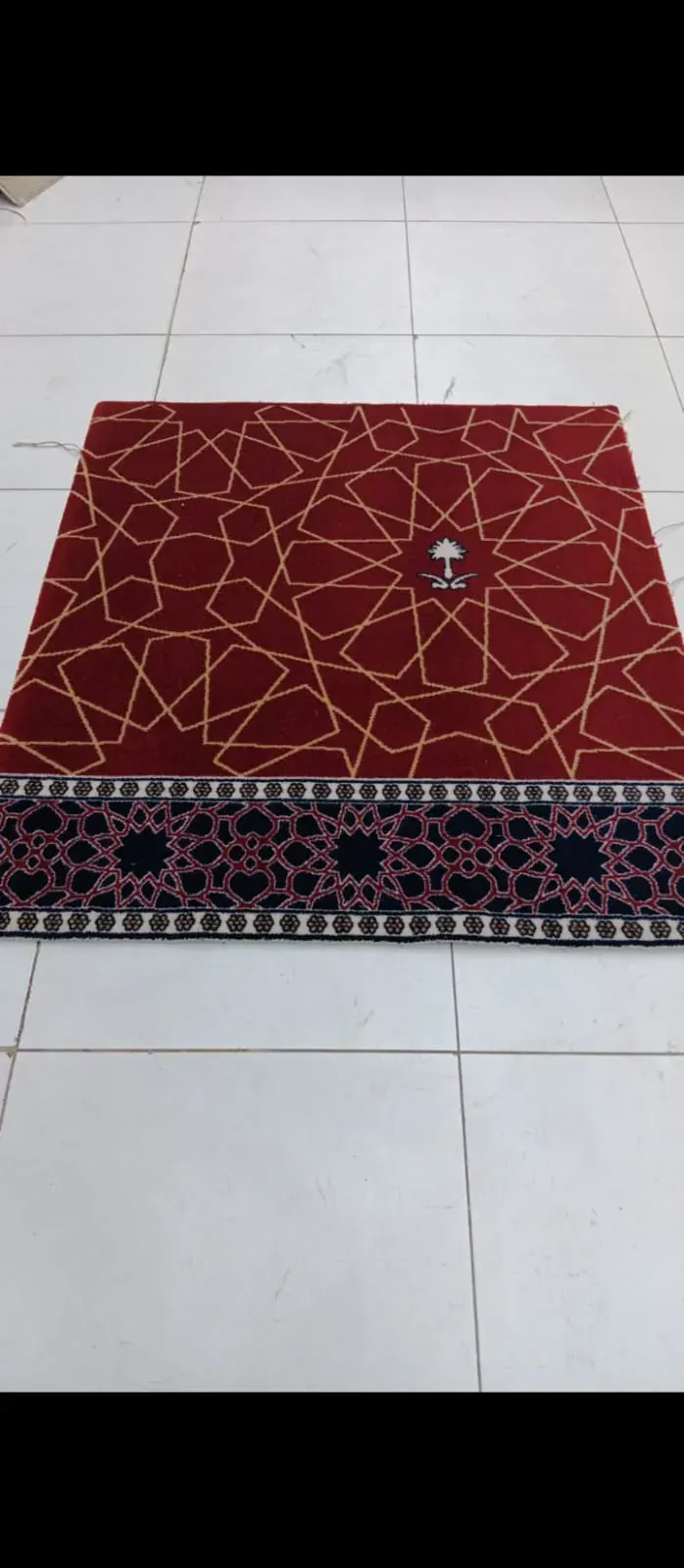
Deep red is the classic: warm and forgiving of everyday marks. Navy feels calm under white LED lighting, green and teal read as quietly traditional, and grey or beige make a room look larger but show dust sooner.
The right fibre depends on footfall, budget and cleaning. The table below is general guidance; at the site visit you can kneel on real samples before deciding.
| Wool blend | Nylon | Polypropylene | |
|---|---|---|---|
| Feel during prostration | Usually softest | Soft, springy | Fair; depends on density |
| Coping with heavy traffic | Good at high density | Typically excellent | Moderate; pile may flatten sooner |
| Stains and moisture | Needs quick attention | Good | Usually very good |
| Budget | Highest | Mid to high | Generally most economical |
| Best suited to | Main Friday mosques | Busy mosques and walkways | Musallas, annexes, tight budgets |
Specifications vary between products of the same fibre, so we decide from the sample and its data sheet rather than the fibre name alone.
Accurate measuring means less waste and no seam through the middle of a row.
We mark the front row from the qibla wall and check it against the true qibla — some buildings sit slightly off-square.
We measure the niche and minbar footprint and decide whether the niche gets its own piece.
Columns, AC grilles and speaker points go on the plan so no cut breaks a prayer line.
Corridors, the women’s section and annexes are measured separately, as each may need its own laying direction.
Rolls are mapped so joins fall between rows, then quantities are worked out with waste.
Enter the hall’s length and width in metres for a first estimate including waste. The final figure follows the free visit and roll plan.
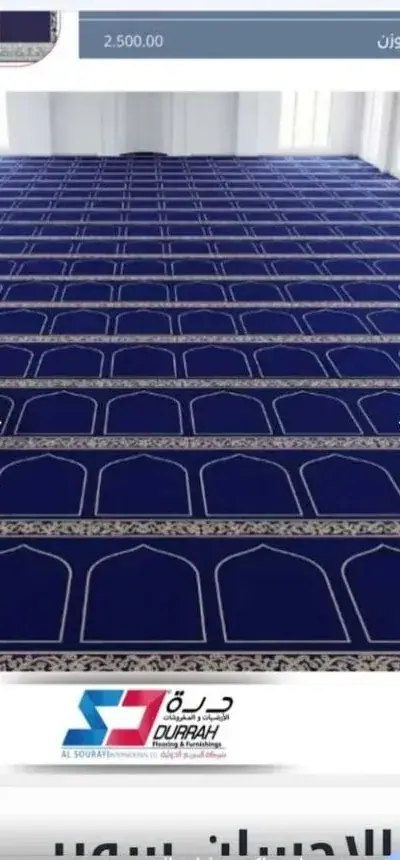
A marked place for every worshipper in large congregations.

Calm, and easier to cut around columns.
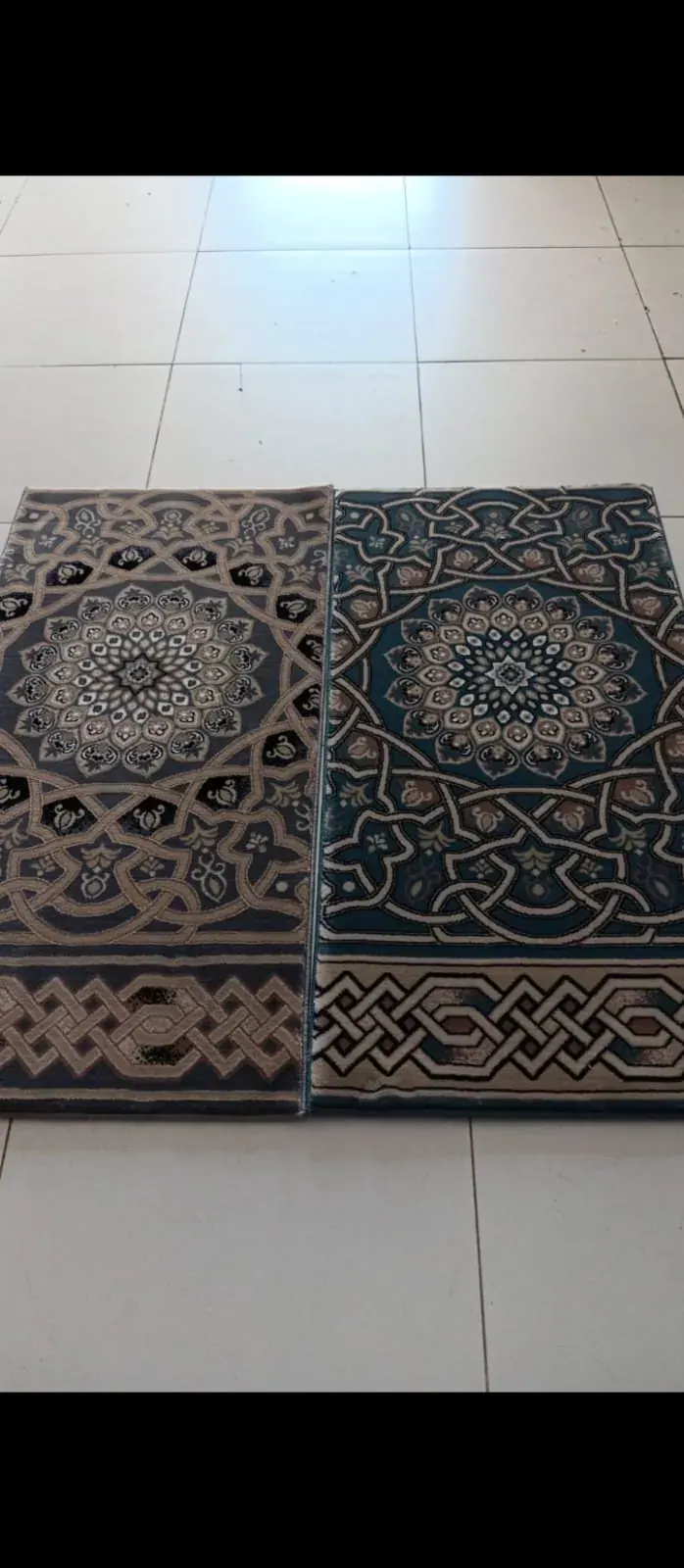
Medallions and stars that disguise daily wear.
A mosque is a public building where crowds gather, so ask any supplier how a carpet behaves in a fire before signing. Don’t settle for general reassurance: request documents and review them with the building’s consultant or the relevant authority.
A mosque cannot close for days, so we work in phases — often starting after Isha and working through the night, or laying one section between Dhuhr and Asr while the rest of the hall stays in use. Each phase is agreed with the imam or mosque administrator.
On renovations we lift the old carpet, scrape off adhesive and clean the screed. Any lump left underneath eventually shows through as a ridge, so if the floor needs levelling we say so before starting.

Most mosques use rolls, but tiles suit some prayer rooms.
It depends on floor area, the number of columns and whether old carpet must come up first. After the survey we give an expected duration and split the job into night-time or between-prayer phases, agreed with the mosque administration, so congregational prayer carries on.
We confirm the qibla on site and use the qibla wall as reference when it is square to it. A string line sets the front row and every other row runs parallel. If the building is off-angle, we explain the options to the committee and agree an approach before cutting.
Yes. The mihrab niche can take its own piece in a matching design, or the front row can run into it, depending on its depth. Around the minbar we cut tight to the outline and secure the edges so they never lift. We settle the method on site.
For moderate daily use, polypropylene or nylon is usually the practical pick, as both clean easily and resist stains. If the room sits on a raised access floor, modular tiles may suit better. We bring samples of each and leave the decision with you.
We can. The scope may include lifting old carpet, removing adhesive and cleaning the floor before laying, and the quotation lists exactly what is included. If the floor turns out to need levelling, we tell you before going ahead so there are no surprises.
Fire performance varies by product, so we make no blanket claims. Ask any supplier for the flammability test report of the specific product and the standard behind it, and check what your consultant or the relevant authority requires. We help gather the documentation available for your chosen product.
Regular vacuuming with a powerful machine, plus entrance mats to stop sand reaching the hall. Blot spills instead of rubbing, and book deep cleans on a cycle, especially before Ramadan and Eid. Let the carpet dry fully before worshippers return.
Yes. Site visits inside Riyadh are free, and we bring samples so you see colours under the hall’s own lighting, which often differs from a showroom. Book by phone or WhatsApp — we take enquiries every day, 7 AM to 10 PM.


Send the mosque’s location and rough size, and we will book a free visit with samples. Curious who we are? Read about Tiraz Najd.
Choosing colour and pattern for a prayer hall
A practical guide to mosque carpet care in Riyadh: vacuuming, dust, humidity, stains and when to replace.
Set up a home prayer room with a clean, comfortable floor: prayer-line carpet or rugs, direction, sizes, cleaning,…
Estimate mosque or prayer room carpet area (length × width) with waste, plan prayer rows, handle the mihrab and…
How to remove tea, coffee, grease and ink stains from carpet and rugs safely: practical steps, mistakes to avoid…
Anti-slip, water-resistant floors for mosque facilities.
Flooring for Quran memorisation centres in Riyadh: comfortable carpet for halaqa floor seating, prayer-line rows, sound softening, easy…
A guide to furnishing a mosque in Riyadh for donors and mosque committees: measuring the hall, choosing carpet and colours, avoiding…
