
Zone the space
A rest house rarely needs turf everywhere. We usually focus it around seating and in front of the tent or majlis, leaving paths and parking in paving or gravel.
We replace tired natural lawns and bare soil with natural-looking artificial grass in villa gardens and istirahas, finished neatly around palms, planters and paths. Free visit with samples anywhere in Riyadh, then a quote by phone or WhatsApp.


Our artificial grass Riyadh page explains the basics; villa owners then ask how their own garden will look. A natural lawn in a Riyadh summer needs daily watering, feeding and mowing, yet still ends up scorched in the sun and muddy by the sprinklers.
Artificial grass frees your irrigation for trees, palms and beds, and gives an even green surface in front of the majlis and around the seating. A great result comes down to detail: where the turf stops, how it meets the path, and what happens around every palm trunk.

These steps are specific to converting an existing garden, before the usual compaction and laying.
Sprinklers go off a few days before, then the old lawn comes up roots and all, so nothing regrows under the new turf.
Sprinkler heads in the turf area are capped; drip lines to trees and beds stay, rerouted where needed.
Soil in newer villas often hides building debris and stones, which we remove so no bumps show through later.
Path and bed edging is set first and becomes the reference for ground level and trimming.
Open lawn is easy; the edges are what separate a tidy garden from one that looks rushed.
We never butt turf against a palm or tree trunk. A ring of gravel or decorative stone lets irrigation reach the roots and keeps the trunk easy to inspect and clean. Strong surface roots can lift the ground over time, so we keep the edge back a little.

Irrigated bed soil stays damp and washes out, so a block kerb or a sturdy metal or plastic strip separates it from the grass and keeps mud off the turf edge.
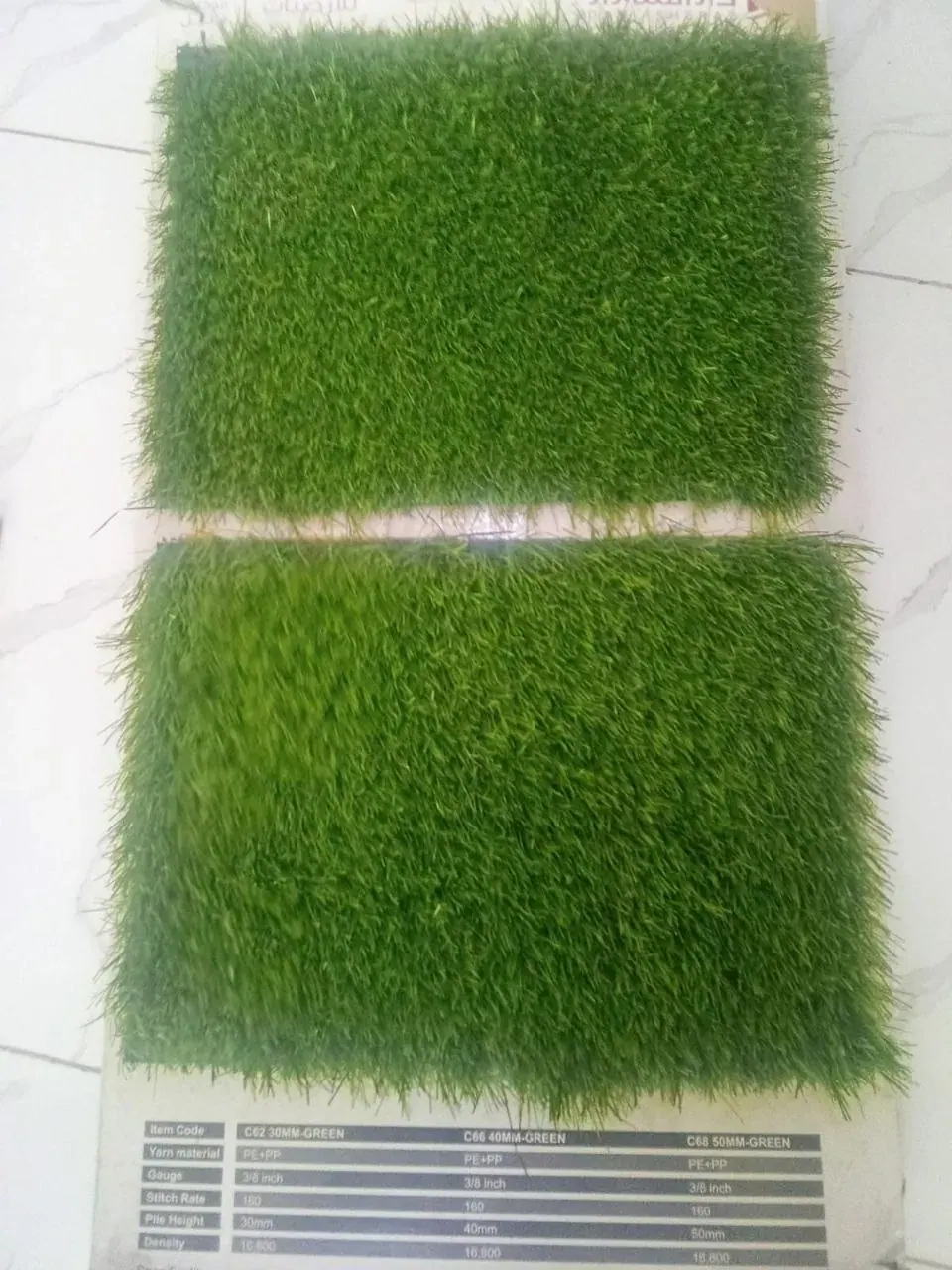
The best junction sits the turf slightly proud of the path, tight to the edge with no gap. Stepping stones can also be set into the lawn as a walkway, with turf cut precisely around each one.

Splash water and pool chemicals call for fast drainage and a well-perforated backing, and we keep a tiled strip right at the pool edge for safe walking.
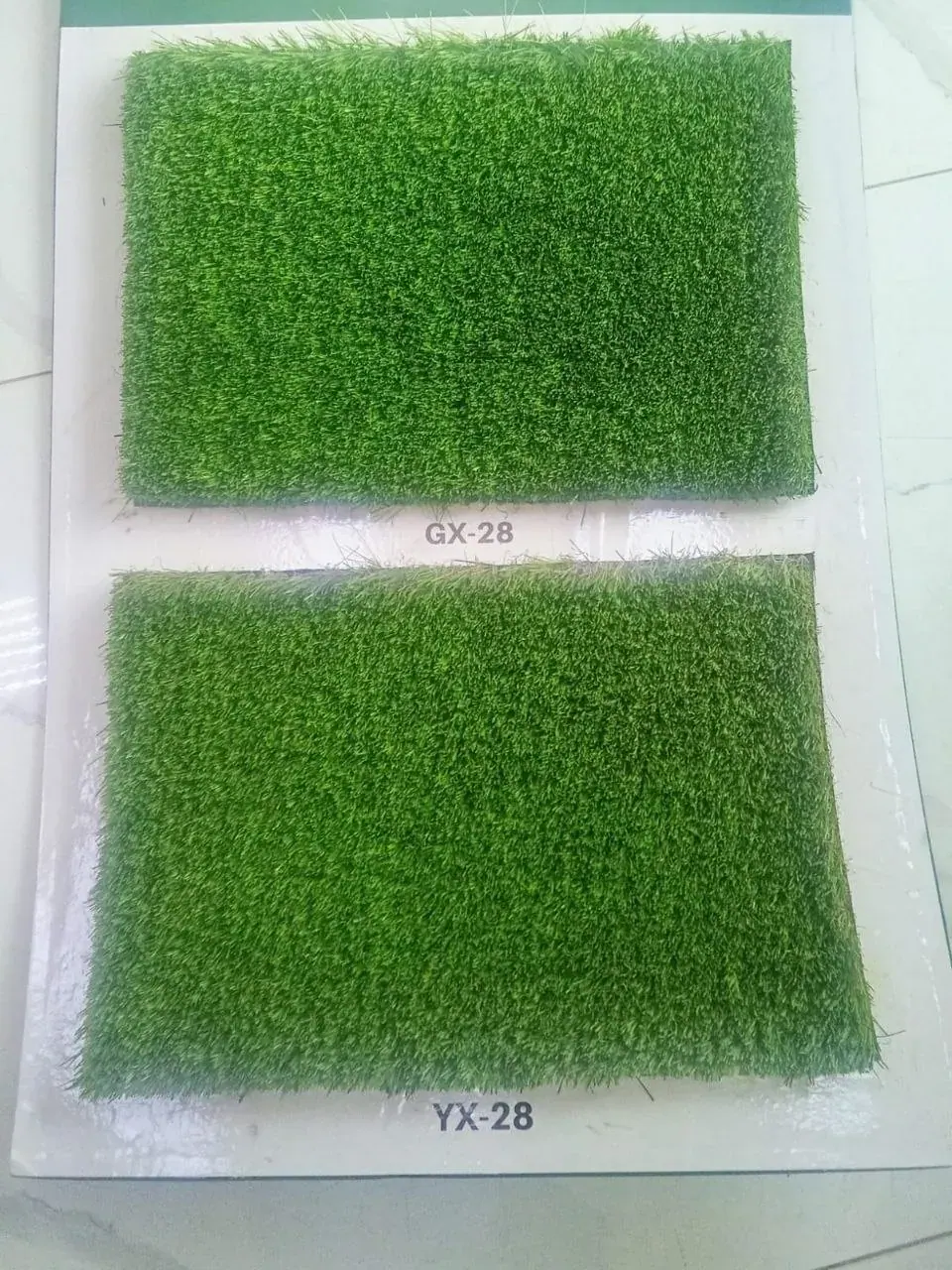
| Approx. pile | What matters | |
|---|---|---|
| Front display lawn | About 35–40 mm | Full look, multi-tone colour |
| Family play and seating lawn | About 30–35 mm | Good density, blades that spring back |
| Outdoor majlis area | Around 30 mm | Copes with seating and rugs on top |
| Busy walkway | Shorter than the rest | Won’t flatten fast, easy to sweep |
| Pet area | Short to medium | Fast-draining backing, easy rinsing |
Two heights can share a garden if a path separates them. For a swing corner see playground grass; for the roof, rooftop grass.
Artificial grass has a grain, and looks darker or lighter depending on the viewing angle. We point the pile towards where the garden is seen most — the majlis window or main seating — so it looks full rather than shiny.
Rolls come in fixed widths, so we plan seams away from the main walking line and bond them so they disappear. For colour, a mix of olive and lighter greens with short brown thatch reads as a real lawn in Riyadh’s strong light.

A rest house rarely needs turf everywhere. We usually focus it around seating and in front of the tent or majlis, leaving paths and parking in paving or gravel.
Weekend and family-event use is intense, so we suggest higher density where people sit, and rugs over the grass for large occasions.
A rest house may sit closed for weeks. Turf doesn’t mind missed watering, but built-up dust needs a rinse and brush before use.
We plan routes for lighting and speaker cables before laying, so the turf never has to be cut open later.
Enter the garden’s length and width, roughly minus beds and paths. We work out seams and roll direction precisely on site.
We advise against it. The old lawn rots underneath, leaving dips and smells, and its roots can push up through seams. We lift it roots and all, remove weak topsoil and build a fresh compacted base. It is extra work up front but keeps the garden looking right for years.
Sprinkler heads inside the turf area are capped because that water is no longer needed, while drip lines to trees and beds stay. Overspray of mineral-rich water onto the grass can leave white marks over time, so we angle the bed sprinklers away from it.
We leave an open ring of gravel or decorative stone around each trunk so water reaches the roots and the trunk is easy to clean and care for. Gluing turf tight to the trunk traps moisture and blocks the irrigation zone, and shallow roots can lift the edge over time.
Flat, uniform bright green does look artificial, but multi-tone turf with short brown thatch looks very natural from a few steps away. Correct pile direction, carefully bonded seams and clean edges at the paths help too — which is why we lay samples on your ground in daylight.
Yes. Seating and outdoor rugs can sit on the turf; just lift rugs after events so moisture and dust aren’t trapped beneath. Heavy fixed seating is better on its own paved pad or flat bases. For the indoor side, see our majlis rugs.
It depends on area, soil, rubble, and the number of beds and palms. A small garden with good soil may take roughly a day or two; large gardens or rest houses needing excavation and irrigation changes take longer. We give the timing in the quote.
Photos from several angles, rough measurements, whether there is existing lawn or bare soil, and where the palms, beds and sprinklers are. Then we book the free visit. To understand what affects cost, read our artificial grass price factors.


Send photos, rough sizes and where the palms and beds are on WhatsApp, and we will bring samples to your garden on a free visit in Riyadh.
Which pile height suits a garden, roof or balcony and how density matters.
Water, upkeep and cost compared
Turning an apartment balcony green
Flooring ideas for rest houses and chalets, from majlis rooms to pool-side areas.
Artificial grass around pools: drainage, feel and cleaning.
How to prepare the ground for artificial grass in Riyadh: levelling, compaction, base layers and drainage for gardens, roofs and balconies.
Does artificial grass get hot in Riyadh summers?
Is artificial grass right for cats and dogs in Riyadh?
Ideas and installation methods for artificial grass wall cladding.
Artificial grass for restaurant and cafe terraces.
Which floor suits gardens, roofs, balconies and rest houses in Riyadh? We compare options and cover sun, drainage,…
Practical ideas for an artificial grass garden in Riyadh: paths, seating areas, pergolas,…
Green shades, blade shape, density and thatch layers explained
How to judge artificial grass quality in Riyadh: density, yarn shape and material, backing, drainage and colour stability. Ask the right…
How artificial grass rolls are joined without a visible seam: pile direction, seaming tape, adhesive and edge fixing in Riyadh heat. Free inspection…
Why artificial grass can smell and how to stop it: drainage, pet urine, food residue and damp roofs. A practical guide from Tiraz Najd in Riyadh.