
Natural light
A hall with large windows and daylight all day shows colour differently from a hall lit only by lamps. We look at the hall at the hours it is actually used.
Colour and pattern decide how a prayer hall feels and how it ages. A good choice keeps worshippers calm, makes the rows easy to follow, hides daily wear and cleans without fuss. Here is how we think it through with mosque committees in Riyadh.


Colour is only one part of the decision. We ask about the following first, because they change which options make sense.
A hall with large windows and daylight all day shows colour differently from a hall lit only by lamps. We look at the hall at the hours it is actually used.
The carpet should sit comfortably with the walls, the mihrab, the columns and the lighting rather than compete with them.
Entrances and the front rows wear faster. Mid tones and a subtle texture hide this better than a very pale or very dark flat colour.
A colour that shows every mark means more cleaning and more complaints. Tell us how often the hall is vacuumed and by whom.
Prayer lines help worshippers stand straight and fill rows evenly. Line spacing and width should match the hall layout.
A balanced pattern in a practical colour usually serves longer than a bold design that looks tired in two seasons.
Mosque committees in Riyadh often ask for the same few families of colour. The notes below describe how each tends to behave in a hall. They are guidance rather than a rule, and we confirm the final shade against a physical sample.
Blues and blue-greens are popular because they feel calm and pair well with white or cream walls. Mid blues hide dust better than pale blues. Teal gives a slightly warmer, more distinctive look but is best judged in the hall itself under its own lighting.
Green is widely associated with mosques and suits halls with warm wood or beige walls. Very bright greens can feel loud over a large area, so softer or deeper tones are usually easier to live with.
Deep reds give a formal, traditional feeling and hide marks well. In a large hall they can feel heavy if the walls are also dark, so we look at the balance with lighting and ceiling height.
Neutral shades brighten the hall and suit modern interiors, yet they show wear and spills faster. If you choose a neutral, a subtle pattern or fleck helps a great deal.
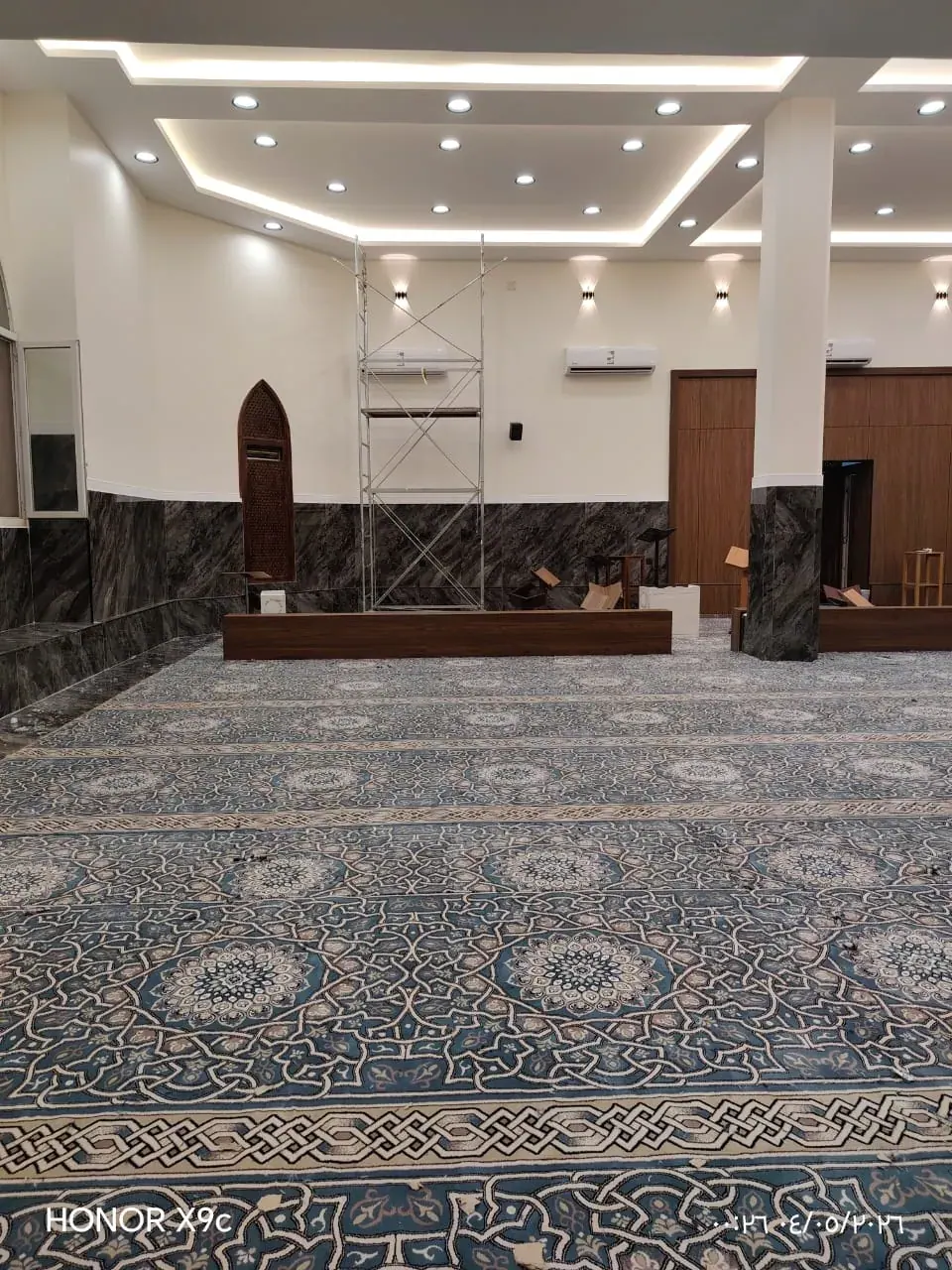
The first image below is from our work; the others are design concept visuals made to help compare colour direction, not photographs of finished mosques.

A cooler, calm look that suits white walls and soft lighting.

A formal, traditional feeling that works best with generous light.

A balanced choice many committees feel comfortable with.
Send the hall dimensions and a few photos, and we will suggest colour and pattern options.
Pattern matters as much as colour. A pattern that is too busy tires the eye during long prayers, while a flat surface with no guidance makes rows uneven.
Lines marked across the carpet guide each worshipper to a place. The width of a place and the spacing between lines should follow the layout you actually use, which is why we measure the hall before ordering. A mihrab-shaped or arch-style motif can be used at the front, but we avoid decoration that distracts from the direction of prayer.
A simple border can frame the hall and hide small cutting irregularities near the walls. Large plain fields look clean but need a texture to avoid showing every footmark.
A short, dense pile is easier to vacuum and keeps its shape under constant standing and prostration. Deep, soft piles feel luxurious but flatten and trap dust. We explain the trade-off when we show samples.
Carpet absorbs sound, which helps with echo in large halls. A good underlay adds comfort for worshippers who pray for long periods. We do not promise a specific noise reduction because it depends on the hall.
| Usually suitable for | Note | |
|---|---|---|
| Mid blue | Most prayer halls with light walls | Hides dust well and feels calm |
| Teal | Halls wanting a distinctive look | Judge under the hall lighting |
| Green | Halls with warm or wooden tones | Prefer softer or deeper shades |
| Deep red | Formal, traditional halls | Check balance with dark walls |
| Beige or sand | Bright modern interiors | Shows wear faster, choose a textured fleck |
These points are easy to overlook when you are looking at a sample but they affect satisfaction later.
Always view a sample in the hall at the hours it is used. Colour on a screen or in a showroom can differ.
We mention that the venue or authority may have requirements for materials, and we ask you to confirm them before ordering.
If you may need spare lengths later, keep the supplier record and ask about availability, since ranges change.
Ask us for simple care advice suited to the chosen pile and colour, including what to avoid.
We visit or review photos of the hall, note the lighting, walls and the layout of rows.
We show a short list of colours and patterns with physical samples.
You compare samples in the hall and confirm the choice with the committee.
We take final measurements, agree the line layout and confirm availability.
We prepare the floor, lay the carpet and finish edges and lines carefully.
We do not publish fixed prices because they depend on the factors below, and we prefer to quote after seeing the hall.
Our page on mosque carpet prices explains how we quote, and the installation page describes the work on site.
Agree on two or three priorities before looking at samples, such as ease of cleaning, calm appearance and budget. Ask a few regular worshippers to look at samples under the hall lights. Avoid choosing from a small swatch alone, and ask to see a larger piece laid on the floor if possible. Keep a photo of the final choice with the supplier details for future reference.
Enter the hall length and width to estimate the carpet area. The figure is approximate and we confirm it with a site measurement.
There is no single best colour. Mid blues and greens are common and hide dust well, while neutrals brighten the hall but show wear faster. We choose with you after looking at lighting and walls.
They are not required, but most halls prefer them because they guide rows and fill the space evenly. We set the spacing from your hall layout.
A subtle pattern or texture hides marks better than a flat plain colour. A very busy design can distract, so we recommend a balanced pattern.
Yes. Lighter shades reflect more light while darker shades make the hall feel more enclosed. We look at windows and lamps before suggesting a shade.
Yes. We recommend viewing a physical sample in the hall at prayer times, because the colour can look different from a screen or a showroom.
A short, dense pile is usually easier to vacuum and keeps its shape under constant use. We explain the options when we show samples.
We try, but exact matches depend on availability and on how the old carpet has aged. We discuss the options and may suggest a clean separation instead.
We do not publish fixed prices because they depend on the hall area, the carpet and the work needed. Contact us with the hall details for a quote.
Carpet absorbs some sound and can reduce echo, but the effect depends on the hall. We do not promise a particular result.
Send the hall dimensions and photos by WhatsApp or call us. We will arrange a visit or suggest sample options.

Prayer carpets with row lines for mosques and prayer rooms
Pricing factors for prayer carpets
Aligning row lines, cutting and fixing
Replacing old carpet in an orderly way
Carpets for prayer rooms in offices and complexes
How to read carpet specifications
Flooring for Quran memorisation centres in Riyadh: comfortable carpet for halaqa floor seating, prayer-line rows, sound softening, easy…
Protecting your floor from Riyadh sun
Contact us on WhatsApp or by phone with the hall details and we will reply with options.