
Fibre
Wool, natural silk, viscose and modern synthetic yarns each feel different, wear differently and need different care. Pick the fibre for how the rug will be used, not only for its shine.
A luxury rug is a decision you live with for years, so we start from the room rather than the catalogue: how it is used, the furniture, the light and how many people walk across it every day. Send us a photo and the measurements on WhatsApp and we will suggest suitable materials and designs inside Riyadh.
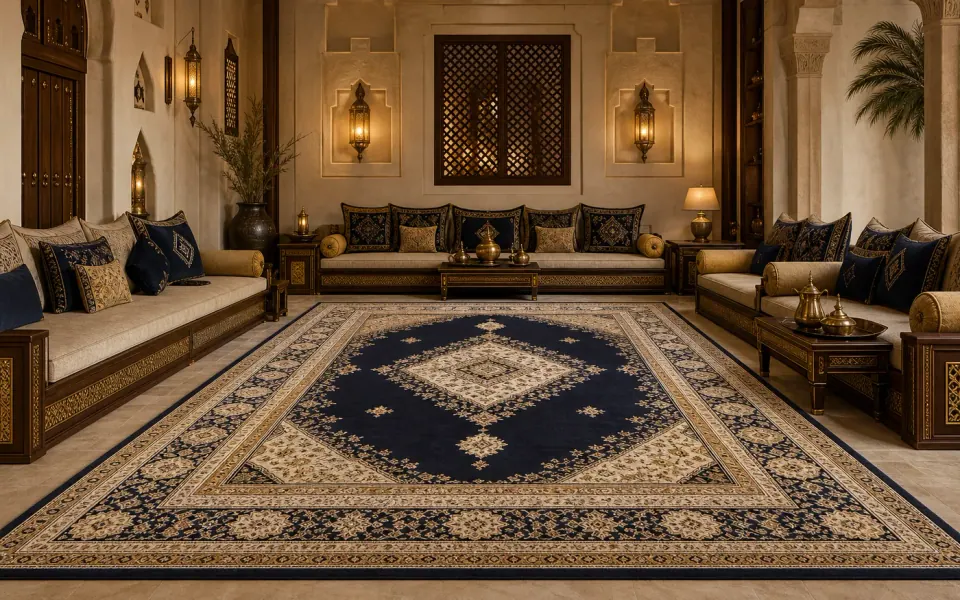
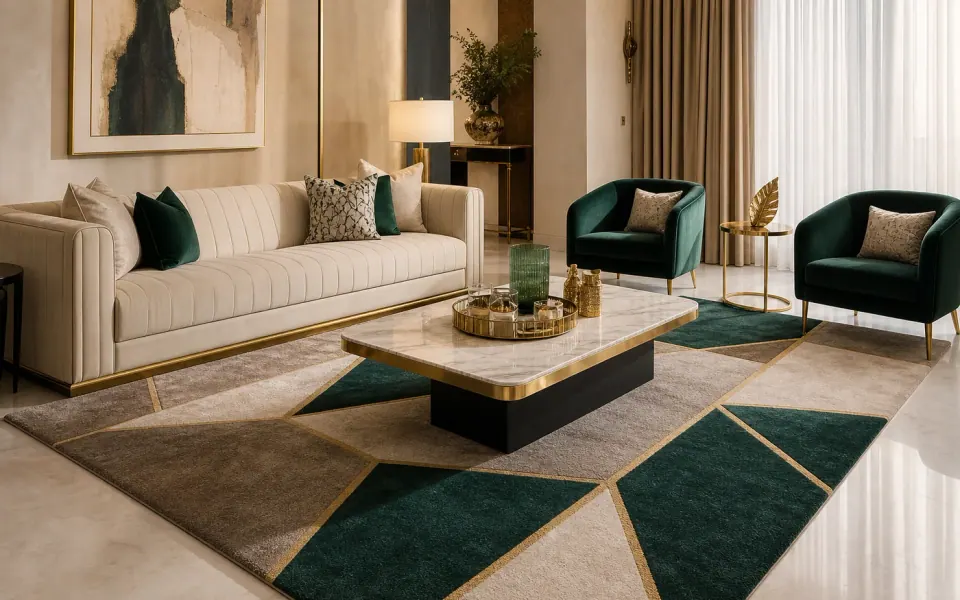
Luxury is not only the price tag or the country of origin. These are the six points we go through with every customer before they commit, and they apply equally to majlis rugs, living-room rugs and reception rugs.
Wool, natural silk, viscose and modern synthetic yarns each feel different, wear differently and need different care. Pick the fibre for how the rug will be used, not only for its shine.
The closer the knots or stitches sit, the sharper the pattern stays and the longer the rug resists foot traffic and pressure. Turn the rug over and look at the back before you decide.
Good dyeing holds its shades through cleaning and strong light. Ask how well the colours resist fading and test the sample near a window before you commit.
A classic medallion with borders suits an Arabic majlis, while a geometric or abstract design suits a modern lounge. The pattern should balance the furniture, not compete with it.
Well-bound edges and secure ends mean a rug that survives cleaning and dragging. We check corners and ends because they are the first place a weak rug fails.
A beautiful rug in the wrong size loses its effect. We measure the space and decide whether the rug should cover the whole seating area or float in the middle of the room.
The first question we ask anyone looking for a high-end rug is where it will lie and how often people will walk on it. A majlis that receives guests every day needs a fibre that tolerates traffic, while a private sitting room allows a finer, shinier material.
Wool is the traditional choice, known for its resilience and its ability to spring back after pressure, which is why it suits busy rooms. It feels warm underfoot and copes with regular cleaning when you follow the maker’s instructions. Its weak points are moisture and long exposure to direct sun.
Natural silk gives a distinct sheen and very fine pattern detail, but it is delicate and is usually placed in low-traffic rooms or hung as a feature piece. Viscose, often called artificial silk, gives a similar lustre at a lower cost, yet it reacts to water and stains more than other fibres, so we do not recommend it for children’s rooms or open hospitality areas without protection.
Polypropylene, polyester and similar yarns are practical for crowded living rooms and resist stains and cleaning better than delicate fibres. Some rugs blend two materials to balance shine and durability. During the visit we explain which option fits your home, and you can read more in our rug materials guide.
| Fibre | Feel and look | Care | Best for |
|---|---|---|---|
| Wool | Warm and soft with a natural, low-sheen look | Regular vacuuming; avoid moisture and long direct sun | Majlis and living rooms with heavy use |
| Natural silk | Clear sheen and very fine pattern detail | Delicate; needs specialist cleaning and protection from friction | Low-traffic rooms or display pieces |
| Viscose | Silk-like lustre with a smooth feel | Reacts to water and stains, so clean with care | Private sitting rooms away from children |
| Synthetic yarns | Varied textures and stable modern patterns | Easier to clean and resist stains reasonably well | Busy lounges, offices and children’s rooms |
Photograph the majlis or living room and send the measurements on WhatsApp. We will arrange a visit in Riyadh and suggest a material and design.
Most regrets after buying have nothing to do with the quality of the rug itself. They come from rushed decisions, and these are the mistakes we help customers avoid.
You fall for a rug in a photo, then find it is smaller than the seating area and looks like a small island, or so large that it touches the walls and catches the doors. Measuring first saves returns and disagreements.
A colour in a showroom or on a phone screen looks different under the lights of your home. South-facing rooms make pale colours brighter, and warm evening lighting shifts blues and greens. Ask for a sample or a close-up photo and try it in place.
A luxury rug on a rough or uneven floor wears faster and creeps. If your floor is old, look at floor preparation and levelling, then add a suitable rug pad.
A crowded pattern is not always the finer one. A rug with fewer colours and a dense weave can look more elegant and last longer. Choose what suits your taste and furniture rather than counting details.
A guest majlis, a family lounge or an office? Daily use decides the fibre and density.
We measure the seating area and the furniture layout so the rug at least reaches under the front legs.
We look at wall, curtain and furniture colours and suggest a rug that complements them.
View the sample in your own light, because colour shifts between day and night.
We arrange the rug, suggest a suitable rug pad and send you care tips.
Vacuum steadily with moderate suction and avoid hard rotating brushes on silk and viscose. Move the furniture from time to time so wear does not settle in one spot.
Long exposure to sunlight fades colour. Use light curtains or turn the rug occasionally so exposure is shared.
A non-slip pad protects the rug from friction, stops it creeping and makes vacuuming easier. See our rug pad guide.
Blot liquids, never rub, and test any cleaner on a hidden corner first. More in our carpet stain removal guide.
We choose a rug according to what the room does. These are the places where customers in Riyadh most often ask for a higher grade of rug.
A large rug with a classic pattern covering the seating area. See Arabic majlis flooring.
A modern design in calm colours unifies the furniture and settles the room.
A rug large enough for the chairs even when pulled out, in a fibre that tolerates food and traffic.
A soft runner beside the bed or a large rug beneath it for warmth in the morning.
Rugs for managers’ rooms and guest meetings, covered in executive office rugs.
Formal rugs in entrances and lounges make a strong first impression.
Look at the fibre, weave density, colour fastness and edge quality, not just the look. Ask the seller to explain the material, and turn the rug over to see whether the pattern is clear and even on the back.
It can be, with the right fibre. Wool and synthetic yarns cope better than silk and viscose around children, and a colour and pattern that hide small marks together with a good rug pad help a lot.
It depends on the seating layout. As a general rule the rug should cover the seating area so at least the front legs of the furniture rest on it. We measure on site and recommend a size.
Usually yes. A pad stops slipping, reduces friction between rug and floor and makes walking more comfortable, especially on smooth floors such as tile and parquet.
Any rug can be affected by direct sun over time. Curtains and turning the rug occasionally help. Ask about light fastness of the dye when choosing.
We handle special requests depending on availability; see custom rugs in Riyadh. Send the size and design you want and we will tell you the options.
Call us or message on WhatsApp with a photo of the room, the measurements and any preferred material. We reply with options and a quote after a visit or review.
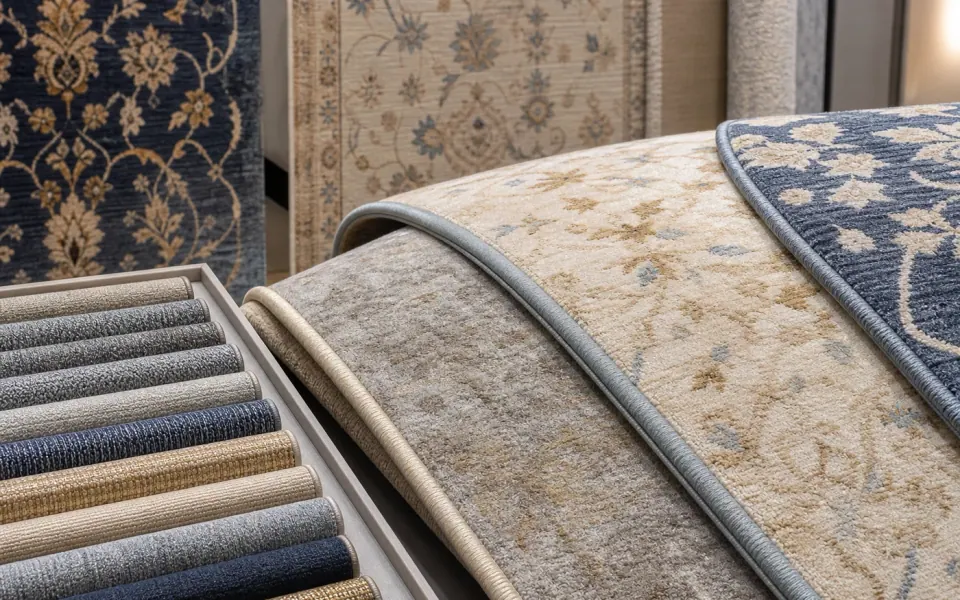

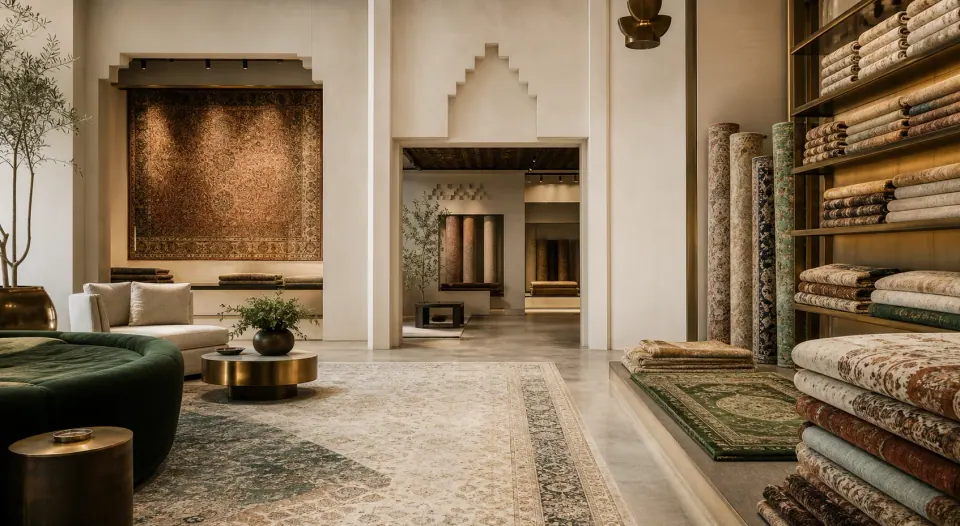
Before comparing prices, understand how the rug was made: hand-knotted, power-loomed or tufted onto a backing.
Call or message us on WhatsApp with a photo and the measurements and we will arrange a visit inside Riyadh.
How to choose a rug size by room and furniture.
Wool, silk and synthetic fibres compared.
Where to place a rug relative to sofas and tables.
Choosing a rug that copes with chairs and food.
When a round shape works in a room.
Deep-pile rugs for lounges and bedrooms.