
Do not oversize
A rug that disappears fully under the sofas is paying for area nobody sees. Front legs resting on the edge is usually enough.
Two rugs of the same size can be far apart in price, usually because of material, density, pattern and finishing rather than the label. Here is what drives the cost, so you can ask for the right size and grade.
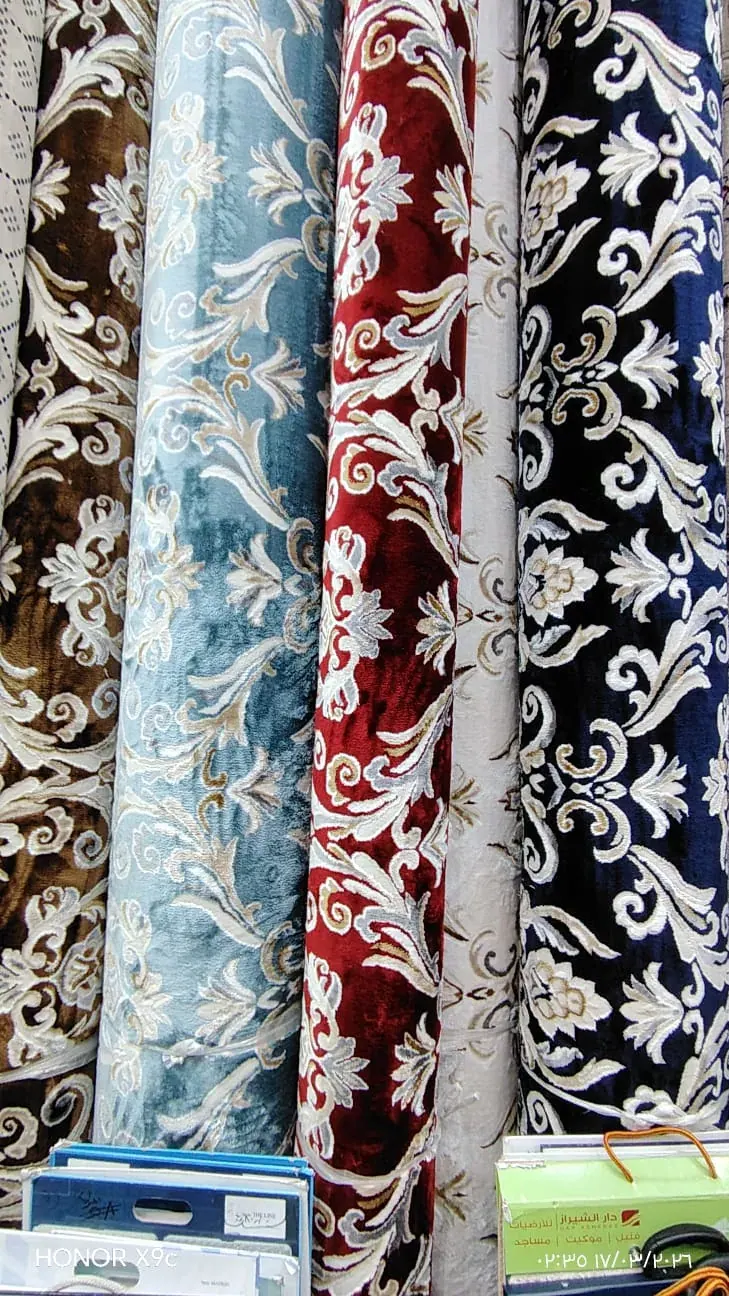
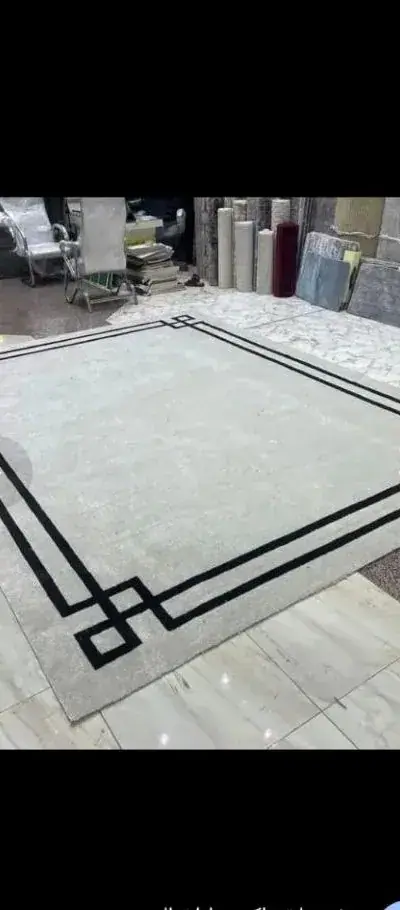
A rug’s price comes from three things: how much material it holds and of what kind, how finely it is woven, and the work added afterwards, from edging to delivery. Size multiplies the first two.
So before asking “how much is this rug?”, settle the right size for your room and the grade it actually needs. Those two decisions explain most of the gap between quotes.
Polypropylene is the workhorse of machine-woven rugs: practical, stain-resistant and usually at the budget-to-mid end. Polyester feels soft and holds bright colour. Viscose has a silk-like sheen but marks easily with water and wear. Wool generally sits at the top, a resilient natural fibre that recovers its shape and ages well with care.
Turn the rug over. The smaller and tighter the points on the back, the denser the weave, the crisper the pattern and the better it resists crushing. More yarn per metre feeds straight into the price.
A long-pile shaggy rug uses far more yarn than a short flat weave, and weight is a quick proxy for material. Lift a corner of each rug you are comparing; the heavier one usually holds more, as long as the fibre is the same.
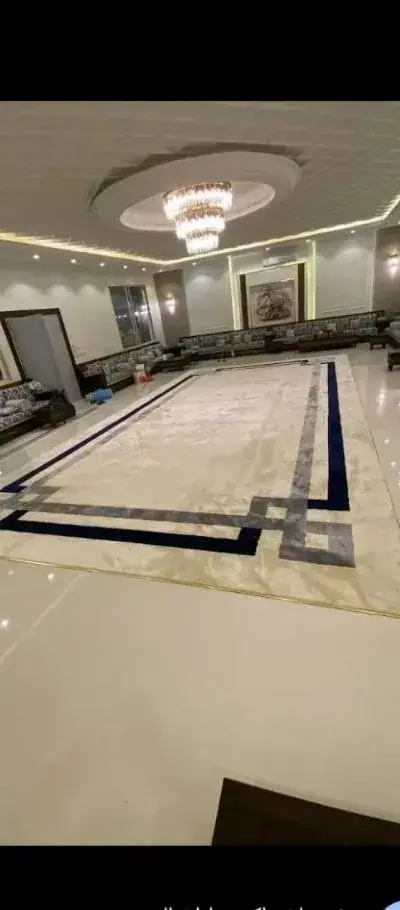
A 2 × 3 m rug is 6 m²; a 3 × 4 m rug is 12 m², double the material although each side grew by only a metre. For a 7 × 5 m majlis with a 60 cm margin all round, the rug is 5.8 × 3.8 m = 22.04 m². Doing this sum first stops you buying too big or too small.
Large medallions, double borders and fine heritage motifs need more colours and a tighter weave than plain or simple geometric designs. That is why classic majlis rugs usually sit at a different level from calmer modern rugs.
A made-to-measure rug is cut to size and then finished with a bound tape, an overlocked edge or fringes. Round shapes or an L-shape around a column take longer still. See custom-size rugs for how it works.
Large rugs are heavy, and on marble or porcelain an anti-slip layer underneath is usually advisable. Check whether these are inside the price.
These are the requests we hear most often in Riyadh, and each is priced differently.
Standard sizes are woven in volume and need no cutting or special edging, so they are the easiest to price. They work well in lounges when one of the available sizes happens to fit your sofa layout.
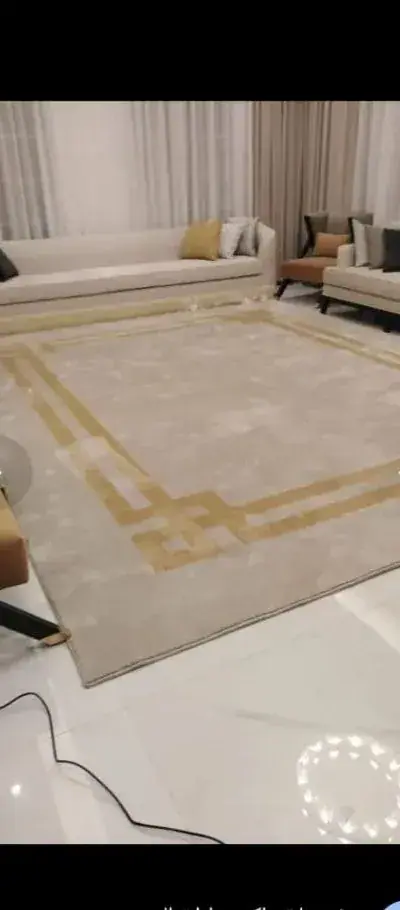
When no stock size fits, the rug is cut from a roll and its edges are finished. That adds handwork to the material cost, but you buy exactly the area you need instead of a larger stock rug tucked under the sofas.

A traditional majlis with seating along the walls often needs one very large rug or two pieces, usually with a border and medallion. The sheer area magnifies material and density, so we measure on site and advise whether one piece or two makes more sense.

Compare each quote with the middle column; anything resembling the last column deserves a written answer.
| Item | Clear wording | Wording to question |
|---|---|---|
| Size | Final length and width after finishing | “Large size” or “to suit the room” |
| Material | Fibre type as on the product label | “Premium material” |
| Density or weight | The figure printed on the rug label | “Heavy rug” |
| Design | Design name or code with a sample photo | “Roughly like the picture” |
| Edges | Type and colour of edge finish | “Finished” |
| Anti-slip underlay | Included or not, cut to rug size | Not mentioned |
| Delivery and laying | Included or priced separately | “We deliver” |
This is a general comparison list; our own quotes spell these items out once we know your size. For aftercare, see carpet and rug care.
A rug that disappears fully under the sofas is paying for area nobody sees. Front legs resting on the edge is usually enough.
The main guest majlis deserves a better fibre; a quiet sitting room can take a mid-range rug with a good design.
Photos look alike; the back and the weight reveal the real difference. Ask for a photo of the reverse side.
In an irregular room, a rug cut to size can be better value than a much larger stock size.
Room length and width and where sofas or floor seating sit, or one photo from a high angle showing the whole floor.
Classic with border and medallion, or calm modern? A photo of sofas and curtains helps us suggest colours.
Marble, parquet or porcelain? Children at home? That sets the fibre and the anti-slip layer.
It depends on size, material, weave density and pattern detail, and on whether the rug is ready-made or cut to measure. Majlis rooms vary so much that a general figure would mislead you. Send the room size and a photo on WhatsApp, or book a free visit in Riyadh, and we will suggest a size and options with a written quote.
Size tells you nothing about the amount of yarn in each metre. Two rugs with identical dimensions can differ in fibre, density, pile height and number of colours. Turn each one over, compare the back and the weight, and ask for the material in writing; most gaps explain themselves.
Cutting and edging add labour, so the rate per metre can be a little higher than a stock rug in the same material. In an irregular room, though, custom often works out better because you buy only the area you need. We compare both once we know your dimensions.
It is when you want a rug that lasts in a room you care about: wool is resilient, recovers its shape and ages gracefully with care. In children’s rooms or spill-prone areas, synthetic fibres may be more practical and easier to clean. The right call depends on where the rug goes.
Measure the room, subtract the bare margin you want on each side, and make sure the seating touches or rests on the rug edge. If you are unsure, send a photo with the dimensions or book a free inspection and we will suggest a size by looking at the space itself.
That varies between quotes, so ask before comparing. Large rugs need careful handling and laying, and usually an anti-slip underlay on marble or porcelain. Our quotes state these items explicitly, line by line, so there are no surprises on delivery day.


A photo with rough dimensions is enough to start; we arrange a free visit in Riyadh if precise measuring is needed. Or contact us by phone.
How to choose rug size for a majlis, living room, bedroom and dining room.
How carpet and rugs differ in installation, use and upkeep.
Hallway and entrance runner rugs: sizes, materials and how to choose.
How to choose the size and shape of a dining room rug.
An inspection and buying guide for Persian-style rugs.
When a long pile suits you and how to look after it.
Rug materials explained for Riyadh: wool, viscose, polypropylene and soft polyester. Differences in durability, feel and cleaning, and…
Size, material and pad
A guide to choosing round and oval rugs for living rooms, dining rooms, bedrooms and entrances in Riyadh: sizes, styling, rug pads and care.…