
Flat weave without pile
Warp and weft interlace to make the pattern itself, so no upright threads stand on the surface as in a thick rug. That is why it is light, thin and holds less dust.
A kilim is a pile-free woven rug where warp and weft threads interlace to form bold geometric patterns on a flat, light surface. At Tiraz Najd we supply kilim rugs in Riyadh in several sizes and materials, and help you choose the size, pattern and way of securing it that suits your space.
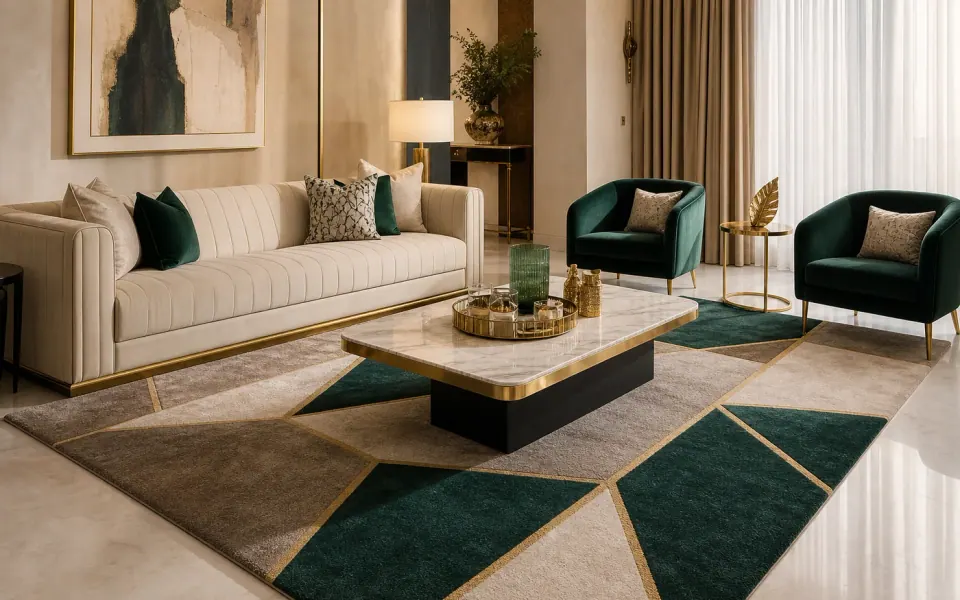
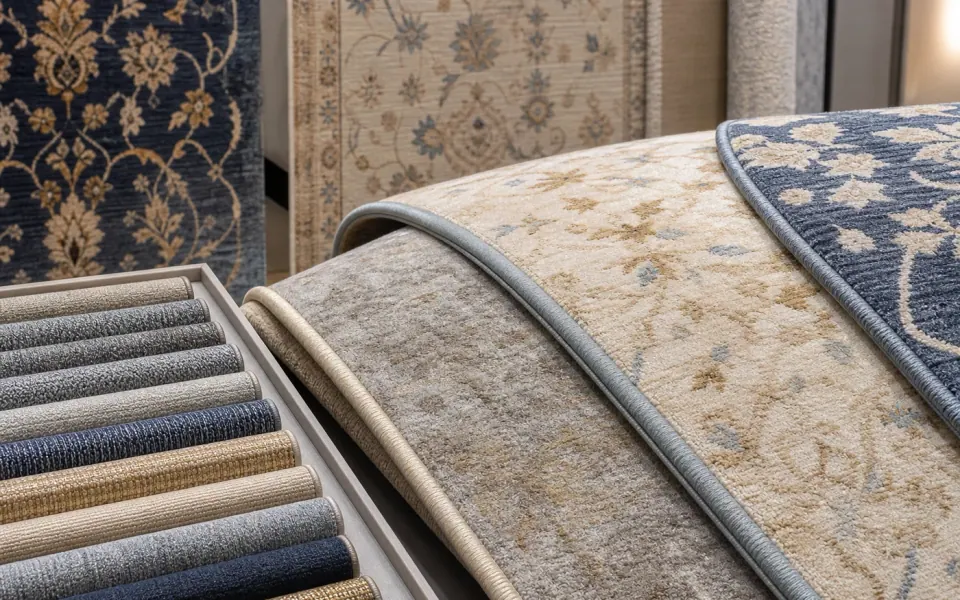
A kilim differs from other carpets and rugs in how it is woven and how it feels, and understanding that helps you place it correctly rather than being surprised by how it behaves after purchase.
Warp and weft interlace to make the pattern itself, so no upright threads stand on the surface as in a thick rug. That is why it is light, thin and holds less dust.
Diamonds, triangles and stepped lines are the traditional language of the kilim, and they look sharp because the colour forms the weave rather than being printed on it. Calm and bold colours are both available.
Many kilims show the pattern on both sides, so you can flip the rug to spread wear. We confirm this product by product because it depends on how the rug is made.
It weighs far less than a thick rug, so it is easy to lift for cleaning or move between rooms, which suits apartments where furniture is sometimes rearranged.
A kilim does not give the softness of a deep pile; it feels like a firm, flexible surface. For a plush cushion to sit on the floor, a pile rug suits better; for a neat, light surface, choose a kilim.
It can be woven in wool, cotton, synthetic fibres or blends, and each material means a different feel, durability and care, which we explain with each sample before you decide.
Choosing a kilim starts from the space, not the pattern. A lovely picture is not enough if the size is too small for the living room or the material does not suit children, so we tie every suggestion to your site.
The general rule is that the rug should be large enough for at least the front legs of the furniture in the seating area, so it does not look like a small island in the floor. In corridors, a long narrow kilim works best. Common sizes are explained in the rug sizes guide.
Wool generally gives a warmer feel and good durability, cotton is lighter and easier to wash in some types, and synthetic fibres are less affected by spills and suit heavy use. The details are in rug materials.
A kilim with small repeating patterns hides dust and marks better than a single pale colour, while large patterns stand out in big rooms. We recommend comparing the sample with the floor, walls and sofa colour in your own lighting before deciding.
Because a kilim is thin and light, it can slide on smooth tile and marble. An anti-slip pad underneath is essential, especially with children and older people; read anti-slip rug pads.
Price varies with material, size, weave quality and source. We do not write a fixed figure here because it changes with the product; visit rug prices in Riyadh to understand the factors and then ask for an itemised quote.
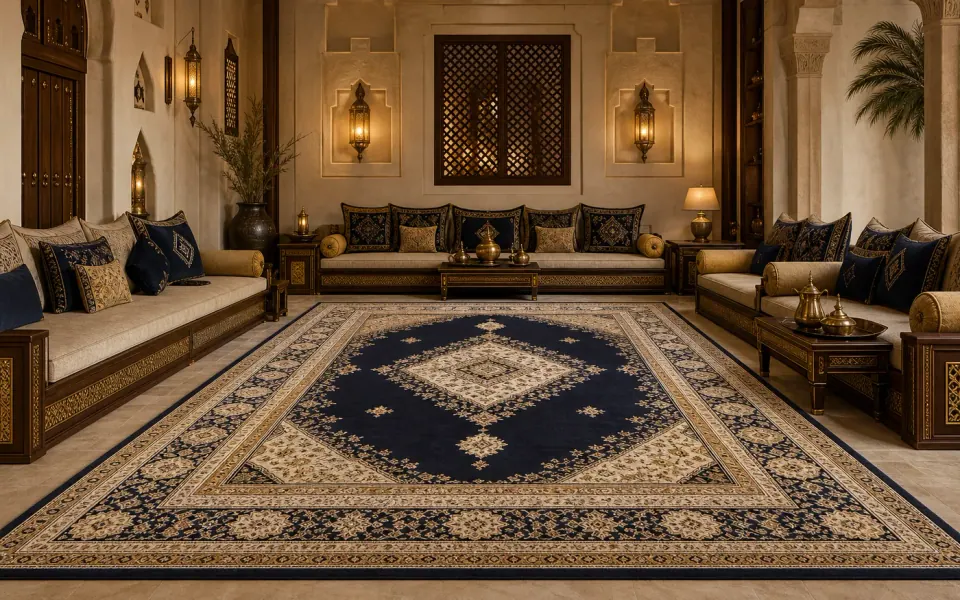
It gives a majlis an elegant heritage feel with easy cleaning, and a size that covers the whole seating area is best.

It suits light floor seating, but anyone sitting for long hours needs a thicker cushion or an underlay beneath.
Geometric patterns blend with simple decor and give the room a colour focal point without weighing it down.
We place a suitable pad under the rug before laying it, to hold it in place and reduce edge friction on the floor.
Vacuum without a strong rotating brush so it does not pull the threads, and lift the rug now and then to clean beneath.
Blot liquid with a clean cloth without rubbing, then treat the mark according to the rug material.
Turn it from time to time so wear and sun exposure are spread over the whole surface.
Long hours of direct sun fade colours; see sunlight fading for the detail.
| Aspect | Flat kilim | Deep-pile rug |
|---|---|---|
| Feel | Flat and firm | Soft and deep |
| Weight | Light | Usually heavier |
| Cleaning | Easy to sweep | Needs a strong vacuum and pile care |
| Sitting on the floor | Less comfortable without a pad | More comfortable |
| Best for | Corridors, living rooms and dining rooms | Majlis, bedrooms and long sitting |
The most common error is a rug smaller than the seating area, so it looks like a separate piece. Measure first, then choose, and see how to measure.
A kilim is thin and can slide and cause a trip, especially on marble and smooth tile. The fix is simple and costs little compared with the risk of a fall.
Heavy furniture can leave a lasting mark in a thin weave, so leave parts of the rug outside heavy legs or use suitable pads.
Kilim colours look different on a screen than on a floor in daylight. Ask to see the sample in your own space before deciding.
Two rugs that look alike can differ in material and weave density, so the lowest price is not always the best value in the long run.
Dust builds up under thin rugs over time, so lift it and clean the floor beneath now and then.
A kilim is flat with no pile, and the pattern forms from the interlacing threads themselves, while an ordinary rug has an upright pile that feels softer and thicker. A kilim is lighter and easier to sweep but less cushioned underfoot.
It suits majlis with raised seating. For long floor seating we recommend adding a soft layer beneath or looking at denser majlis rugs.
Yes it can, because it is light and thin, so we always recommend an anti-slip pad. Details are in anti-slip rug pads.
Vacuum regularly without a strong rotating brush, blot spills at once without rubbing, and follow the material instructions for any deep wash. For more see carpet stain removal.
It depends on the room and furniture layout, but the rule is that the rug covers the seating area so at least the front legs of seats rest on it. See the sizes guide.
It can go under the table if it is big enough for the chairs when pulled out, bearing in mind crumbs are easy to clean. More in dining room rugs.
Any rug is affected by long direct sun, and materials differ in resistance. The best approach is to rotate it from time to time and protect it from direct sun.
Send the rough size of the space, a photo and any preferred material on WhatsApp, and we will suggest the best options and arrange a visit or an itemised quote inside Riyadh.
Send the size of the space and a photo on WhatsApp, and we will suggest the material, size and pattern inside Riyadh.
Long, narrow sizes for corridors.
Protecting and organising the entrance.
Where to put the rug relative to sofa and table.
When a non-rectangular shape suits.
Special sizes for unusual spaces.
Materials and designs for refined majlis.