Durability underfoot
Some fibres cope with daily traffic while others show footprints quickly.
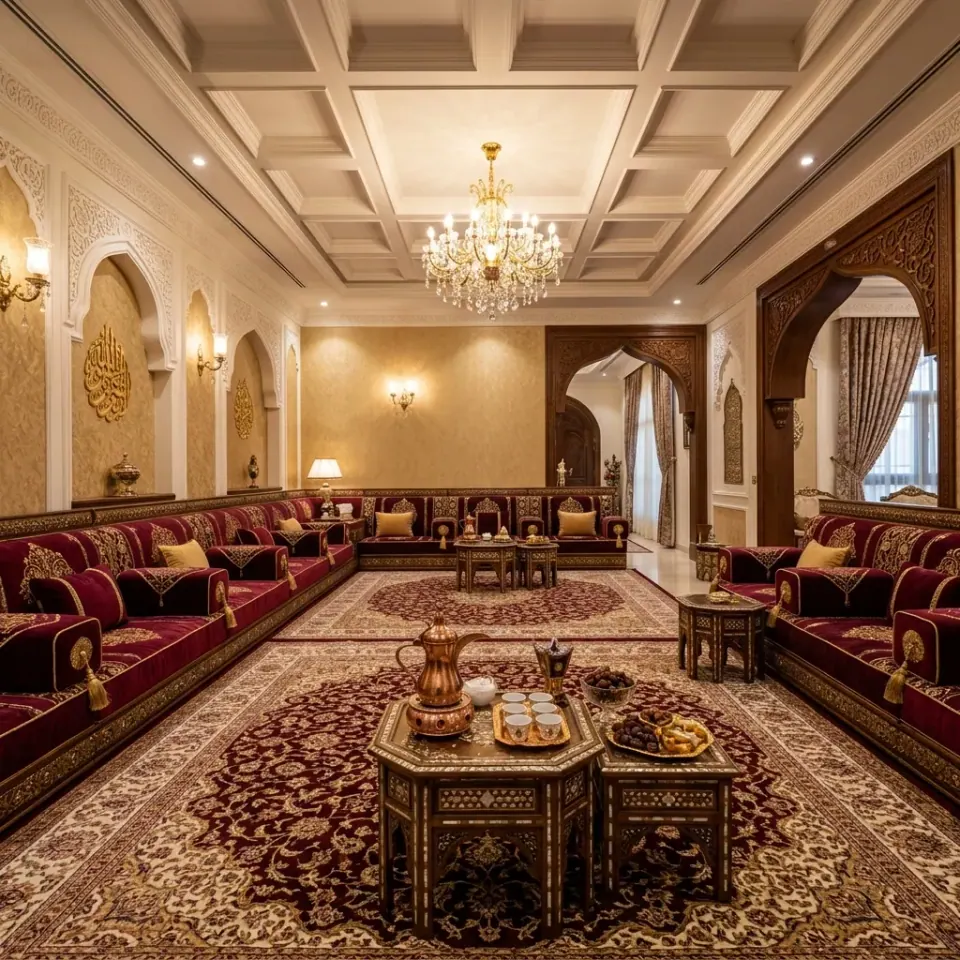
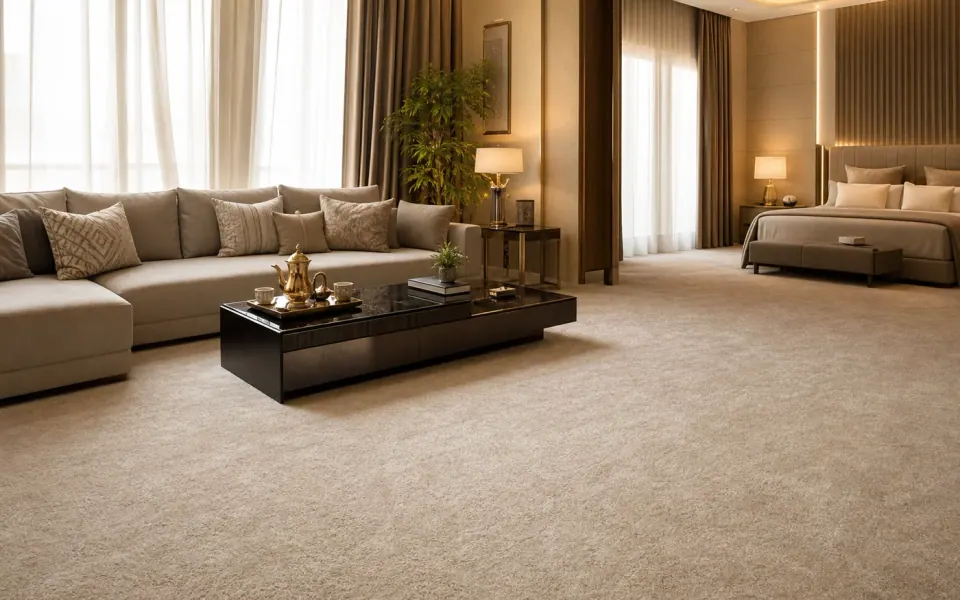
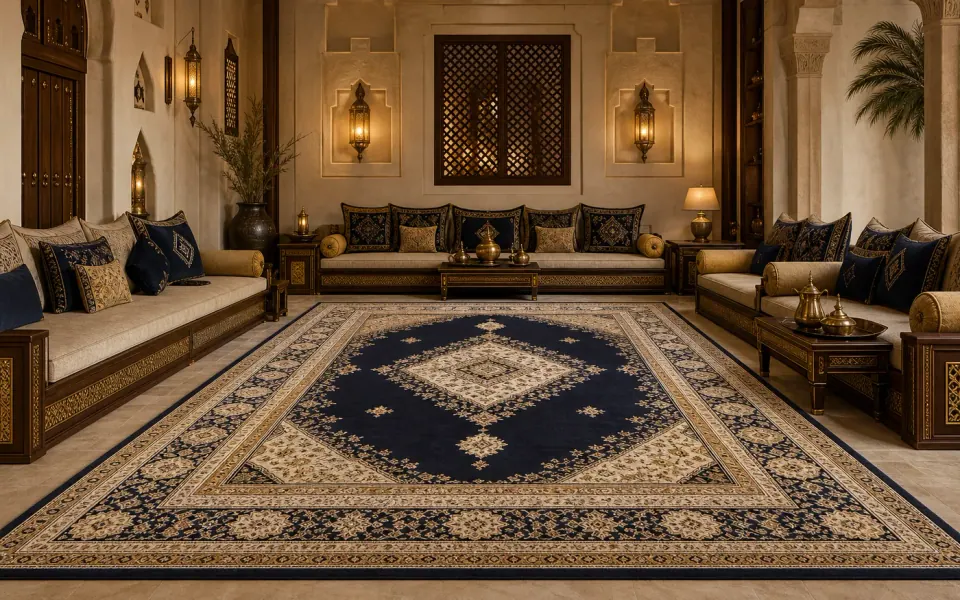
Pattern and colour are the first things you notice in a rug, but the material is what you will live with for years: how it handles walking, children and guests, how it is cleaned, and whether it loses its sheen or sheds fibres. This guide explains common rug materials in plain language and compares wool, viscose, polypropylene and polyester so you can pick what suits your majlis, living room or bedroom. Then we arrange a free visit in Riyadh with real samples.
Two rugs can look alike and perform very differently after the first season of use.
Some fibres cope with daily traffic while others show footprints quickly.
Wool is warm and dense, viscose is glossy and smooth, and polypropylene is slightly coarser.
A new rug may shed some fluff in the first weeks depending on the material and construction.
Some materials take strong vacuuming and deep cleaning, others need a gentler hand with water.
Shorter fibres and flat surfaces are easier to keep clean for households sensitive to dust.
Material is one of the main reasons prices differ, and understanding it stops you paying a lot for what you do not need.
Wool: a warm, durable natural fibre that holds colour well and is used in premium rugs. It is usually the most expensive and needs more careful care, and some fluff in the early weeks is normal.
Viscose (art silk): gives an attractive sheen and a smooth feel and is common in modern rugs. It is sensitive to water and hard rubbing, so it suits lightly used spaces.
Polypropylene: an economical synthetic that hardly absorbs water and resists water-based stains, widely used in machine-made rugs with classic and modern patterns. Good for majlis and living rooms with plenty of guests.
Polyester and soft types (shaggy): very soft with long pile, used in fur-style rugs and cosy rooms. They feel wonderful but need more combing and cleaning.
For common sizes see our rug size guide, and for the difference between rugs and carpet read carpet versus rug.
A general comparison to start with; results vary with yarn quality and weave.
| Wool | Viscose | Polypropylene | Soft polyester | |
|---|---|---|---|---|
| Feel | Warm and dense | Smooth and glossy | Slightly coarser | Very soft with long pile |
| Traffic durability | Very good | Lower with rubbing | Good | Moderate |
| Water resistance | Relatively sensitive | Sensitive | High | Good |
| Care | Careful, with a suitable cleaner | Gentle, no rubbing | Relatively easy | Frequent combing and vacuuming |
| Best for | Premium majlis and living rooms | Rooms with light use | Majlis and guest-heavy living rooms | Bedrooms and cosy seating areas |
A practical starting point before you look at samples.
A tough material for guests and floor seating: wool or polypropylene at good density.
Polypropylene or wool with a pattern that does not show dust quickly.
Soft polyester or viscose because traffic is light and comfort comes first.
An easy-clean, stain-resistant material, with attention to safety and non-slip support.
A flat, low-pile surface that is easy to clear of crumbs, with a grip pad.
A durable short-pile piece that stands up to friction and cleans easily.
We measure the room and furniture positions and settle on the right size instead of guessing.
We learn about household size, children or pets and how often the room is used.
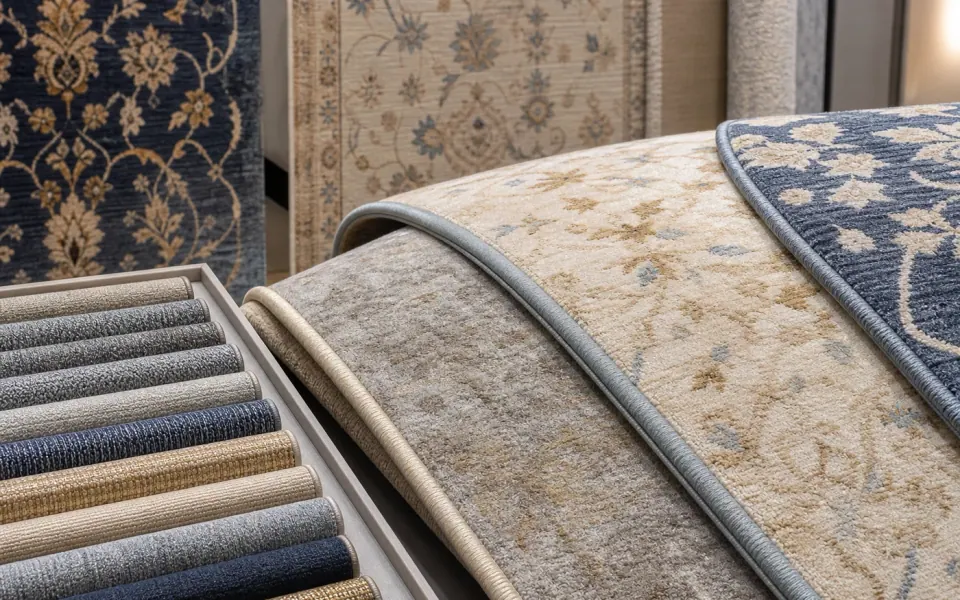
We show samples in different materials and colours so you can see them in your own light.
Where possible the sample is tried in the room to check it against wall and furniture colours.
After agreement we deliver, lay the rug and advise on the right grip pad.
Turn up a corner and look at the back of the weave: closely spaced, even knots indicate good density. Press the pile to see whether it recovers.
Ask for the material name clearly and for the blend ratio if the rug mixes fibres, because it affects how it should be cleaned.
A few cases we often meet during visits in Riyadh.
A dense, tough rug that copes with sitting and standing, with a pattern that does not show crumbs.
An easy-clean, stain-resistant rug with a short pile and a good grip pad.
A soft, thick rug beside the bed gives comfort when stepping out.
A flat, low-pile rug that crumbs shake out of easily and that chairs slide over without catching.
A short-pile runner that can be vacuumed quickly and that handles dust from outside.
A flat rug under a rolling chair, without long pile that catches the wheels.
Colours on a screen differ from reality, so we encourage seeing a real sample.
A small rug looks lost in a room and slides around with the furniture.
A rug without a pad can move and wrinkle and become a tripping hazard.
A lovely rug without regular vacuuming loses its sheen quickly.
Start with the room: for a majlis or a living room that hosts guests, durability and easy cleaning come first, while for a bedroom softness comes first. Then check your budget to see whether wool is realistic or a good synthetic is the better answer.
Do not forget the rug pad, which protects the rug and the people walking on it. For sizes see the rug size guide.
If you want a design made to your own size, look at custom rugs where we discuss material, colours and finishing with you.
We serve Riyadh only, and every visit is free with no obligation to buy.
General tips; the supplier instructions for your rug always come first.
Gentle vacuuming and spaced deep cleans with a wool-safe cleaner.
Do not rub a stain; blot with an absorbent cloth and avoid lots of water.
Handles regular vacuuming and water-based spills are easy to clean if treated quickly.
Comb gently and vacuum slowly so the long pile does not tangle.
Rotate the rug now and then so one part does not fade in the sun.
Use pads under the legs to reduce permanent dents.
Short questions that make the decision clearer.
Ask for the exact name of the material, not just “luxury fibre”.
Ask about colour fastness and whether cleaning or sun affects the rug.
Make sure you have a way to clean it in Riyadh without damaging it.
Light shedding at first is normal, but ask what counts as normal.
If your room is not a standard size, ask about made-to-measure options.
Agree a clear date so preparing the room is not delayed.
No material is best for every room. Wool is excellent for durability and luxury, polypropylene is practical and easy to clean, and viscose looks beautiful but is delicate. We recommend based on your room.
Wool feels richer and holds up well but costs more and needs more careful care. Good synthetics are easier to maintain and suit many budgets.
It can be used, but it reacts to water and rubbing and shows footprints, so we suggest it for lightly used spaces rather than busy rooms.
Light shedding at first is common because of cut fibres left from manufacturing and it reduces with regular vacuuming. If it is unusually heavy, contact us.
A stain-resistant, easy-clean material with a short pile and a grip pad to prevent slipping. We show options to suit their room.
Look at the back of the weave, knot density and how the pile recovers after pressing, ask for the material name clearly and test a sample first.
Yes, tell us your size and we will explain the made-to-measure options and possible materials.
Yes, we show real samples during the free visit inside Riyadh.
Tell us about the room and your household and we will arrange the visit and quote inside Riyadh.
Which size suits each room.
Prevent slipping and protect the rug.
Which option suits you better.
Size and material for crumbs and chairs.
Quick steps when a spill happens.
What really changes the price.
Size, material and pad