
Tiles are firmly bonded
No tile moves or sounds hollow when tapped. A loose tile shifts and shows through the vinyl.
Replacing old tiles with vinyl without demolition saves time and mess in many homes, but it does not suit every floor. Here are the conditions that must be met, what we test before laying and when taking the tiles out is the better call.
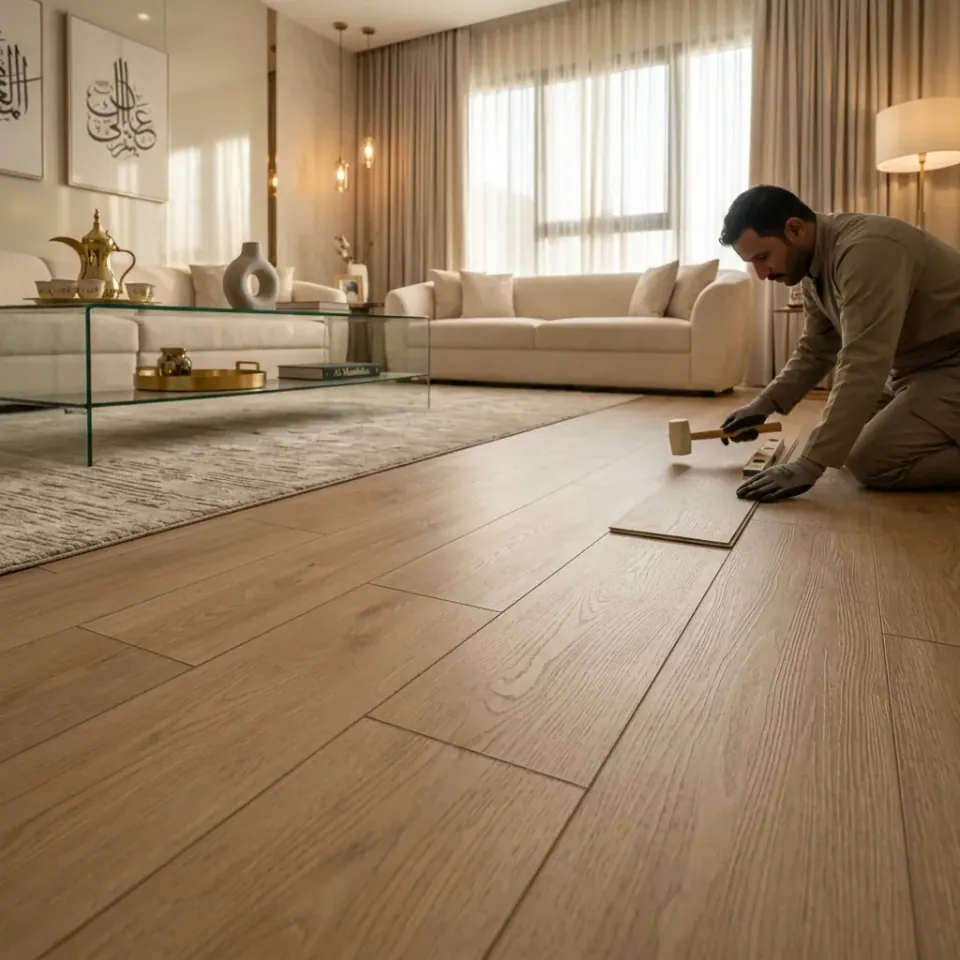
Laying vinyl over tile is one of the questions we hear most in Riyadh. The answer depends on the condition of the tiles, not only on the vinyl you choose, and these signs sum up what we look for during a visit.
No tile moves or sounds hollow when tapped. A loose tile shifts and shows through the vinyl.
Small differences between tiles are acceptable; a wave or clear slope needs levelling before laying.
Deep joints can telegraph through thin vinyl, so we fill them or skim the surface where needed.
Damp patches or salts on tiles point to a problem beneath the floor that must be solved before covering.
Vinyl and its layers add a little height; we check that doors and cabinets will not rub the new floor.
Cracks that keep widening show movement in the slab and need treatment before any covering.
A quick test saves you a re-lay. We go through three main checks before confirming that vinyl can sit over the old tiles.
We run a light tool across the surface and listen. A hollow tile rings differently, so we fix it or break it out and fill the space where needed.
A long straightedge goes down in several directions and we watch the gaps under it. If the difference exceeds the vinyl maker’s limit we use a levelling compound. Read more in floor preparation and levelling.
We confirm the grout is sound and check raised tile edges; some need grinding so floating vinyl does not crack when pressed.
Rooms near bathrooms and kitchens need attention at drains and thresholds. For rooms that get wet we suggest kitchen and bathroom vinyl.
| Floating vinyl (click) | Glue-down vinyl | |
|---|---|---|
| Surface needed | Flat, with narrow grout lines tolerated | Very smooth and flat; flaws show through thin planks |
| Grout lines | Filled if wide | Usually skimmed over |
| Height added | Slightly more because of thickness and underlay | Usually less |
| Later repair | Easier, as planks can be lifted and relaid | Harder, since it is bonded |
| Best for | Living rooms, majlis and ordinary rooms | Commercial areas or well-prepared surfaces |
Many problems come not from the vinyl but from small details overlooked when preparing over tile.
Before laying we decide how the floor ends at each door: a metal transition strip or a matching piece to the next room. The height difference between a tiled room and a vinyl room can trip people if it is not handled, and you can see the options in skirting and trims.
Tile skirting may stay if it is tall enough to cover the expansion gap; otherwise we fit new skirting over or beside it. The call depends on the wall and the condition of the old skirting.
In kitchens, bathrooms and entrances drain covers are raised or framed so water does not run under the vinyl. These spots need specific advice.
Cabinets fixed to the floor are laid around; floating vinyl is never run beneath them because it needs freedom to move.
Sound, flatness, moisture and joint checks.
Secure loose tiles, fill joints and smooth edges.
Compound for low spots or deep grout lines.
Staggered planks with the expansion gap kept.
Skirting, transition strips, cleaning and walk-through.
The decision to cover or demolish is not about price alone. It is about time, mess and the condition of the original floor.
Quicker and cleaner, it suits lived-in homes that cannot take dust or a long clearance. The tiles stay underneath if you want to go back to them later. It does add height and needs a sound base.
This gives an entirely new base at a controlled level and deals with damp and voids at the root, but it takes longer, leaves rubble and dust and raises the overall cost of the project.
Send us a photo and rough measurements and we will give an opinion after the visit. For differences between materials read vinyl vs parquet vs tiles.
If most tiles are hollow, damp rises through them or the slope is steep, covering only postpones the problem. In a new building whose slab is still drying, waiting is wiser.
Some doors and stairs also cannot accept extra height, so we suggest lifting the tiles or adjusting the doors. We give you our honest view after the visit and never encourage covering a floor that is not suitable.
Enter length and width to get the area including waste, then send it with a photo of the tiles so we can estimate quantity and preparation.
Send photos of the floor or book a free visit and we will test the tiles and choose the right method.
Heavy furniture slows work and hides the tiles from inspection.
Trim under them or raise them? Agree with us before laying.
Tell us at once about damp patches on the tiles.
An extra tile helps when repairing a loose spot.
Not any tile. It must be firm, flat and dry. We judge after the visit and tapping test.
They can with thin glued vinyl, so we fill joints or skim the surface. Thicker floating vinyl shows them less.
By the thickness of the plank and underlay; we check doors and thresholds before agreeing.
Bathrooms need special care at drains and thresholds; we prefer kitchen and bathroom vinyl after assessing the site.
Floating vinyl lifts more easily than glued. In both cases the tiles remain below.
It depends on the product, as some planks have one attached. Read our underlay guide.
Send the area and a photo of the tiles on WhatsApp, and review vinyl price factors before comparing offers.

Contact us on WhatsApp or by phone for a free visit and the right method for your floor.
How we renovate an old floor: inspect, treat, then pick the right material.
Quick, practical flooring for rental apartments between tenants.
How floor height affects doors and thresholds before installation.
The look of marble and stone with lighter weight and a warmer surface.
Timber tones and patterns in practical vinyl, and how to choose.
How to clean vinyl flooring and keep it looking good: daily care, stain removal, safe…
Carpet or tiles for your Riyadh home? Compare warmth, noise, cleaning, moisture and…
Vinyl for stairs in Riyadh: how to cover steps safely with vinyl, stair nosing and anti-slip strips, curved stairs, installation steps and…
Vinyl planks, vinyl tiles, sheet vinyl and herringbone compared for Riyadh: look, joints, waste, kitchens and small rooms. Choose the right…
Vinyl and carpet for display halls