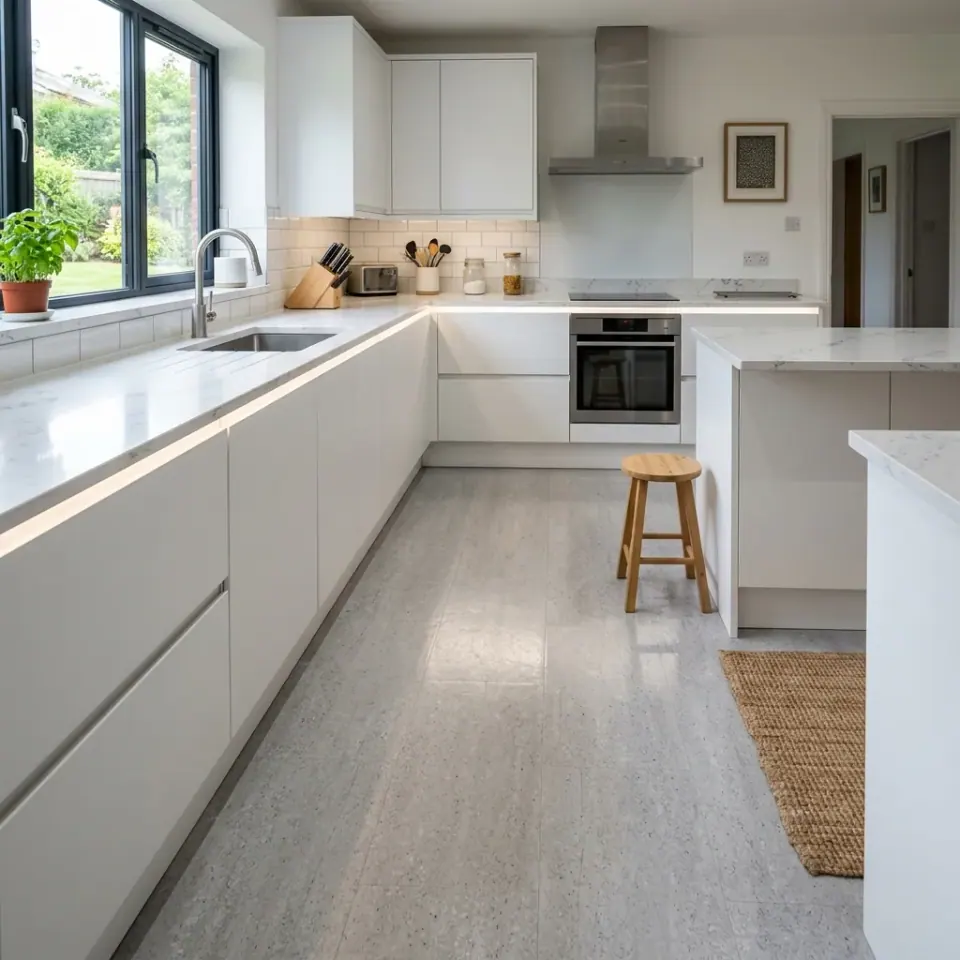
Direction of lines
Long planks lead the eye in one direction, so they can lengthen or widen a room depending on the laying direction.
When you decide to fit vinyl a question comes up that many people do not expect: long wood-look planks, square stone-look tiles, continuous sheet or the premium herringbone pattern? The shape of the piece changes how the room looks and feels, and it also changes waste and the way it is laid. This guide compares the common formats directly so you can pick what suits your room before the free visit in Riyadh.
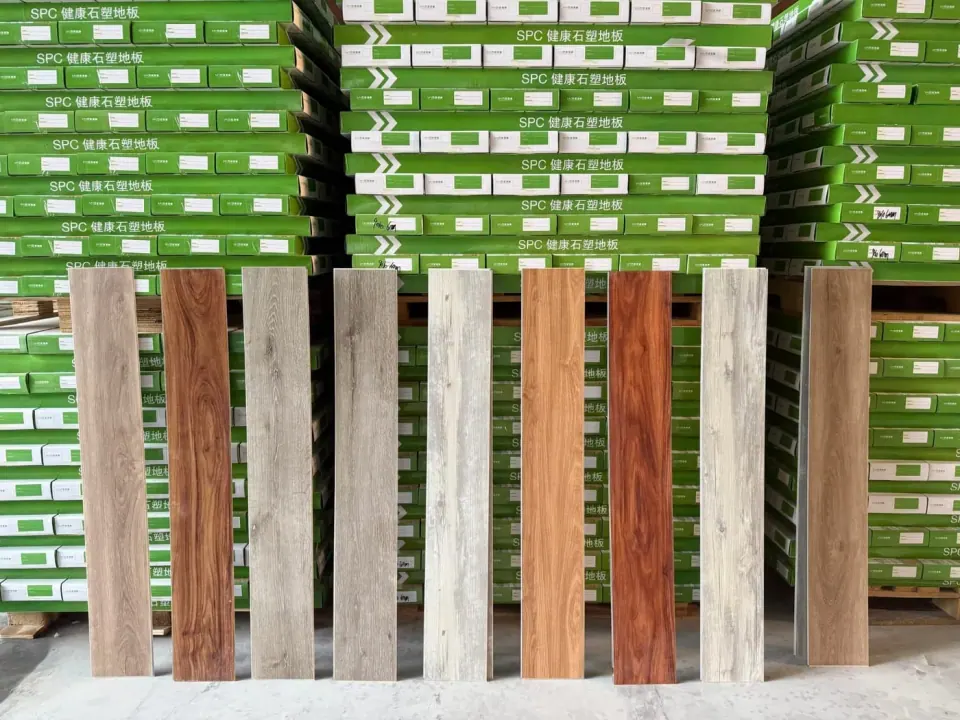
Colour and thickness matter, but the format draws the lines of the room and its feel.
Long planks lead the eye in one direction, so they can lengthen or widen a room depending on the laying direction.
The larger the piece, the fewer the joints and the more continuous the floor looks, while small pieces give a clear grid.
Long pieces and diagonal patterns increase waste slightly, and simple rectangular layouts waste less.
Some formats suit click and some suit glue-down, and complex patterns take longer to fit.
Wood patterns give warmth and stone patterns give formality, and the effect varies with the room and its light.
The number of joints and the edge type affect how dirt collects and how easy it is to wipe.
Long planks: the most widespread, with a wood pattern in different lengths and widths, suiting living rooms, bedrooms and offices. Colours range from light to dark. See wood-look vinyl.
Square or rectangular tiles: imitate ceramic, marble and stone and suit kitchens, entrances and living rooms wanting a formal look. See marble and stone look flooring.
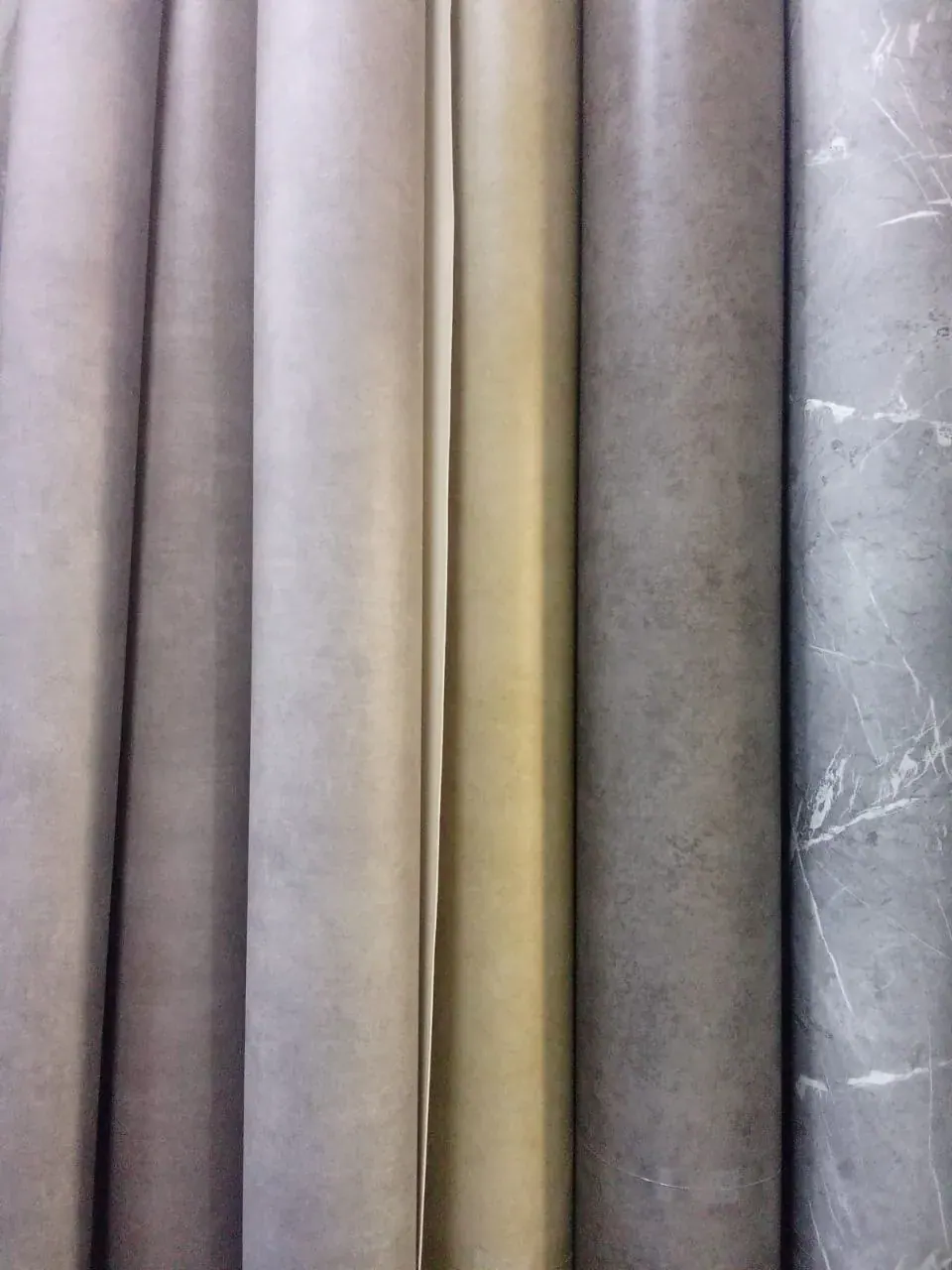
Continuous sheet: a single surface with the fewest possible joints, suited to large areas and places needing high hygiene such as clinics. See sheet vinyl.
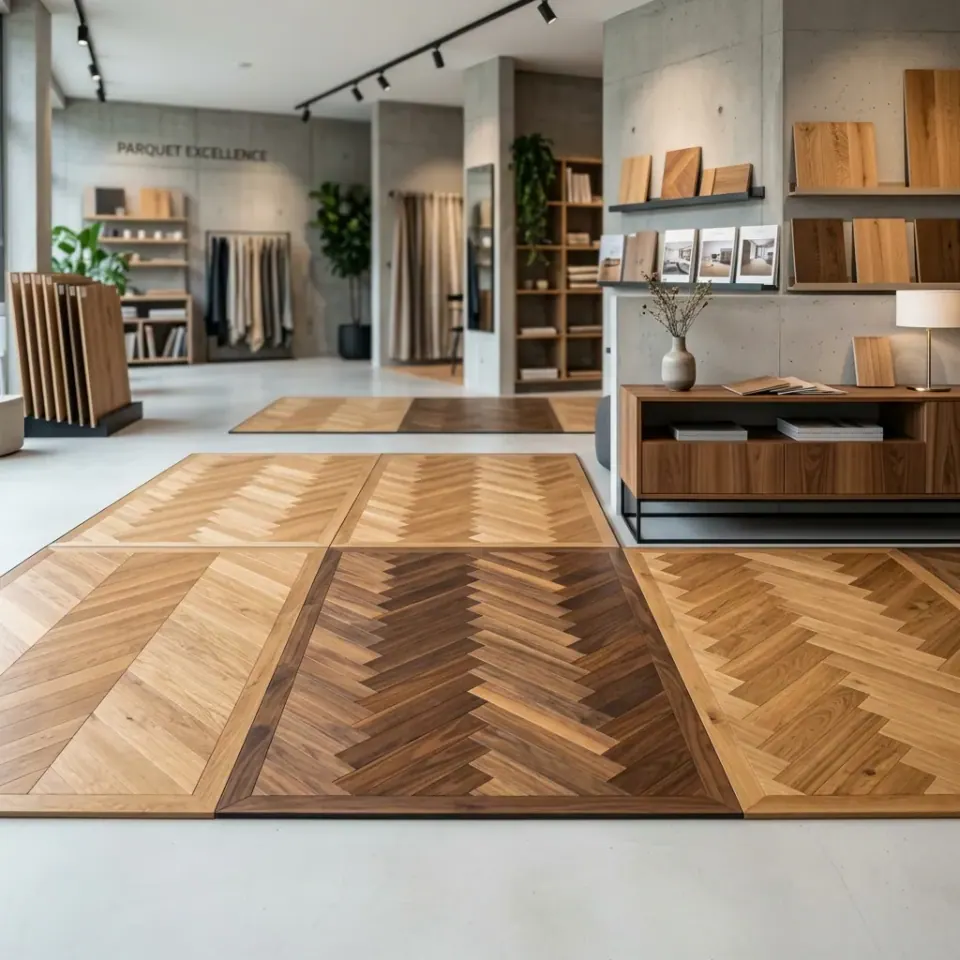
Herringbone: an angled layout of small pieces giving a premium look, but with higher waste and needing fitting skill. Parquet pieces in the same pattern are shown in herringbone parquet.
For the difference between click and glue-down systems see glue-down or click vinyl.
A general comparison; the final choice depends on room shape and budget.
| Long planks | Tiles | Sheet | Herringbone | |
|---|---|---|---|---|
| Look | Warm wood | Formal stone and marble | Continuous surface | Premium and distinctive |
| Joints | Few | More, depending on size | As few as possible | Many |
| Waste | Moderate | Moderate | Depends on roll width | Highest |
| Fitting ease | Easy | Easy | Needs cutting skill | Needs high skill |
| Best for | Living rooms and bedrooms | Kitchens and entrances | Clinics and large areas | Premium majlis and living rooms |
A starting rule that we then adjust to the space.
Long planks in a calm wood tone running along the longer direction of the room.
Warm wood-look planks that give visual comfort and a sense of calm.
Stone-look or wood-look tiles with a water-resistant surface that wipes clean.
Tiles or planks with a durable, non-glossy surface.
Medium-width planks and larger pieces that reduce joints and suggest space.
Sheet or tough planks depending on use and the ability to replace in part.
We measure dimensions and see the direction of light and room entrances.
We ask about traffic in the room and any children or heavy furniture.
We show samples in different formats so you can compare in the room’s light.
We suggest the laying direction that gives the best look for the room.
We send a quote with specifications, waste and fitting so you can compare accurately.
Laying planks along the longer side of a room gives a sense of extension, and laying them with the direction of window light reduces the visibility of joints. Diagonal laying gives a distinctive look but adds waste and time.
That is why we set the direction after seeing the room and not before.
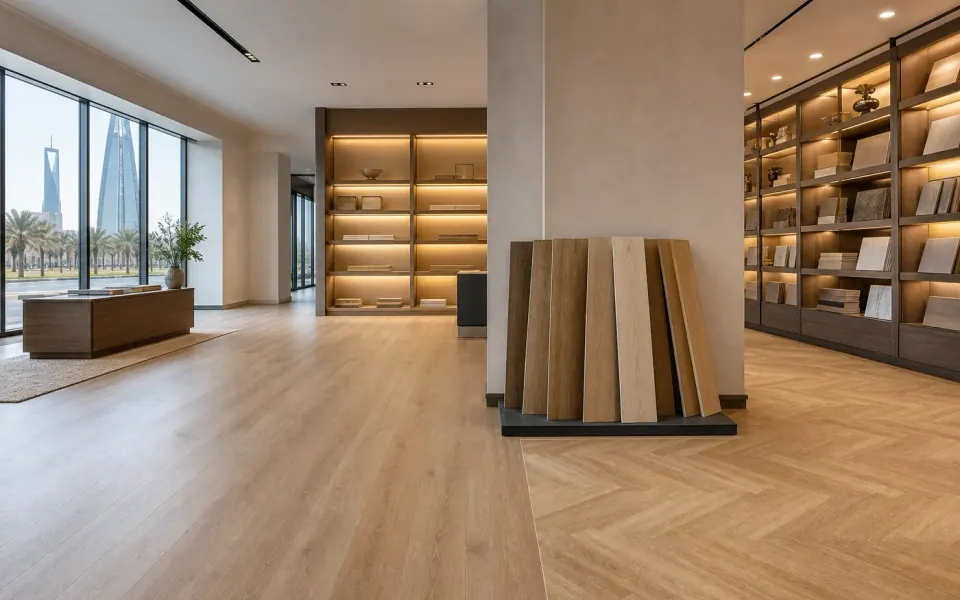
Common examples we meet during visits in Riyadh.
Long planks along the longer side give a sense of depth and reduce visible joints.
Stone-look tiles in the kitchen and wood planks in the living room in a matching colour with a planned transition.
Medium-width planks in a calm light colour give a sense of space and comfort.
A quiet marble-look tile gives formal elegance with easy cleaning.
Sheet vinyl or tough planks with an easy-clean surface and few joints.
Herringbone in vinyl or parquet if the budget allows the higher waste and a longer fitting time.
Many joints divide the room and make it look smaller.
Joints can show clearly if light runs across the plank direction.
The quantity and cost may rise more than expected.
Not thinking about direction at doors gives an uneven look.
Start with the question: what feeling do you want? If it is warmth and comfort, go for wood-look planks; if it is formality and a clean visual feel, stone-look tiles. If you want something distinctive consider herringbone, as long as you accept the higher waste.
Then review budget and time, because complex formats take longer. Read vinyl thickness and wear layer to pick a layer that suits how the space is used.
And do not forget floor preparation, because vinyl shows any flaw in the surface beneath, as explained in floor preparation and levelling.
We serve Riyadh only and every visit is free with no obligation.
Simple shared care with notes by format.
Wipe along the planks with a damp cloth and avoid water pooling at joints.
Watch the joints between tiles because dirt collects there more.
Wipe regularly and check that welded seams are sound.
Gentle wiping and periodic edge checks because of the many joints.
Keep sand out with a mat at the door to reduce scratches.
Use pads under legs to avoid pressure marks and scratches.
Questions that reduce surprises after fitting.
It decides the number of joints and the waste allowance.
A bevelled edge shows the joint and looks closer to real wood or stone.
Herringbone and diagonal layouts need a higher allowance.
To avoid shade differences between two batches.
Click or glue-down, and each has its advantages.
A sample under the room’s light settles many decisions.
Neither is better in every case. Planks give wood warmth and suit living rooms and bedrooms, and tiles give the formality of stone and suit kitchens and entrances. We decide after seeing the space.
It can be done in vinyl and suitable pieces exist, but it needs more skill and adds waste and time.
Large planks reduce joints and look continuous, but they need a flatter surface and may not suit every small room.
Usually along the longer side of the room or with window light. We suggest the best direction after seeing the room.
Yes, diagonal and herringbone layouts need more waste than straight laying. We calculate the real allowance after the visit.
Yes, such as planks for the living room and tiles for the kitchen, provided colours and thicknesses match and transitions are planned.
Usually yes once joints are treated and the surface levelled, as explained on our fitting-over-tiles page.
We show real samples during the free visit inside Riyadh.
Send a photo of the room and its size and we will arrange the visit and quote inside Riyadh.
Preparation, fitting and handover steps.
When each system fits.
The difference between the two.
Criteria for high-traffic areas.
What changes the price.
Renewal without breaking out.
Vinyl and carpet for display halls