Glue-down vinyl
It is fixed to the floor with a suitable adhesive. The whole surface bonds to the base, so it needs a level, clean, dry floor and careful preparation.
When choosing vinyl flooring, many people ask whether glue-down vinyl or click planks that lock together without adhesive is the better choice. The answer depends on the condition of the floor, the space, how it will be used and the budget. This guide explains the difference between the two methods in plain language, without exaggerated claims. We supply and fit vinyl after a free site visit anywhere in Riyadh.

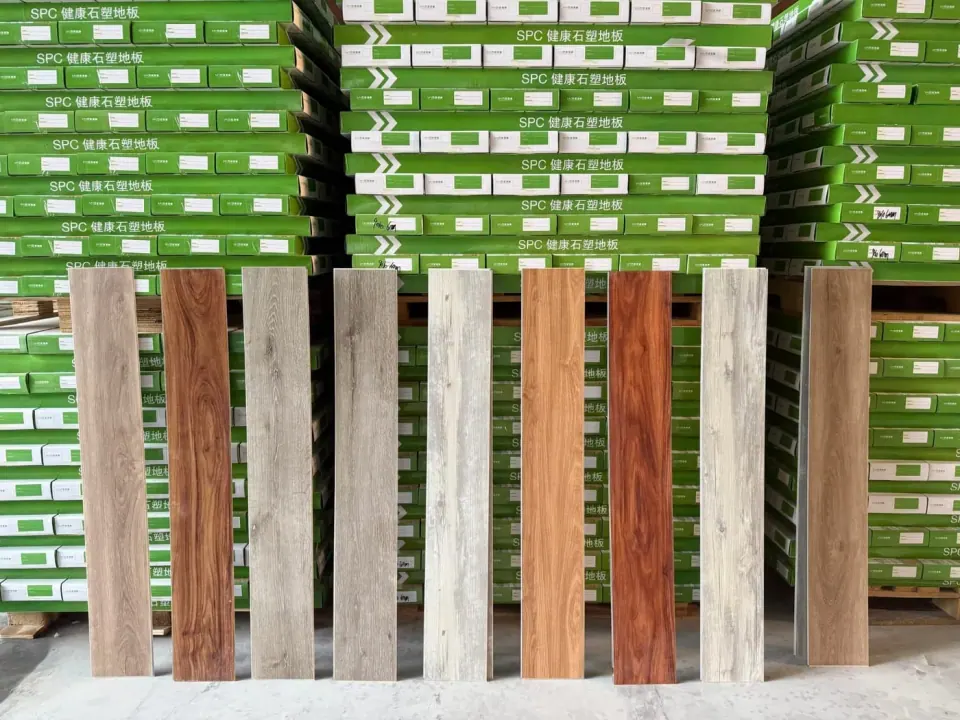
Both give an attractive look close to wood or stone, but the installation method changes the requirements and the result.
It is fixed to the floor with a suitable adhesive. The whole surface bonds to the base, so it needs a level, clean, dry floor and careful preparation.
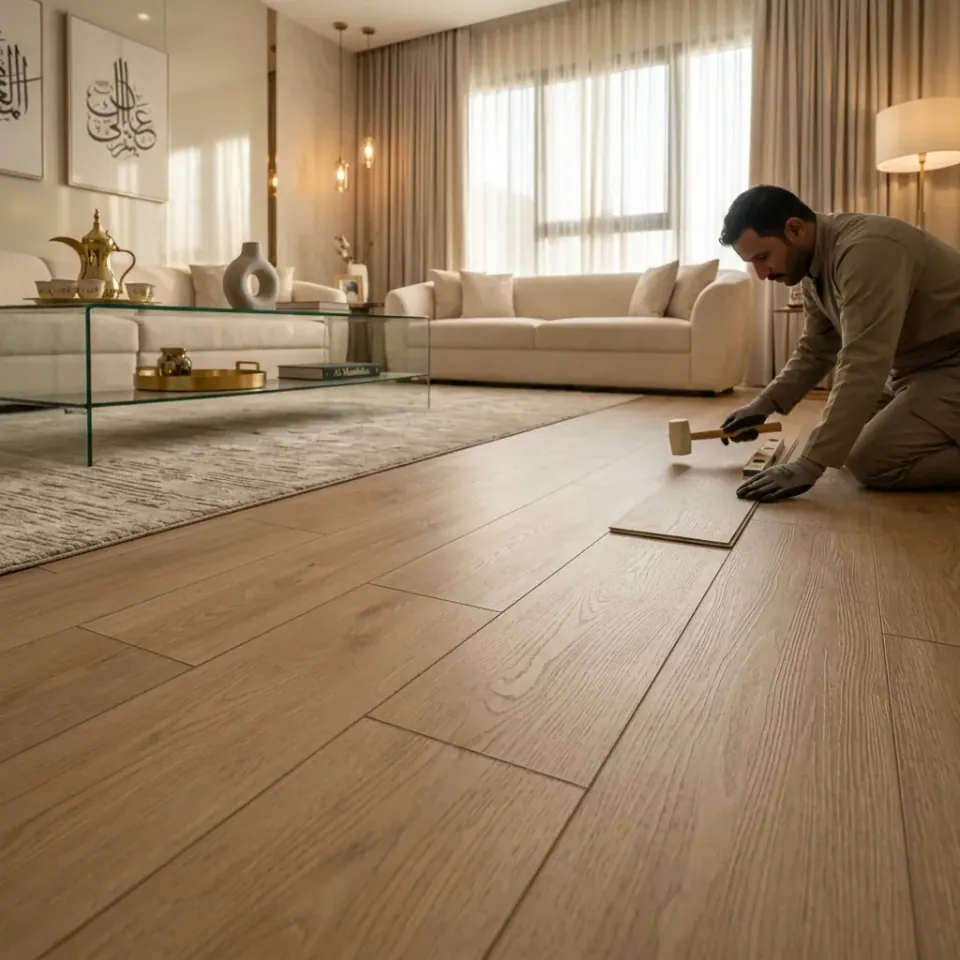
Planks with a tongue and groove lock into each other and form a floating floor over the base without glue, and can tolerate some minor unevenness depending on the product instructions.
This means the planks are not bonded to the ground but rest on it and move slightly with temperature, so expansion gaps are left at the walls.
It sticks to the entire floor, so the planks do not move, which gives a firm feel underfoot in large, busy spaces.
The decision follows the site, the floor condition and how often it is used, so we start with a visit before suggesting either type.
Glue-down vinyl works very well in large and commercial spaces and where traffic is heavy, provided the base is properly prepared.
The floor must be clean, dry and level, because any flaw can show through the vinyl surface. See the floor preparation and levelling guide.
Before gluing we make sure the floor is dry, since moisture weakens the adhesive bond. If the site needs treatment before fitting we tell you clearly.
Glue-down fitting takes relatively longer because the adhesive needs time to set, and replacing a damaged section is harder than with click planks.
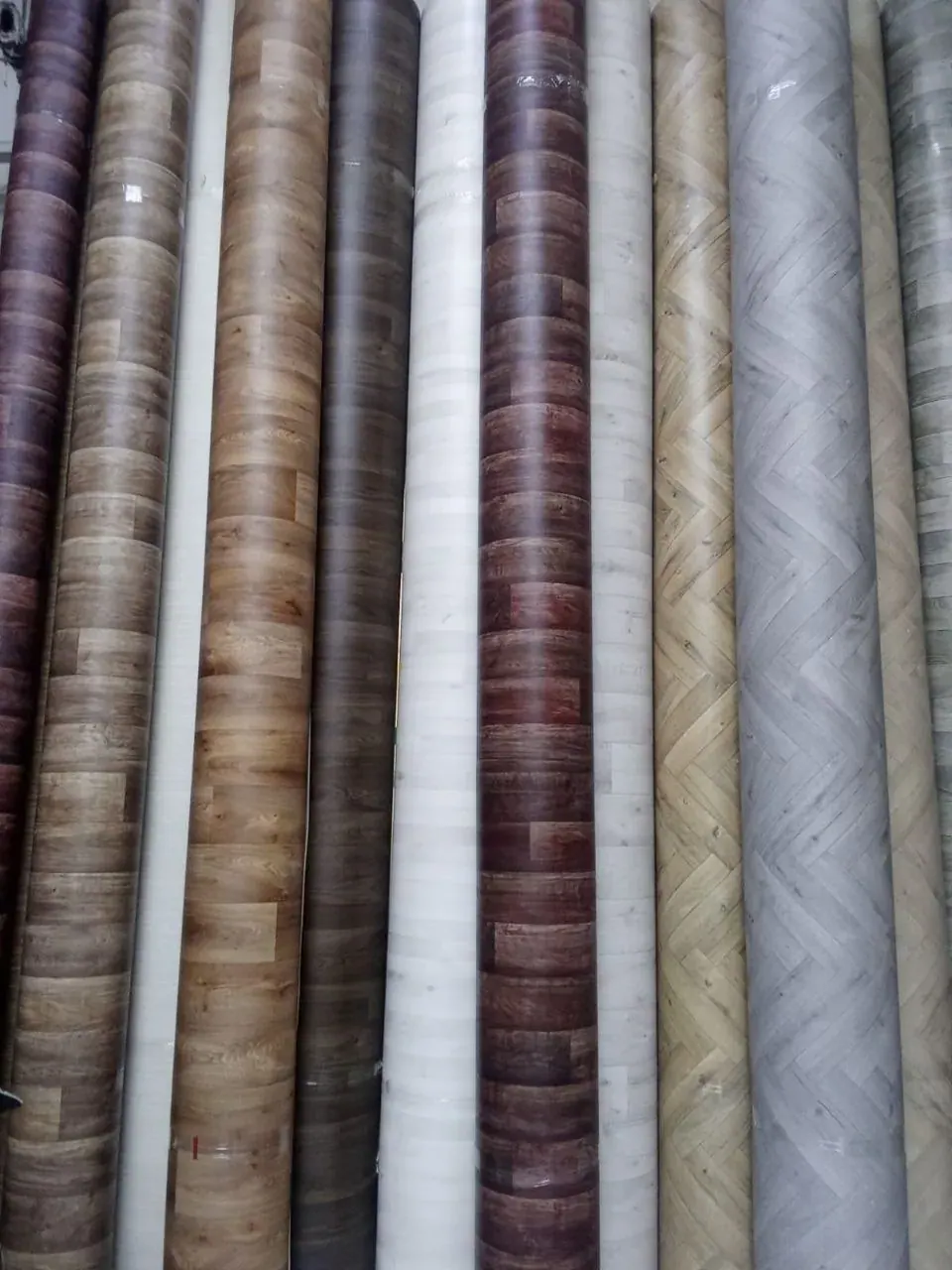
A bonded surface gives a uniform look with no movement, which many people prefer in offices, shops and corridors. For product types see vinyl roll flooring.
| Glue-down vinyl | Click vinyl | |
|---|---|---|
| Floor preparation | Needs a level, clean, dry floor to a high standard | Tolerates some minor unevenness depending on the product |
| How it is fixed | Adhesive across the whole surface | Planks lock together with no glue |
| Installation speed | Slower, because of the bonding stage | Usually faster once the floor is ready |
| Replacing a damaged plank | Harder, as the plank is bonded | Often easier by lifting neighbouring planks |
| Large, busy areas | Suitable for its firmness and uniform surface | Suitable but joints need monitoring |
| Movement with heat | Limited, because it is bonded | Needs expansion gaps at the walls |
These are general guidelines, settled once we see the site.
Click is often a practical choice for speed and easier upkeep; glue-down is a good choice if the floor is ready and you want full firmness.
Click suits because it is quicker and relatively clean to install, provided floor height suits the doors.
Glue-down is preferred for heavy traffic and a uniform surface; click suits smaller areas.
We review moisture and leaks first and follow the product instructions, since water affects the two methods differently.
Both are possible after the floor is checked; see the guide to fitting over tiles.
Click suits better since it can often be lifted, depending on the product.
Send us a photo and rough measurements on WhatsApp.
We check levelness, cleanliness, dryness and door heights.
Is it a home or a business, how heavy is the traffic, and will the floor change later?
We suggest glue-down or click from the findings and explain why.
You see the sample yourself and we send a quote after the visit.
Avoiding these saves you from redoing work.
The difference in preparation cost and time can change the comparison once the whole job is counted.
An uneven floor shows through vinyl of either type.
With click, a gap is left at the walls and covered by skirting; skipping it can make planks lift.
A new layer may call for a review of floor height and door clearance.
A damp floor affects bonding and the stability of the floor overall.
Touching it and viewing it in real light often changes the decision.
Some of what is said about the two methods is only partly true, and we clarify it so you can decide with knowledge.
Not necessarily; quality depends on the product, correct fitting and floor preparation more than the name of the method.
It can, but the work is more careful and slower than lifting click planks.
It tolerates minor unevenness only, and does not replace checking and cleaning the floor.
Not so; every product has a fitting method set by the manufacturer, and we follow it.
Whether you choose glue-down or click, the vinyl itself still matters: wear layer thickness, density and dimensional stability. We give no figures without a source and explain the specification of the product we show you.
For specifications see the vinyl thickness and wear layer guide, and for the difference between types see SPC vs LVT.
Care for the two types is broadly similar and simple if you follow the points below, then check the instructions of the product you choose.
Sweep or dust-mop the floor, and wipe spills quickly with a damp cloth so liquid does not reach the joints, which matters most with click.
Use gentle cleaners suited to vinyl and avoid abrasive or harsh products that can affect the top layer.
Put protectors under heavy furniture legs and avoid dragging furniture. A small mat at the entrance reduces the grit that scratches floors.
If you notice planks lifting or joints opening, message us a photo and we will guide you on the cause and a suitable fix.
We answer these during the visit and they help with any supplier.
Knowing the levelling and dryness required avoids surprises in cost.
Some products are fitted one way only, so ask.
The answer differs between glue-down and click and is worth knowing in advance.
See the underlay and insulation guide to learn when it is needed.
the space is commercial or large and busy, your floor is prepared or can be, and you want a firm uniform surface.
you want faster fitting, your floor has minor unevenness, or you want easier plank replacement.
Send a photo of the space and we suggest what suits after the free visit, and tell you frankly if either type is wrong for you.
Enter the length and width to get an approximate area, then send the result by WhatsApp with a photo of the site so we can suggest what suits.
Glue-down is fixed with adhesive across the whole floor, while click planks lock into each other and form a floating floor without glue. The choice depends on the floor condition and the use. No type is better in every case, so we start with a visit, suggest what suits and explain why.
Click is usually faster once the floor is ready, while glue-down needs a bonding stage. Time varies with area and site. The method should not be chosen on speed alone, because floor preparation affects the life of the floor more than a day or two of fitting.
It tolerates minor unevenness better than glue-down, but a good floor is still better, following the product instructions. So we measure levelness and inspect the floor at the visit and write down what preparation is needed before we settle the method.
Click is often easier because neighbouring planks can be lifted, while glue-down needs more careful work. In every case we keep the product description and fitting instructions so you know how it is repaired later.
Glue-down is often preferred for heavy traffic and large areas, but the decision follows the visit and the product. In busy corridors and entrances we suggest checking the wear layer, as explained in the linked guide.
It depends on the product and on moisture and leaks at the site, which we review at the visit before recommending. If the space is often exposed to water we explain what suits it before the order is confirmed.
It may be needed depending on the product and the floor, and we explain it in the quote. You can read the underlay guide. On some floors no extra layer is needed, and we tell you so without adding unneeded items.
It varies with the product, area and preparation, and we do not quote a figure without a visit. Ask for a quote after the free visit and see the price guide. Factors such as product thickness, type of preparation and number of rooms matter, so a quote after the visit gives a figure based on your site.
Yes, inside Riyadh. Send a photo of the space on WhatsApp or call us and we arrange the appointment. We then help you choose the sample and send the quote in writing.
Send a photo of the space and its rough size on WhatsApp and we arrange a free visit inside Riyadh.
How to read vinyl specifications.
A comparison of two common types.
Fitting over old tiles.
When it is needed and what it does.
Vinyl and carpet for display halls