
Adhesives and finishes
Some adhesives and finishing products give off strong smells in the first days; choosing a low-emission product and airing the room reduces this.
The smell of a new floor is not always a sign of harm, but it reminds us that some materials and adhesives release volatile organic compounds. Here is what to ask and how to cut exposure after installation.

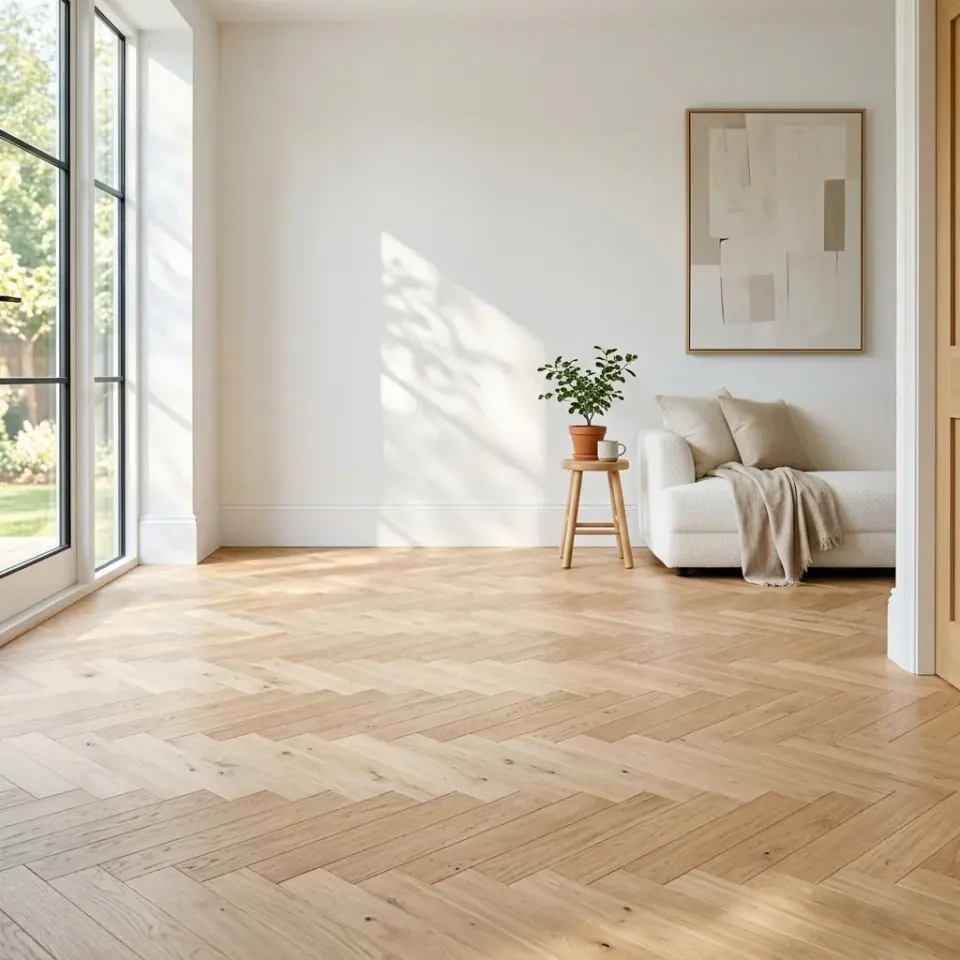
Volatile organic compounds (VOCs) are gases released by some new products such as paints, adhesives and engineered wood materials, and they usually fade with time and ventilation.
Some adhesives and finishing products give off strong smells in the first days; choosing a low-emission product and airing the room reduces this.
Some boards contain resins that can emit formaldehyde, which is why emission classes such as E1 exist and should be requested from the supplier.
They can carry a factory smell at first, which usually fades after unpacking, airing and leaving windows open.
The floor is not the only source; new paint and furniture add to the same room.
This page is general consumer information, not medical advice. If someone in your household has allergies or a respiratory condition, speak to your doctor and focus on ventilation and careful material choice.
Ask the supplier for the product data sheet and any certificates covering VOC and formaldehyde emissions, and check they relate to the product itself rather than being generic. Our guide to flooring datasheets and certificates explains what you can request.
Floating or click installation may reduce adhesive use compared with full glue-down, though each method has trade-offs; see glue-down vs click vinyl. If adhesive is used, ask about its type and the ventilation period after.
Wood-core boards such as HDF parquet and laminate can differ in emissions between products, so ask for the emission class. Compare in our HDF parquet guide and laminate flooring pages.
In these rooms, ventilate well before use and avoid moving all new furniture in at once. Learn more in kids room flooring, bedroom flooring and crawling-safe flooring for babies.
Ask for product data and emission classes instead of relying on general promises.
Where possible choose installation without heavy adhesive, or a low-emission adhesive for the product.
Open windows and let air circulate for several days before using the room fully.
Try not to paint, bring in new furniture and lay the floor in the same week.
Post-work cleaning removes cutting and fitting dust; see first-week care for new flooring.
| Floor | What to ask about | Note |
|---|---|---|
| Vinyl and SPC | Product data and adhesive | Factory smell fades with ventilation |
| HDF parquet / laminate | Formaldehyde emission class | Differs between products |
| Carpet | Adhesive and backing | Unpacking and airing help |
| Natural parquet | Finish and varnish | Treatment materials differ |
If you notice headaches, eye or nose irritation or coughing linked to one room after a new installation, reduce exposure, ventilate and consult a specialist. We make no health claims here; we help you ask the right questions and pick materials and an installation method.
See also carpet, dust and allergies to understand the role of regular cleaning.
In new flats handed over painted and furnished at the same time, smells from paint, adhesive and furniture stack up. It is better to spread the work over weeks rather than days, keep windows open and run the AC on an outside-air cycle if possible. In kids rooms, delay moving in bedding and toys until the smell has fully faded.
Offices renewing floors between working days need quick installation with low emissions where possible, scheduled over a weekend with ventilation before staff return. Closed shops without windows need mechanical ventilation switched on.
If the room belongs to someone with allergies or asthma, ask their doctor when it is safe to return, and avoid testing smells yourself by sniffing new products directly.
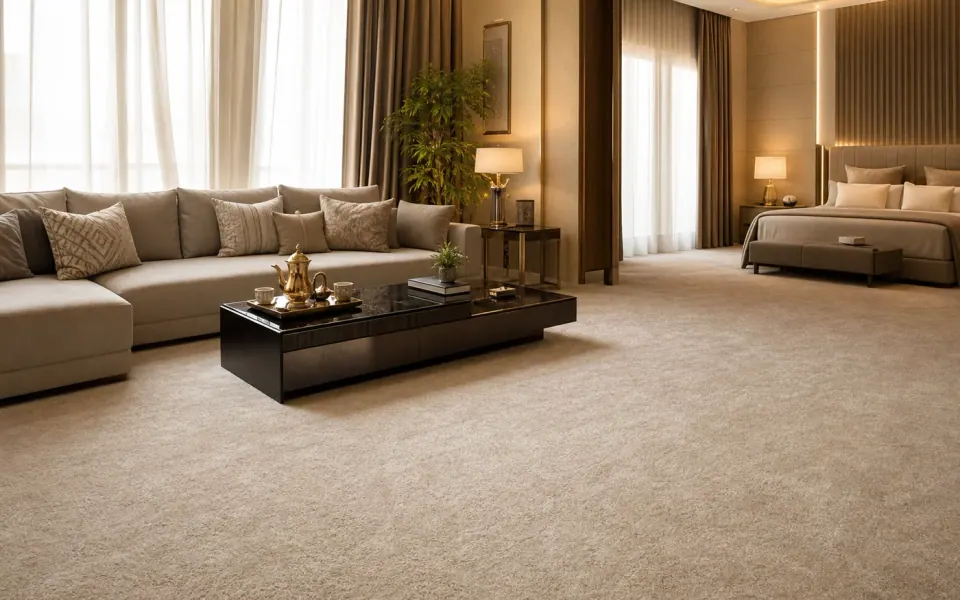
Products with clear data may cost more than others, a difference worth asking about.
Choosing a particular method can affect labour time and cost.
Delaying use of the room for several days affects household scheduling more than material cost.
Final cleaning and dust removal after fitting may be priced within the project.
Cases vary and the smell usually fades with ventilation within days. If it is strong or causes symptoms, consult a specialist and delay using the room.
It is an emission class for formaldehyde from engineered wood boards that you can request from the supplier and use to compare products.
It may reduce adhesive use, but each method has trade-offs. A documented product and good ventilation matter most.
Open windows and let air circulate for several days, depending on the product and smell, before full use.
It can hold more dust than hard surfaces, but regular vacuuming with a good machine reduces the issue; see our carpet allergy page.
The product data sheet, any emission certificates and the installation and ventilation instructions.
Send the room type, who uses it and any key allergy via WhatsApp and we will suggest suitable options and installation methods.
Send the room type and who uses it on WhatsApp or call us and we will suggest the best fit.
Right after installation.
Dust and cleaning.
Material and use.
Types and use.
Planning and airing.