
One uniform layer
Colour runs deep, so minor surface scratches show less than on printed layers.
Homogeneous vinyl is one uniform layer through its whole thickness, which is why it suits places with heavy foot traffic and frequent cleaning. We explain how it differs from household vinyl, where it is used and how it is laid and cared for.
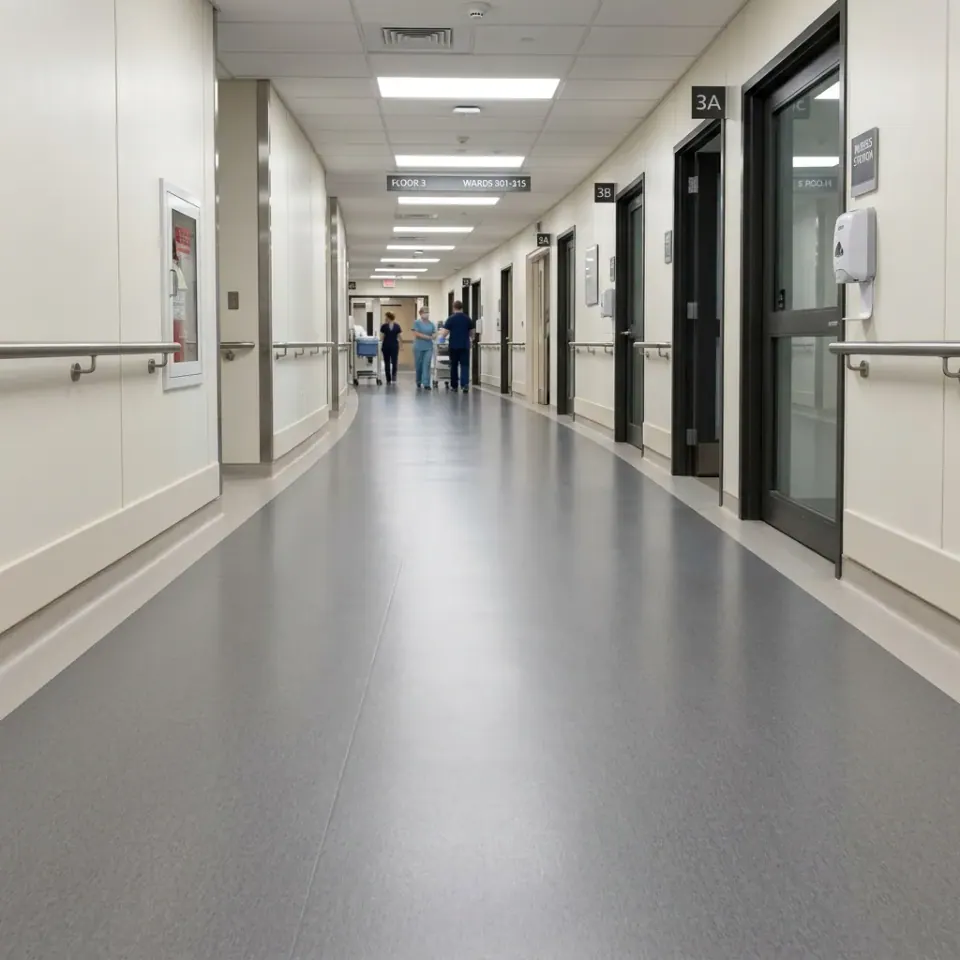
It differs from household vinyl planks in its make-up: colour and pattern run through the full thickness instead of a thin printed layer on a backing. That explains its use in healthcare and education.
Colour runs deep, so minor surface scratches show less than on printed layers.
Joints are fused with a cord of the same material, leaving fewer gaps where dirt and moisture collect.
The floor can curve up the wall so dirt does not collect at the floor and wall junction.
A dense, low-porosity surface that tolerates frequent cleaning with the products the maker allows.
Some products offer slip-resistant or anti-static versions; we check the product sheet for your need and never promise what the maker does not document.
Built for heavy use, though lifespan depends on good installation and correct cleaning.
It suits spaces that combine heavy foot traffic with a need for cleanliness. That does not make it the best choice for an ordinary home, where good planks are often enough.
Consulting rooms, waiting areas and corridors benefit from a floor with few seams that is easy to clean. See clinic flooring to compare options.
For corridors, patient rooms and care areas, where fewer joints and the option to cove up the wall matter. Details are in hospital flooring.
Classroom corridors and entrances take heavy traffic, and easy cleaning keeps the floor looking tidy. Read school flooring.
Where a surface must tolerate cleaning fluids, though the chemicals used need attention as some require a specific product.
| Homogeneous | SPC vinyl | |
|---|---|---|
| Construction | Uniform layer with colour through the thickness | Layers: rigid core, print layer and wear layer |
| Joints | Usually heat-welded | Usually a click system without welding |
| Common use | Healthcare, education and labs | Homes, offices and shops |
| Look | Plain colours and simple patterns | Realistic wood and stone looks |
| Installation | Glued to a very flat base | Floating or glued depending on product |
Test flatness and moisture, treat cracks and smooth the surface.
The roll rests in the room before laying as the maker advises.
Strips are glued with the right adhesive and rolled to release air.
Seams are grooved and welded with a cord, then trimmed flush.
Cove or skirting fitted, inspected and handed over with cleaning guidance.
Correct care is part of the floor’s life. We hand over the manufacturer’s instructions for the chosen product, because permitted cleaners differ from one product to another. In general we avoid abrasive pads and solvents that could affect the surface.
Heat welding reduces joints and makes cleaning easier, but it does not replace regular mopping and keeping water from creeping in at the edges.
Choosing a medical or education floor starts with use, not colour. These are the key questions we ask before showing options.
Waiting rooms, corridors or procedure rooms? Each asks for a different level of durability and cleaning.
For entrances and wet corridors we ask about products with slip resistance clearly documented by the manufacturer.
Some strong disinfectants do not suit every product, so we read the product sheet before selecting.
Homogeneous vinyl is thin and shows base flaws, so it needs high flatness. See floor preparation and levelling.
Large projects are done in phases, and we can coordinate work outside operating hours. Learn about project solutions.
Enter the length and width of the space to get the area including waste, then send it to us so we can estimate the quantity.
Send the plan or photos of the place or book a free visit and we will choose the right material.
Tell us what you use so we pick a compatible product.
We phase the work to limit disruption.
Any slope or crack shows later through thin homogeneous vinyl.
We show samples before the final decision.
Homogeneous is a uniform layer with colour running through, whereas household vinyl is layered with a printed pattern. The first is for heavy use.
It can be, but is rarely needed; plank vinyl gives a look closer to timber. We advise by your needs.
Products vary. We check the slip resistance documented by the maker for your location.
We groove the joint between strips and fill it with a cord of the same material using heat, so dirt and water find it harder to get in.
It needs a very flat surface. We inspect first and decide. Read vinyl over tiles.
It suits some, but grease and chemicals need attention. We discuss the use before choosing.
Send the area, type and location on WhatsApp, and read vinyl price factors.
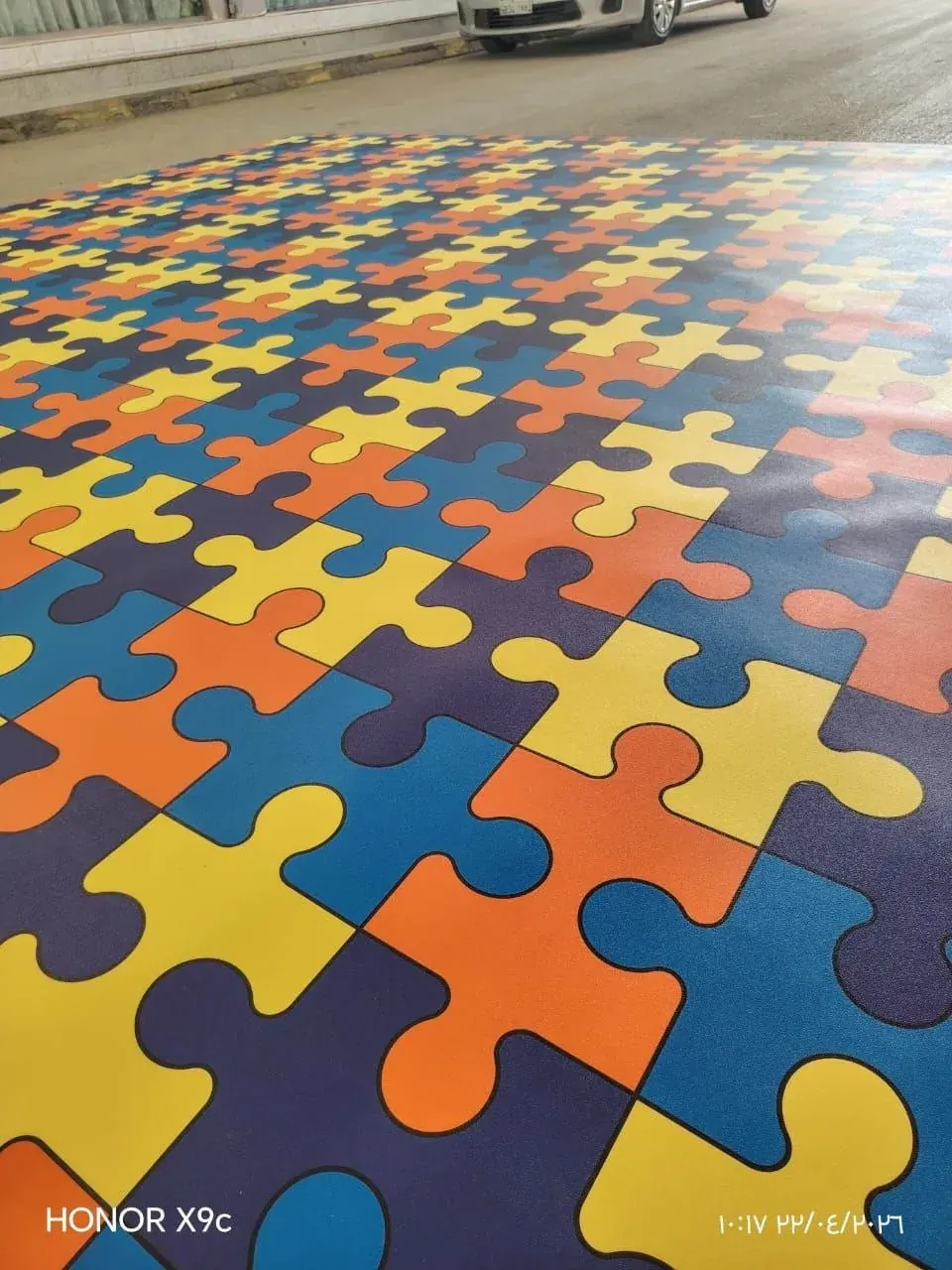
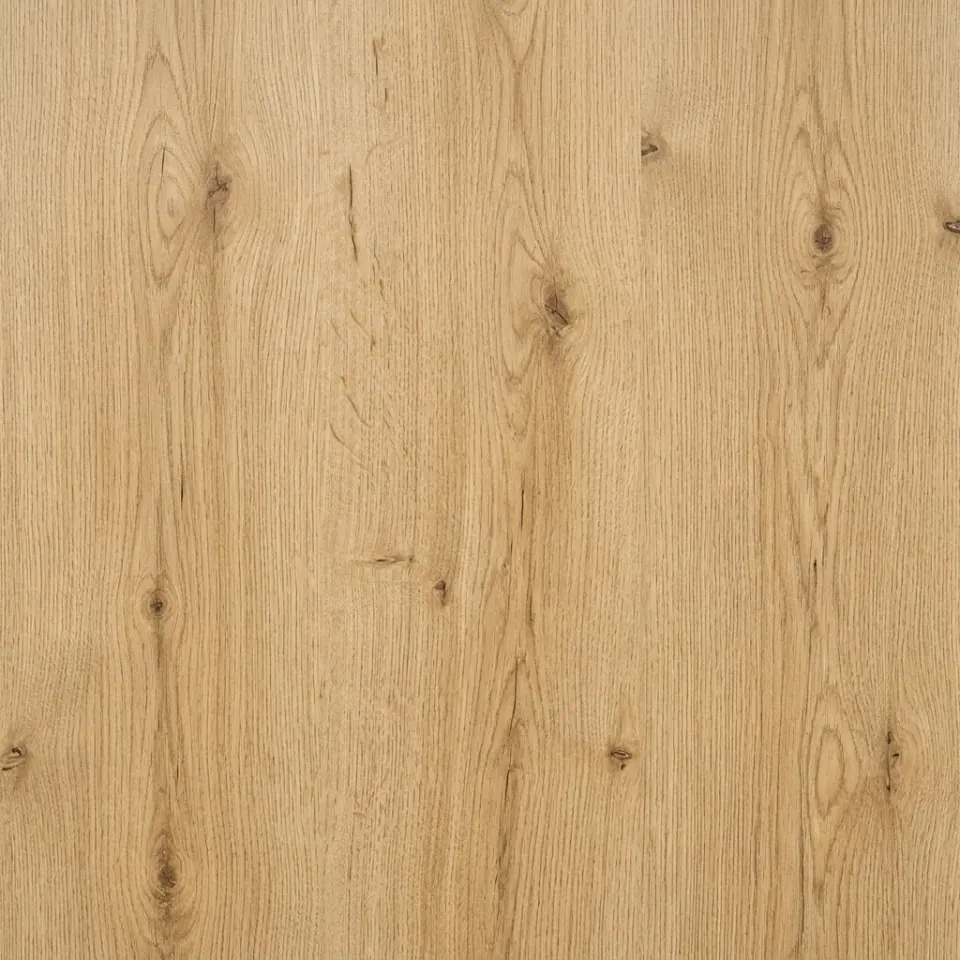
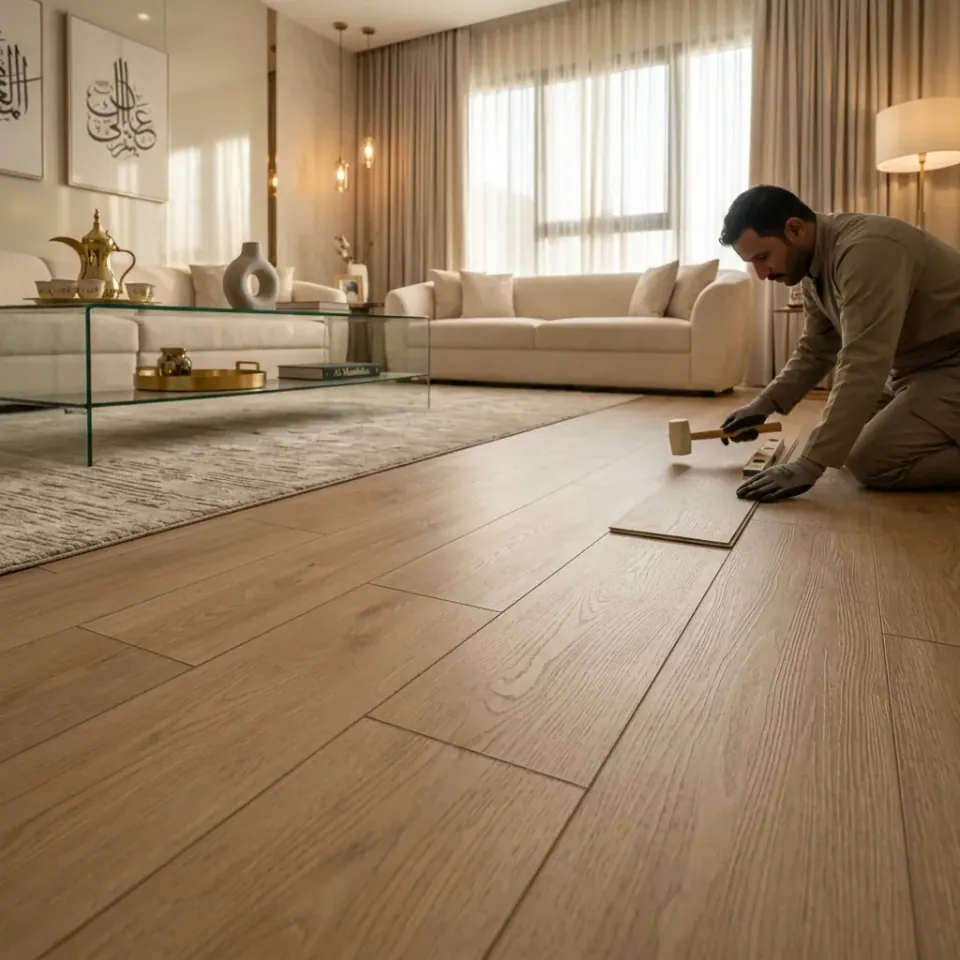

Contact us on WhatsApp or by phone for a free visit and a quote suited to the project.
Choosing safer floors for wet areas and corridors.
Protecting your floor from Riyadh sun