
Moisture from the base
New concrete or an unsealed slab pushes vapour up under the boards, so edges and joints swell gradually.
Swelling means the boards have absorbed moisture or have no room to expand. The right repair starts with finding the source, otherwise the problem returns within weeks. Below we explain the causes, how we inspect and what the treatment options are.
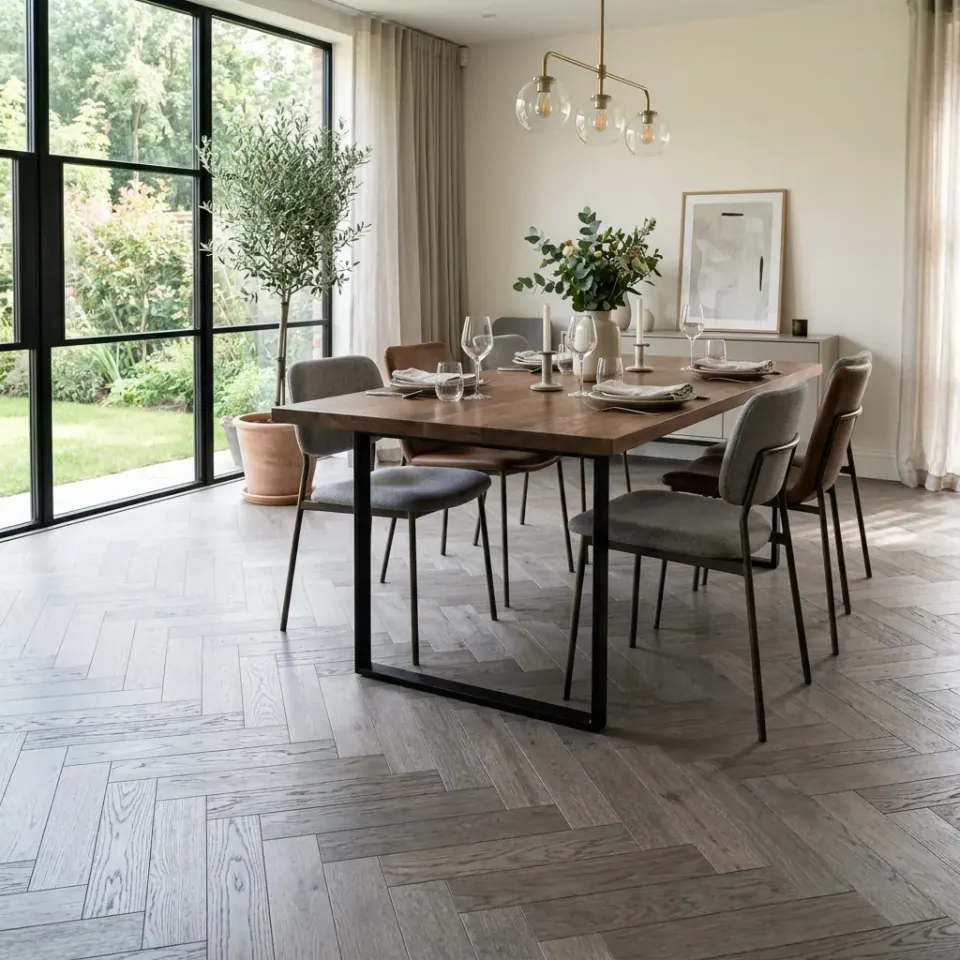
Timber and fibre-based boards such as HDF absorb water and expand. The moisture may rise from below, arrive from the surface or come from the air. Before buying a new floor, read parquet maintenance and repair to see what can be saved.
New concrete or an unsealed slab pushes vapour up under the boards, so edges and joints swell gradually.
Plumbing, an air-conditioner drain or heavy mopping lets water between planks, and the core soaks it up, usually near the source first.
If boards touch walls or trims directly they cannot expand, so the middle of the room rises in a wave.
A house shut up for weeks, or air-conditioning switched off then on, changes humidity and moves the boards.
A heavy unit fixed through a floating floor stops it from moving and forces boards up elsewhere.
Missing or wrong moisture protection under timber boards lets damp reach them. See our floor underlay guide.
We do not start by pulling boards up. The pattern of the problem tells us its cause.
This points to water from the surface or damp at the sides. We check boards near kitchens, bathrooms, entrances and under air-conditioners, and see whether the edge is merely raised or crumbling, because crumbled core will not return.
Usually expansion pressure with too little gap at walls or doorways. It is often cured by opening the gap and adjusting trims, without replacing every board.
This suggests moisture from beneath. Treating the surface is not enough; we measure the base and look for leaks or a damp wall. See floor preparation for how moisture is tested.
It may come from high spots or voids under the plank rather than true swelling. We tell the two apart on site.
| Usual action | Note | |
|---|---|---|
| Expansion with too little gap | Open a gap at the wall and adjust the skirting | Often no board replacement |
| Light recent moisture | Remove the source, dry the room and watch the boards | Boards may settle if the core has not crumbled |
| Swollen, crumbling edges | Replace the damaged boards | Needs a matching or close board |
| Moisture from concrete | Cure the source, then relay with suitable underlay | Surface treatment alone fails |
| Widespread damage | Relay the room or choose a water-resistant alternative | We suggest vinyl where relevant |
No. Materials respond to water differently, and that changes your decision on repair or replacement.
These react to moisture according to species and layers. Engineered boards are more stable than solid timber but still cannot take flooding, and exposed edges absorb water if it reaches them.
The fibre core is what suffers; once an edge swells it rarely goes back. See laminate flooring to understand where it suits best.
Its rigid mineral core does not soak up water like timber, which is why it is suggested for rooms that get wet often. That does not excuse skipping base checks.
They dry slowly and hold moisture, so they need drying or replacement; a different matter from the one discussed here.
A spot repair is cheaper and less disruptive but not right for every case. The decision depends on how many boards are affected, whether the locking system is intact and whether a matching board exists.
The issue is limited to a few boards, the moisture source is known and finished, and the rest is sound. We swap the boards only and adjust the skirting and expansion gap.
The wave covers most of the room, water has reached the base, or no matching board exists because the range is old or discontinued. We may then propose a new pattern or material, following the installation steps.
We keep before and after photos and explain the reason clearly so you never pay for a repair that ignores the source.
We photograph the issue, measure moisture and mark where to begin.
Fix the leak, restore the missing gap or treat rising damp.
Ventilation, suitable air-conditioning and watching board movement.
Open the gap or swap damaged boards in the same pattern.
Refit, inspect and give care guidance.
Most swelling is avoided by simple habits: clean with a barely damp cloth rather than flooding the floor, wipe spills at once and deal with leaks early. When a new floor goes in we protect the expansion gap and use the right underlay.
For rooms that stay damp we recommend a water-resistant floor from the start instead of relying on care alone.
Enter the length and width of the damaged zone to get an approximate area with waste allowance, then send it to us so we can estimate replacement boards.
Send photos or book a free visit and we will identify the source and suggest the right repair.
Close the leak source and dry the surface with a cloth.
Never press them down or nail them back.
Close and wide shots speed up the diagnosis.
Open windows or run air-conditioning without direct heat.
Sometimes, when moisture was slight and the core has not crumbled. Crumbled edges do not recover and need replacement.
Usually not. We treat the damaged area unless moisture rises from below across the whole room.
It depends on the type of problem and how dry the base is. We give a timeframe after the visit, not before.
Yes when the cause is a missing expansion gap; we adjust the skirting and open the gap without lifting the whole floor.
It needs great care. For wet areas we prefer waterproof flooring options.
It helps block moisture from the base but cannot handle a leak or heavy spill. Read our underlay guide.
Send photos and the damaged area on WhatsApp; we will also walk you through parquet price factors.
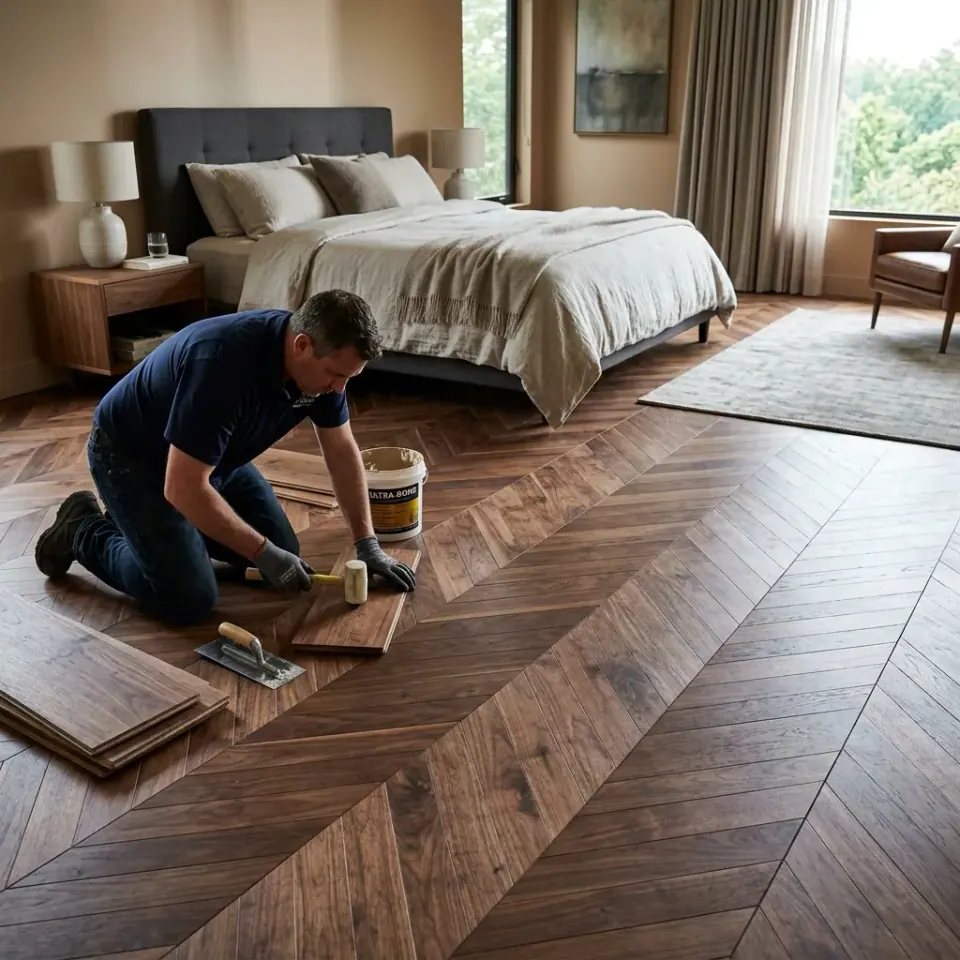



Contact us on WhatsApp or by phone for a free visit and the right treatment for your floor.
Understanding parquet specifications and origin
How we renovate an old floor: inspect, treat, then pick the right material.