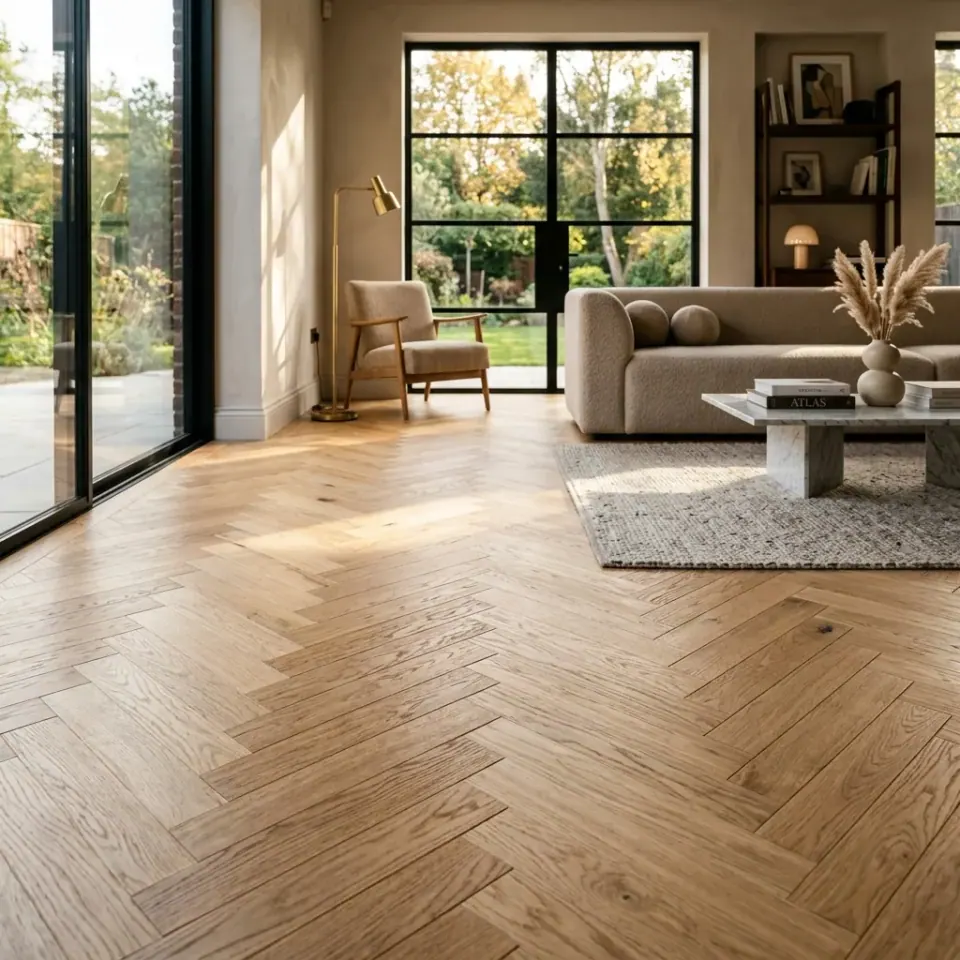
A look that matches the floor
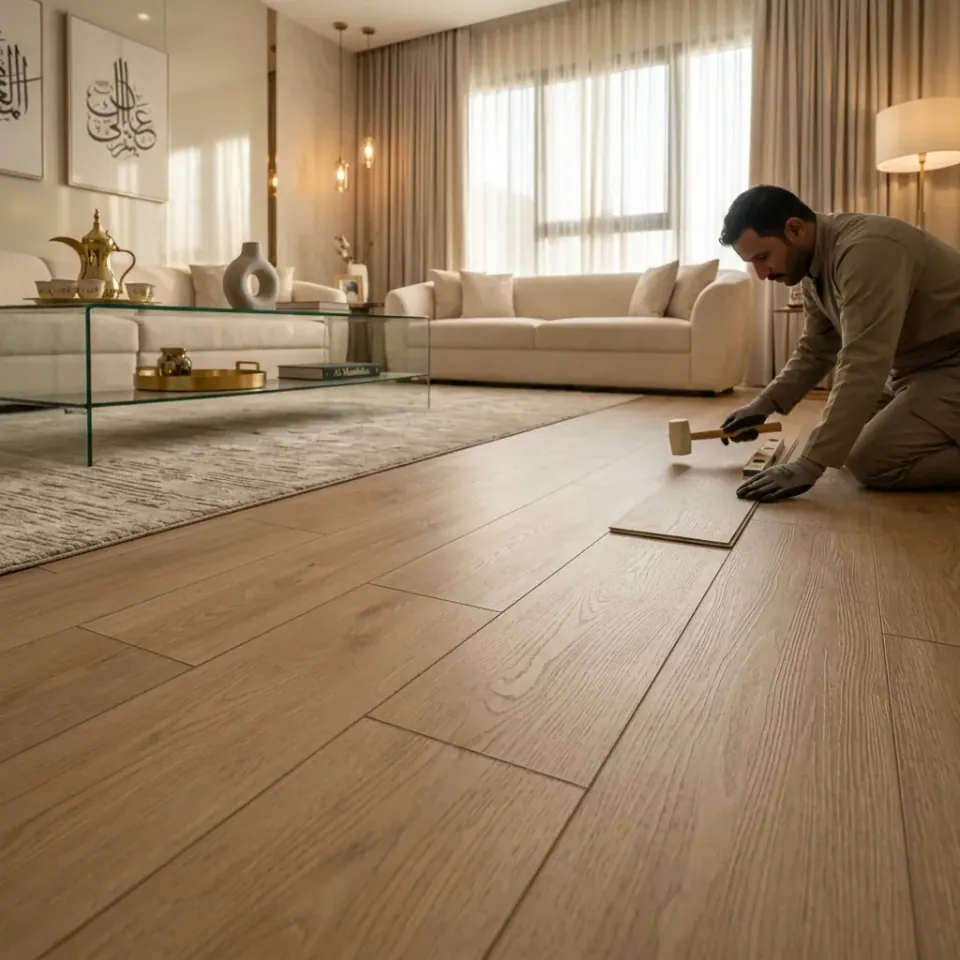
If your hall or corridor has wood-look vinyl, carrying the same pattern onto the stairs gives a continuous look instead of an abrupt change at the first step.
Stairs take more friction and more slips than any other part of a home, so choosing a nice colour is only half the job. Tiraz Najd helps you cover stairs with vinyl while paying attention to step thickness, edge shape and anti-slip strips, and we match the look to your floor upstairs and downstairs. Everything starts with a free visit in Riyadh where each step is measured.
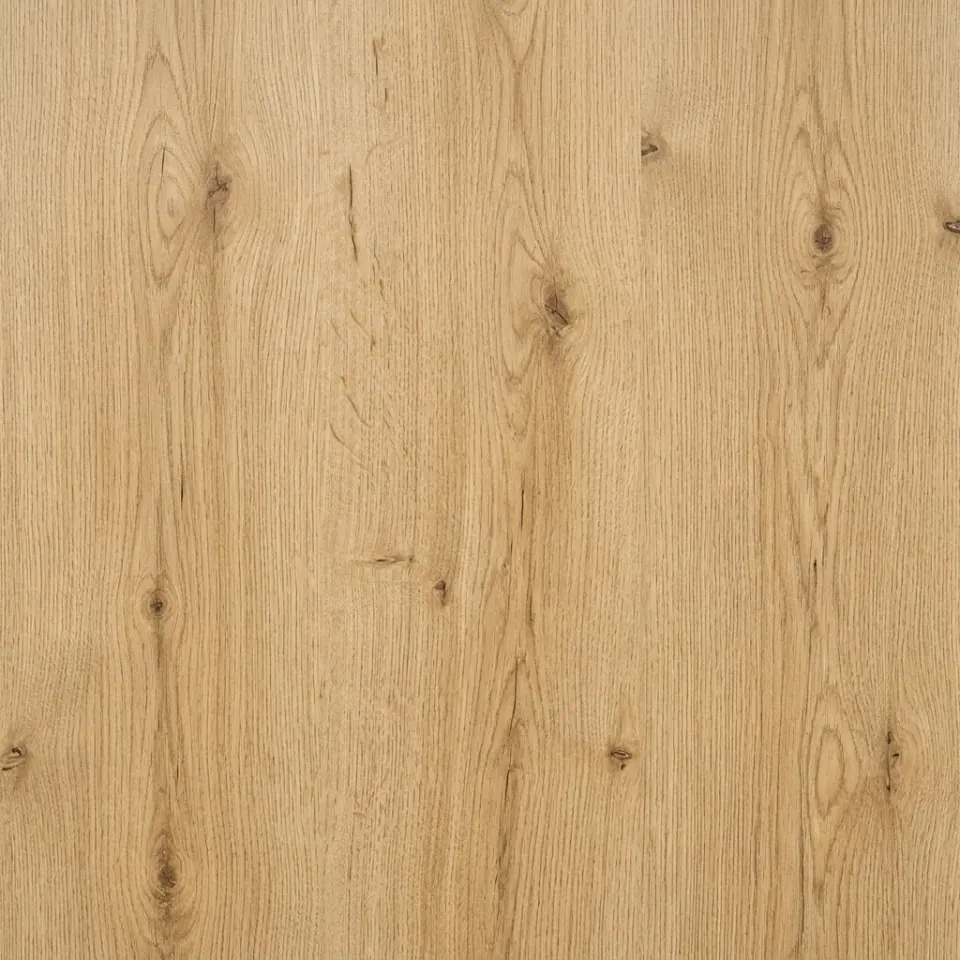
No single material suits every staircase, but vinyl has clear advantages when it is fitted properly.
If your hall or corridor has wood-look vinyl, carrying the same pattern onto the stairs gives a continuous look instead of an abrupt change at the first step.
Dust and crumbs gather on stairs more than anywhere else, and vinyl can be wiped with a damp cloth instead of needing a strong vacuum on every step.
Thin planks do not change step height much, which matters so that the first and last steps do not feel different from the rest.
Vinyl usually softens footsteps compared with hard marble or ceramic, especially with a suitable underlay beneath it.
Light and dark wood, stone looks and calm solid colours let you match the stairs to furniture and wall colours.
Existing stairs can usually be covered without demolition, which means less dust and less time than breaking out and refinishing.
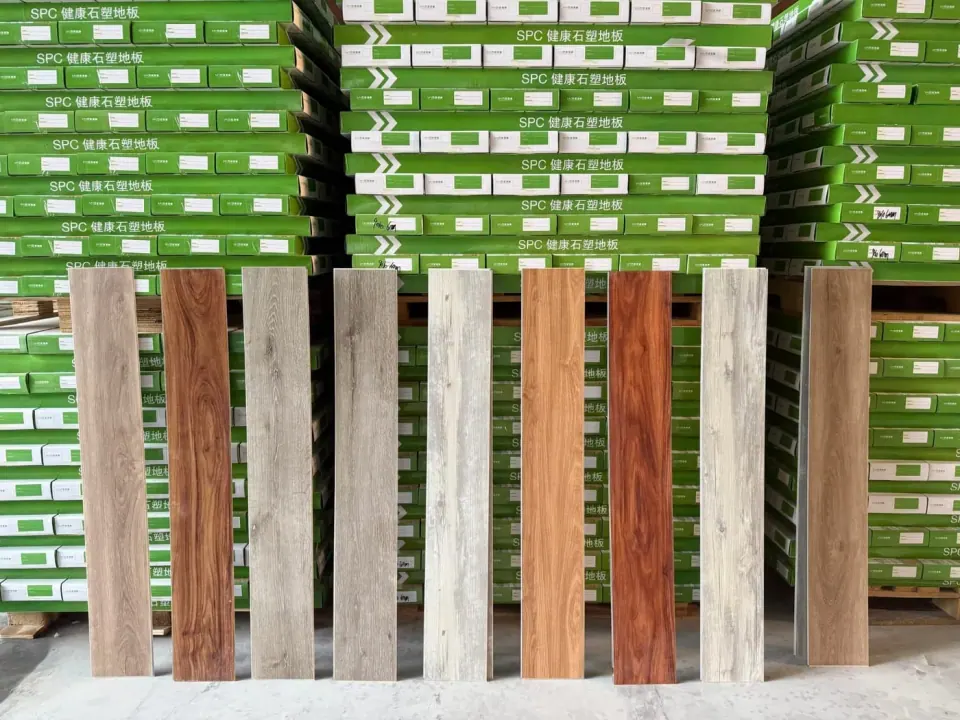
In practice stair vinyl comes in three styles. The first is SPC or LVT planks cut to the size of each step and bonded with suitable adhesive, the most common choice because the boards are dimensionally stable and durable. The second is sheet vinyl that is cut and glued, which suits simple straight stairs or light use. The third is pre-formed pieces that combine the tread and the front edge (the nosing) in one part and give a cleaner finish.
Which style works depends on the staircase. Straight stairs accept cut planks easily, while curved or winding stairs need more precise cutting and longer preparation, and vinyl may not be the best answer when the radius is very tight. That is why we inspect the stairs before recommending a type.
The wear layer matters more on stairs than on a normal floor because footsteps concentrate on the edge of each tread. Read our guide to vinyl thickness and wear layers to understand the difference, and look at SPC flooring if you want a very stable option.
If the existing stairs are finished in tile or marble, vinyl can often be fitted over them once joints are treated and the surface is sound, as explained in fitting vinyl over tiles.
We compare the most common stair coverings on the points that matter to families and facilities, without absolute promises because results depend on workmanship.
| SPC/LVT planks | Sheet vinyl | Stair carpet | Parquet stairs | |
|---|---|---|---|---|
| Look | Clear wood or stone pattern | Many patterns, continuous surface | Soft feel and warm look | Real wood or HDF look |
| Slip behaviour | Good with a suitable strip or nosing | Needs careful edge and strip | Usually good grip | Needs surface and edge treatment |
| Footstep noise | Quieter than hard surfaces | Fairly quiet | Usually the quietest | Moderate |
| Cleaning | Quick wipe | Quick wipe | Needs vacuum and care | Dry or lightly damp clean |
| Best for | Straight stairs in daily use | Simple jobs on a tighter budget | Households that like warmth | People who want real wood |
We visit, measure tread depth, riser height and width, and check the edges for cracks or loose parts.
We show samples of planks, edges and safety strips, then pick the style that suits the shape and use of the stairs.
We repair gaps, secure loose parts and clean off dust so the vinyl bonds to a stable base.
Each piece is cut to its own step and bonded, and the edge trim is fixed so the end cannot lift.
We test every step and hand over care instructions and the waiting time before heavy use.
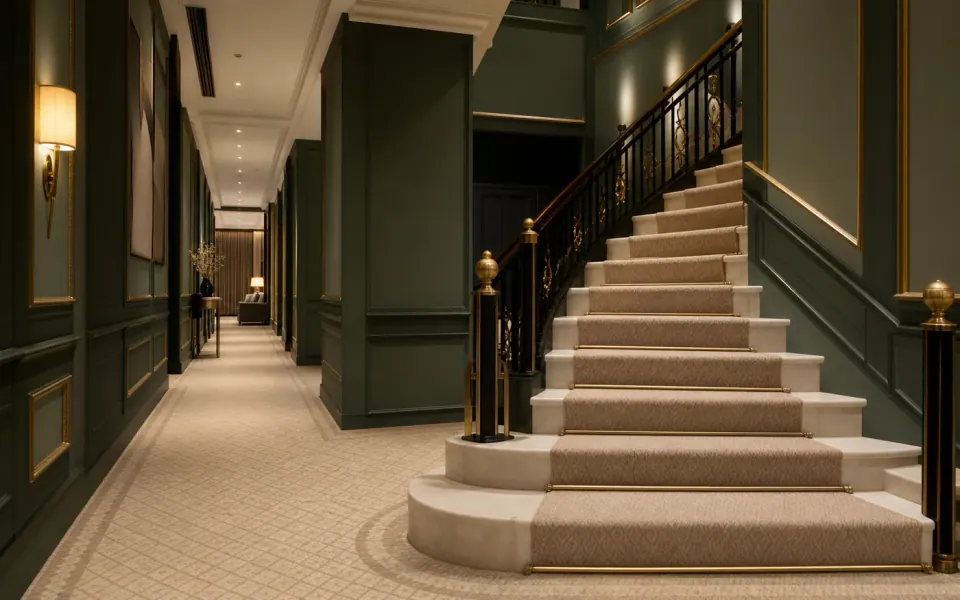
Most slips and falls happen at the edge of a step rather than in the middle of the tread, so we never treat the edge as a minor detail. We pair every job with a strip or nosing that suits the vinyl thickness and holds firmly.
We recommend an edge colour that is slightly different from the tread, especially in homes with children or older people, because a visible step edge reduces tripping.
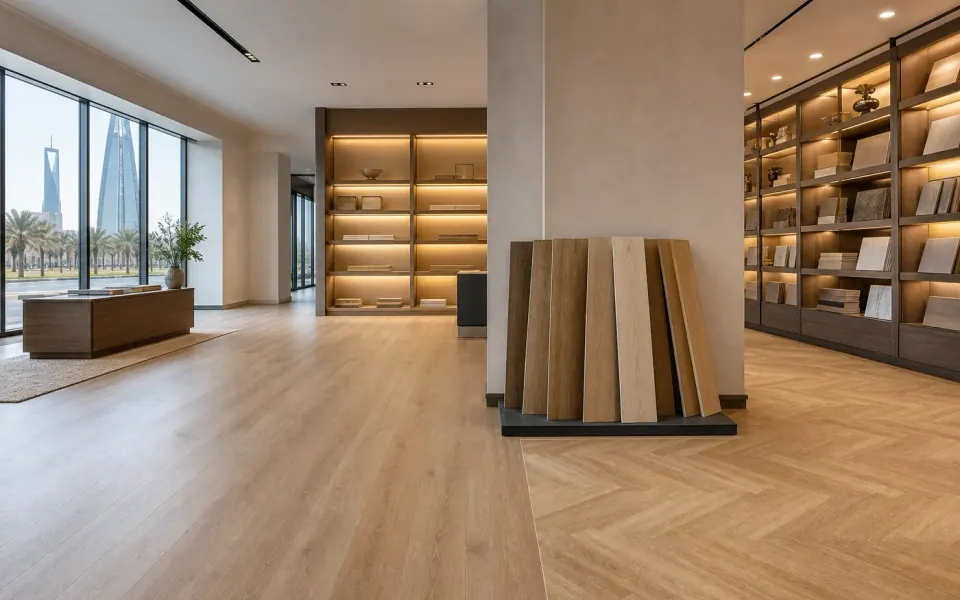
These points reduce risk but never remove it, and user attention remains part of safety.
One step with a different height confuses the stride, so we check that the added thickness is the same on every step.
A very shiny surface can feel slippery in socks, so we prefer a semi-matt or lightly textured finish.
A loose edge is more dangerous than an uncovered step, so we fix it with materials suited to the original surface.
Good lighting shows step edges clearly, and we tell you if the stairs sit in a dark corridor so you can plan a fix.
Checking the handrail is part of safety, and if it is loose we advise repairing it before changing the finish.
We suggest a rougher surface and a clearly visible edge if the stairs are used by children or older people.
Every staircase has its own conditions, and these are cases we meet often in homes and facilities.
Straight stairs between two floors used by children and older people, so we focus on the edge and a non-glossy surface.
Narrow stairs with few steps where thin planks are preferred so the first step does not rise.
Stairs guests see first, so we care about colour harmony with the entrance floor and the look of the edge.
Moderate use by several staff, so we focus on durability and easy cleaning.
The side skirting needs careful treatment so no gap shows between vinyl and wall.
We check the surface, treat slipperiness and then cover with vinyl once the marble is confirmed firm.
Any movement under the vinyl shows later as bubbles or lifted ends.
Leaving the edge untreated makes the end peel quickly and keeps the step unsafe.
Very thick material raises the step and changes its height, while very thin material may not survive the friction.
Immediate use after bonding can shift the pieces before the adhesive has set.
Start with a simple question: who uses the stairs every day? If there are children or older family members, choose a non-glossy surface and a clear edge. If the stairs are lightly used, consistency of colour and finish is the main concern.
Then compare the pattern with the floor on the landing: if the floor is parquet ask for a close pattern, and if it is vinyl you can continue the same one. See wood-look vinyl to pick colour and pattern.
When comparing quotes, ask what is included: edge trims, safety strips, surface repair. If these items are unclear a gap can appear later. For budgeting see our guide to vinyl price factors, and for a direct request just send us a photo of the stairs on WhatsApp.
We work inside Riyadh only, and every visit is free with no obligation to buy.
Simple care that extends the surface life and keeps the edge safe.
Sand and small grit scratch vinyl most, so sweep the stairs regularly with a soft brush.
Wipe with a damp, not wet, cloth and avoid pooling water at the edges so it does not reach the adhesive.
Strong chemicals can dull the surface, so use a cleaner made for vinyl and follow the supplier instructions.
When moving furniture on stairs use pads or a blanket to reduce scratches and pressure on the edges.
Inspect the edge from time to time and tell us if you see lifting or looseness so we fix it early.
A doormat reduces the sand carried indoors, which matters a lot in Riyadh.
Straight stairs can usually be covered once inspected. Very tight curved stairs may need a different solution, which is why we inspect them before suggesting a type.
It depends on the vinyl surface and the edge. We choose a non-glossy surface and a suitable strip or nosing, and we never promise a surface that cannot slip, because careful use is part of safety.
In most cases no. We treat the existing surface, secure loose parts and fit the vinyl over it, unless the stairs are damaged enough to stop the covering from holding.
Vinyl is easier to clean, thinner and less sensitive to moisture, while parquet gives a real-wood look but needs more careful maintenance. Read the comparison guide before deciding.
It depends on the number and condition of the steps and the edge type, and it often takes a day or more. We give a duration after the visit instead of a generic number.
Stairs exposed to direct sun and rain need materials made for outdoor use. Talk to us before ordering and we will explain what suits your site.
Yes. The edge is part of the job and we do not do the covering without it, because the front of the step is where wear is highest.
Send us a photo of the stairs and the number of steps on WhatsApp or call us. We arrange a free visit inside Riyadh and send a quote once the type is agreed.
Send a photo of the staircase and the number of steps and we will arrange the visit and quote inside Riyadh.
When each fitting system makes sense.
Choosing pattern and colour for the home.
Key criteria for high-traffic areas.
The detail that decides the quality of any fit.
Edge finishes and transitions.
Safety and comfort at home.
Warm, comfortable vinyl