
Preventing early damage
Removing dust and stains quickly stops them becoming permanent damage to fibres or surface.
A facility floor is used every day: customers, staff, trolleys, chair wheels, cleaning chemicals and desert dust. The difference between a floor that stays good for years and one that wears out in months is often a written maintenance program. Here we set out the parts of a practical program for offices, schools, clinics and shops, and when to call a specialist to inspect or repair.
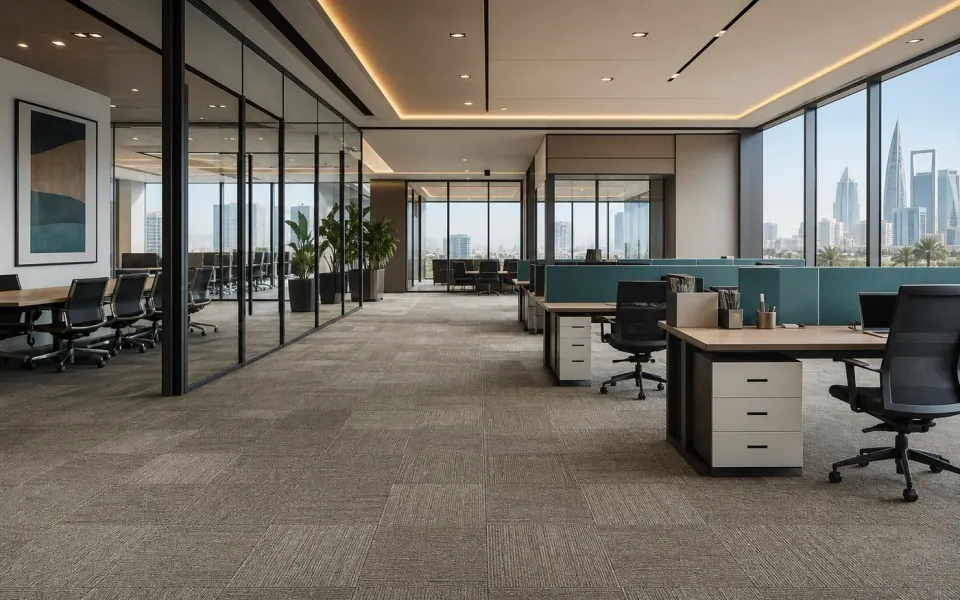

A good program does not mean a large budget; it means regularity, records and clarity about who does what and when.
Removing dust and stains quickly stops them becoming permanent damage to fibres or surface.
A clean, sound floor is part of a visitor’s impression of the facility.
Spotting raised edges or open joints before they cause a trip.
Regular checks reveal the need for replacement before it surprises you.
Scheduled partial maintenance is easier than shutting a whole area for an emergency.
Proper care preserves the supplier’s warranty where its conditions apply.
Medical vinyl, welded seams and installation details for dental clinics.
Homogeneous vinyl, welded seams and edges for medical and teaching labs.
Start with a simple map splitting the facility into zones: entrances, reception, corridors, work rooms, toilets, kitchen. Entrances and corridors carry the most dust and friction, so they need more frequent cleaning and inspection.
Sweep or vacuum entrances and corridors, wipe spills at once, and check that there is a mat at the outside door. This step alone cuts a great deal of fine dust entering the building.
Deeper vacuuming of carpet, wiping vinyl and parquet with a slightly damp cloth without flooding, and checking that no water collects near walls and floor drains.
Inspect edges, skirting and joints, note any lifting, swelling or repeated stains, and write them down. In dust seasons increase cleaning frequency. See the carpet care guide and parquet maintenance and repair.
Photograph entrances, corridors and any defects and send them on WhatsApp; we will say what needs maintenance and what can wait.
Dust is enemy number one; regular vacuuming matters more than any cleaning product. Stains are treated at once by blotting, not rubbing, and deep cleaning follows traffic levels. Carpet tiles let you replace a damaged piece alone, so keeping a small stock from the same batch is wise. See carpet tiles.
Easy to wipe but it can be scratched by grit and sharp objects, so entrance mats and furniture pads are essential. Avoid harsh or excessively wet cleaners so they do not seep into joints. Waterproof flooring is worth reading.
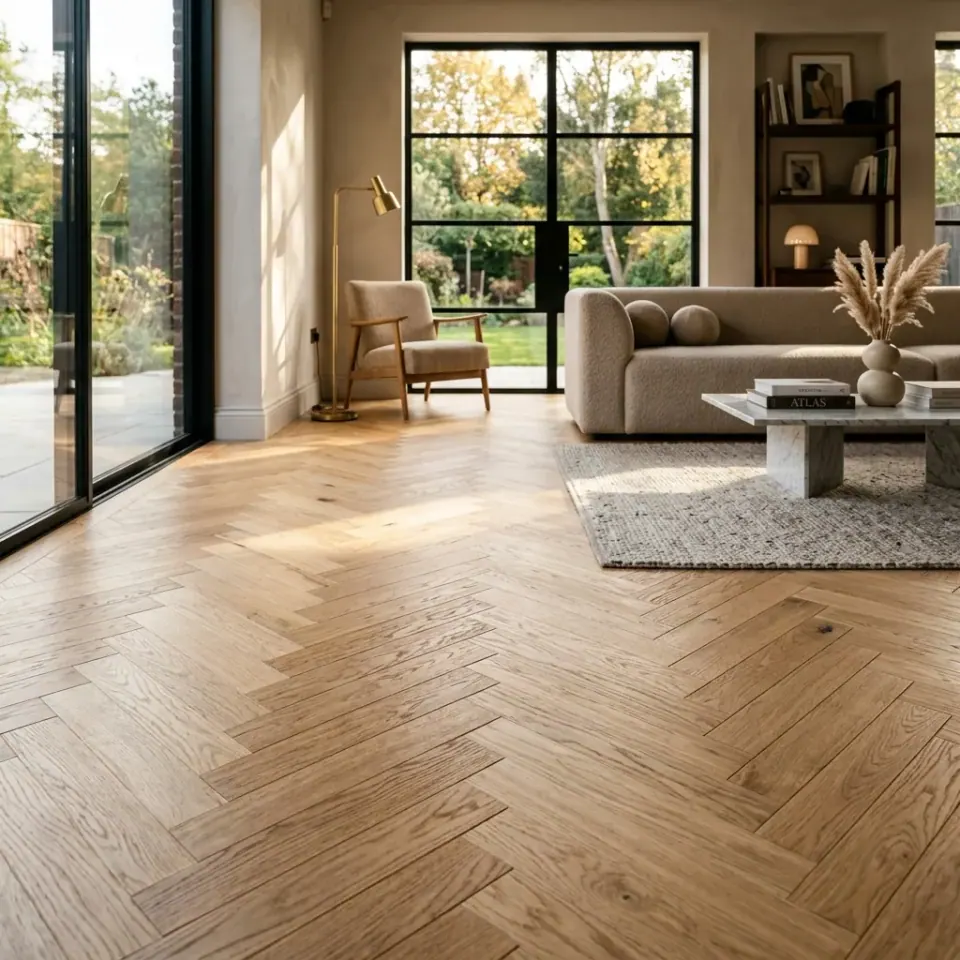
It reacts to water and humidity more than others, so wipe with a barely damp cloth and dry it, and watch skirting and edges near doors and water sources. Any lifting in the boards should be checked early.
It needs periodic brushing, removal of leaves and dust, cleaning according to use, and a check of seams and edges. Details are in artificial grass maintenance.
A table with the date, zone, observation (lifting, stain, open joint, wear), a photo and a proposed action is enough. After a few months you see which zones wear fastest, so you shift effort or change the material there.
If the fault is in one plank, tile or edge, a local repair is best. If the fault repeats at several points, or moisture rises from the floor itself, the problem is deeper and needs a specialist check before any repair.
We suggest an inspection if swelling recurs, joints open after cleaning, a damp smell lingers, or the floor is old and you want to know its remaining life. Our site visit inside Riyadh is free.
Keep spare pieces from the same batch in a dry place with the colour and batch number noted, since different batches can show a colour difference at replacement. See the handover inspection checklist.
Chairs with wheels are the main factor; the floor needs a chair mat or a resistant material, plus regular carpet cleaning. See office flooring.
Heavy traffic in short bursts (queues, breaks) needs a floor that copes and cleans quickly, with stairs and corridors inspected; see school flooring.
Hygiene comes first, so a floor with few joints that is easy to disinfect per the supervising authority’s requirements is preferred; see clinic flooring.
Appearance in front of customers comes first: frequent wiping and quick repair of edges visitors might trip on; see retail and showroom flooring.
The load on a floor shifts with Riyadh’s seasons, so tasks can be spread across four seasons.
Two mild periods suited to reviewing edges, skirting and joints, doing small repairs and deep-cleaning carpet, since the weather allows faster drying.
Heat rises and some materials expand, and colours fade near windows in direct sun. Review curtains and insulation and watch for any joints that change after heat waves. See the best flooring for Riyadh’s climate.
On rainy days wet shoes and mud come into entrances, so absorbent mats and quicker entrance cleaning are needed, and any water leaking from doors or windows onto the floor should be watched.
After dust waves, clean the settled dust off surfaces before it is trodden in and works into the fibres.
At year end review the inspection log, decide what will be repaired and what replaced next year, and ask the specialist for a written quote on big jobs with a clear bill of quantities; see flooring bill of quantities.
Daily for entrances and corridors, weekly for deeper cleaning, and more often in dust seasons. The rhythm changes with traffic.
We offer a free site visit inside Riyadh to assess the condition, supply materials and repair damaged sections according to floor type; the action is set after inspection.
It is advisable, especially with carpet tiles, to avoid colour differences between batches at replacement.
Recurring swelling at more than one point, wide open joints, general wear along walking routes, or moisture from the base.
Some can damage materials and weaken the surface layer, so follow the supplier’s advice for each material and test any product in a hidden corner.
With a suitable mat at the outside door and by cleaning shoes, since most damage starts with the dirt carried in. See the carpet care guide.
Send photos on WhatsApp or call us and we will arrange a free site visit inside Riyadh.
In many cases the work can proceed in phases and zones, and we arrange the schedule around your working hours.




Send photos and area on WhatsApp and we will arrange a free site visit inside Riyadh.