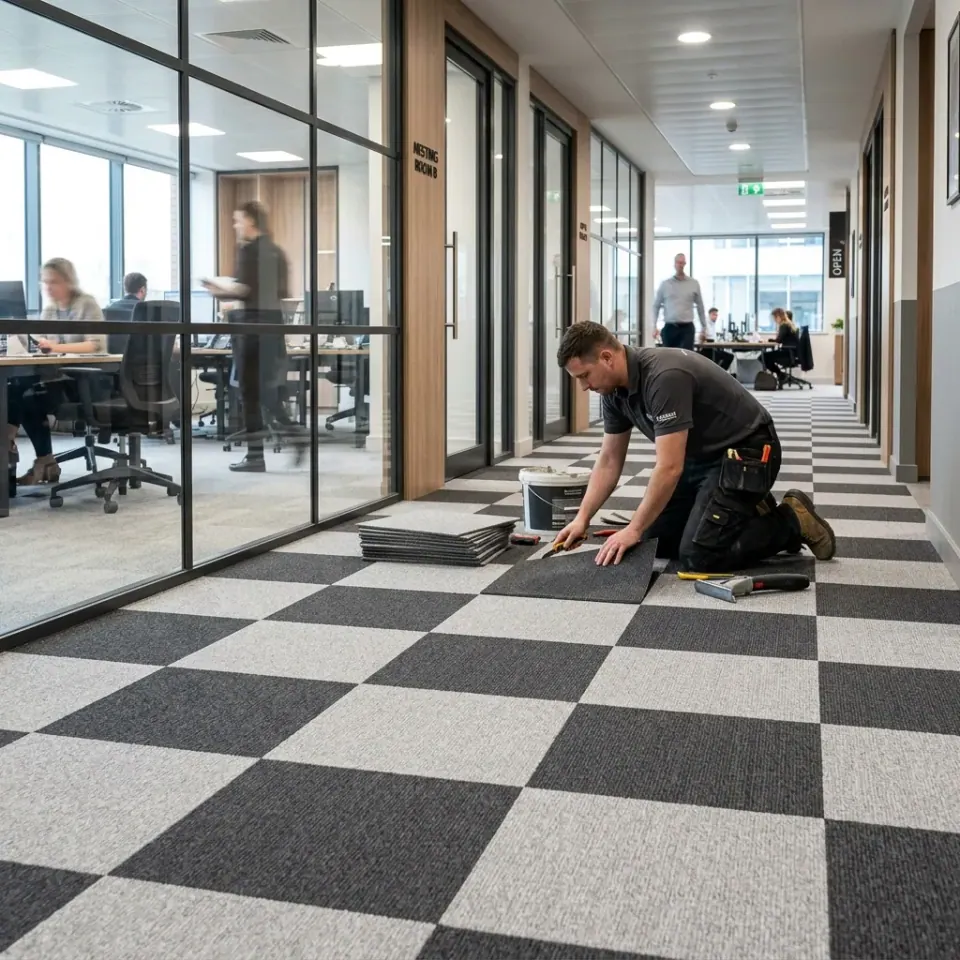
Everyday durability
Some fibres spring back after being walked on, while others flatten quickly in corridors and under chairs.
When people look for a good carpet they quickly find that price and colour alone are not enough, because the fibre it is made from decides how it behaves with traffic, dirt, office chairs and sunlight. This guide explains nylon, polyester, polypropylene and wool in plain language and shows where each one fits, so you decide by how you use the space and not by a brand name. After that we arrange a free visit inside Riyadh with real samples.
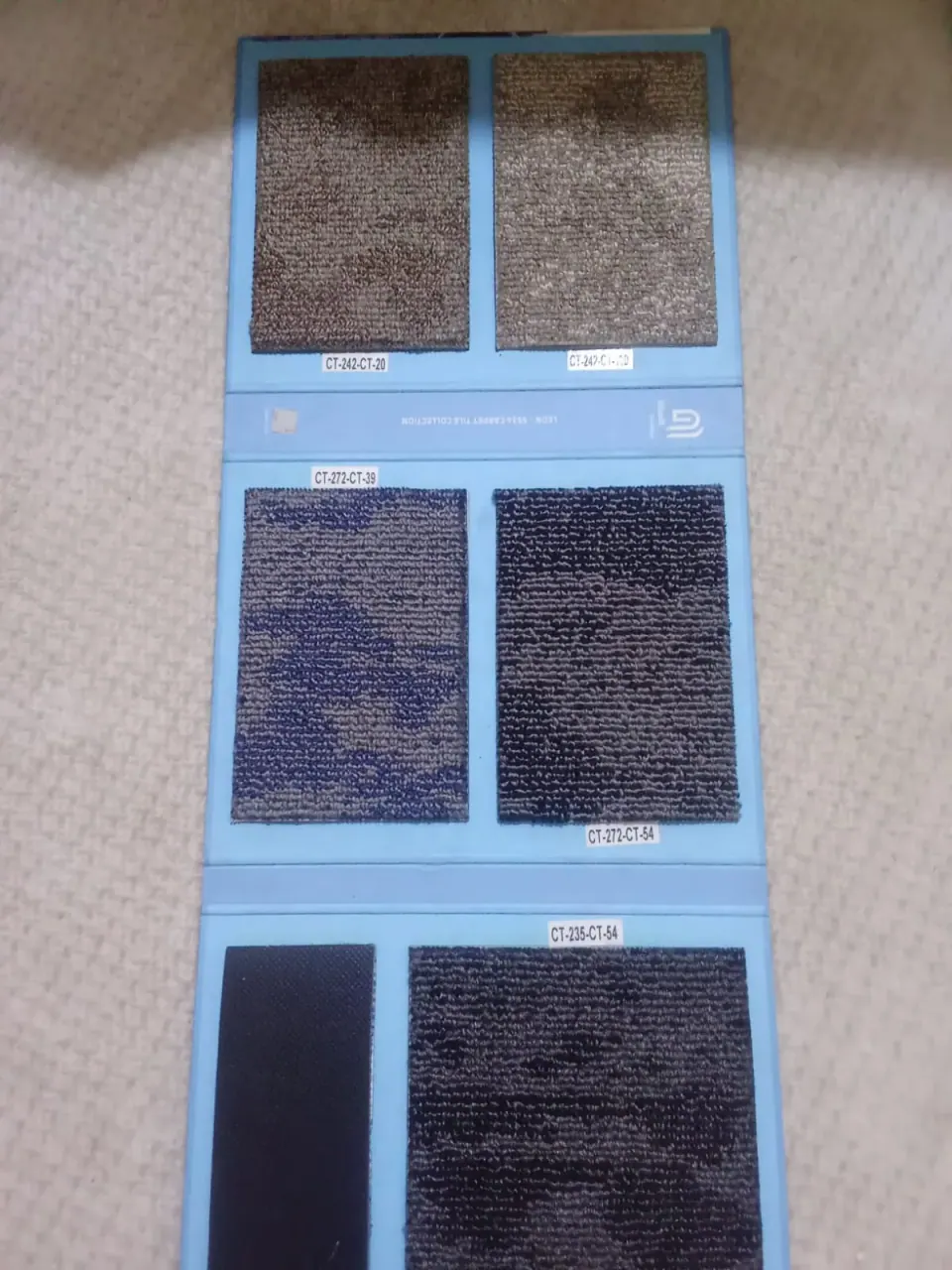
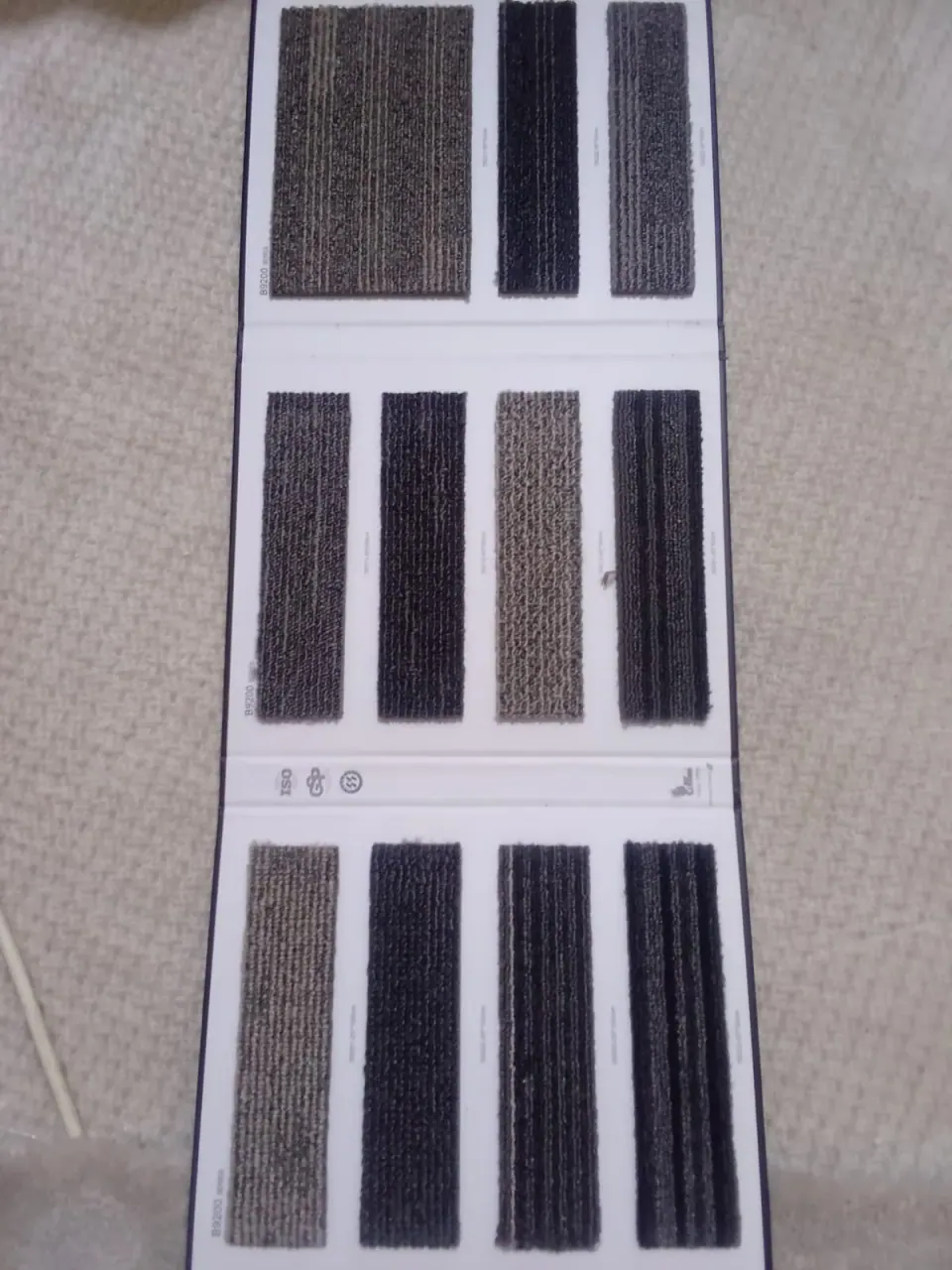
Three carpets in the same colour can behave very differently after a year of use because the fibre is different.
Some fibres spring back after being walked on, while others flatten quickly in corridors and under chairs.
The yarn type decides how dyes and liquids interact with the surface and whether a mark lifts out or sets.
Fibres dyed in different ways handle sunlight and cleaning to different degrees.
Polyester is usually softer and polypropylene a little coarser, which changes how the carpet feels when you walk barefoot.
Some materials take deep cleaning easily and others need more care with water and cleaning products.
The fibre shows up in the price, so it is worth asking whether you are paying for longer life or just for a name.
Nylon (polyamide) is known for resilience and its ability to recover after being compressed, which is why it is widely used in commercial areas and corridors. It takes dye well, so many colours and patterns exist, and it usually costs more than the others.
Polyester has a soft feel and bright colours and copes well with water-based stains. It is generally less resilient than nylon, so foot-traffic marks can show over time in busy areas. It suits bedrooms and lightly used living rooms.
Polypropylene (olefin) hardly absorbs water and resists moisture and water-based marks, so it is used in loop-pile carpets and some commercial settings. It can be affected by some oily stains and feels less soft, so we review how the space is used before suggesting it.
Wool is a warm, luxurious natural fibre that wears well, but it costs more and needs more careful care. Most commercial carpet today is made from synthetic fibres because of cost and easier maintenance.
To understand density and yarn weight go to our carpet quality and density guide, and for the difference between cut and loop pile see cut pile vs loop pile.
A general comparison to get you started; the final result also depends on yarn quality, construction and dyeing.
| Nylon | Polyester | Polypropylene | Wool | |
|---|---|---|---|---|
| Recovery after traffic | Usually excellent | Moderate | Moderate | Good |
| Feel | Medium softness | Very soft | Slightly coarser | Warm and natural |
| Water and moisture | Good | Good | Very high | Relatively sensitive |
| Stain behaviour | Good with care | Good on water-based marks | Good on water-based, careful with oily | Needs quick treatment |
| Best for | Corridors and busy areas | Bedrooms and sitting rooms | Damp areas or general use | Luxury rooms and private spaces |
| Typical price level | Highest of the synthetics | Mid | Economy to mid | Highest overall |
A practical rule we start from on site visits and then adjust to what we see.
Polyester or soft nylon works well because traffic is light and comfort matters more than toughness.
Dense nylon or polyester balances feel and durability.
Dense nylon or carpet tiles stand up to rolling chairs and constant passing.
Tough synthetic fibres at a suitable density with an organised prayer-line design, as in mosque carpet.
Polypropylene is more suitable where moisture is present, with attention to ventilation and drying.
Strong, easy-to-clean fibres because of feet, drinks and repeated use.
We ask who uses the space, how often, and whether there are rolling chairs or children.
We rank what matters to you most: softness, durability, ease of cleaning or price.
We bring samples of more than one material so you can touch them and compare colour in the room light.
We press and rub the sample to see how the yarn behaves.
Once the type is chosen we send a clear quote stating the material, thickness and fitting.
Before buying you can run a simple check on the sample: press with a finger and see whether the pile springs back quickly, and bend an edge to see the yarn density from behind. The closer the fibres, the less backing shows.
If the space is near strong sunlight, ask about colour stability under light instead of judging only from the showroom.
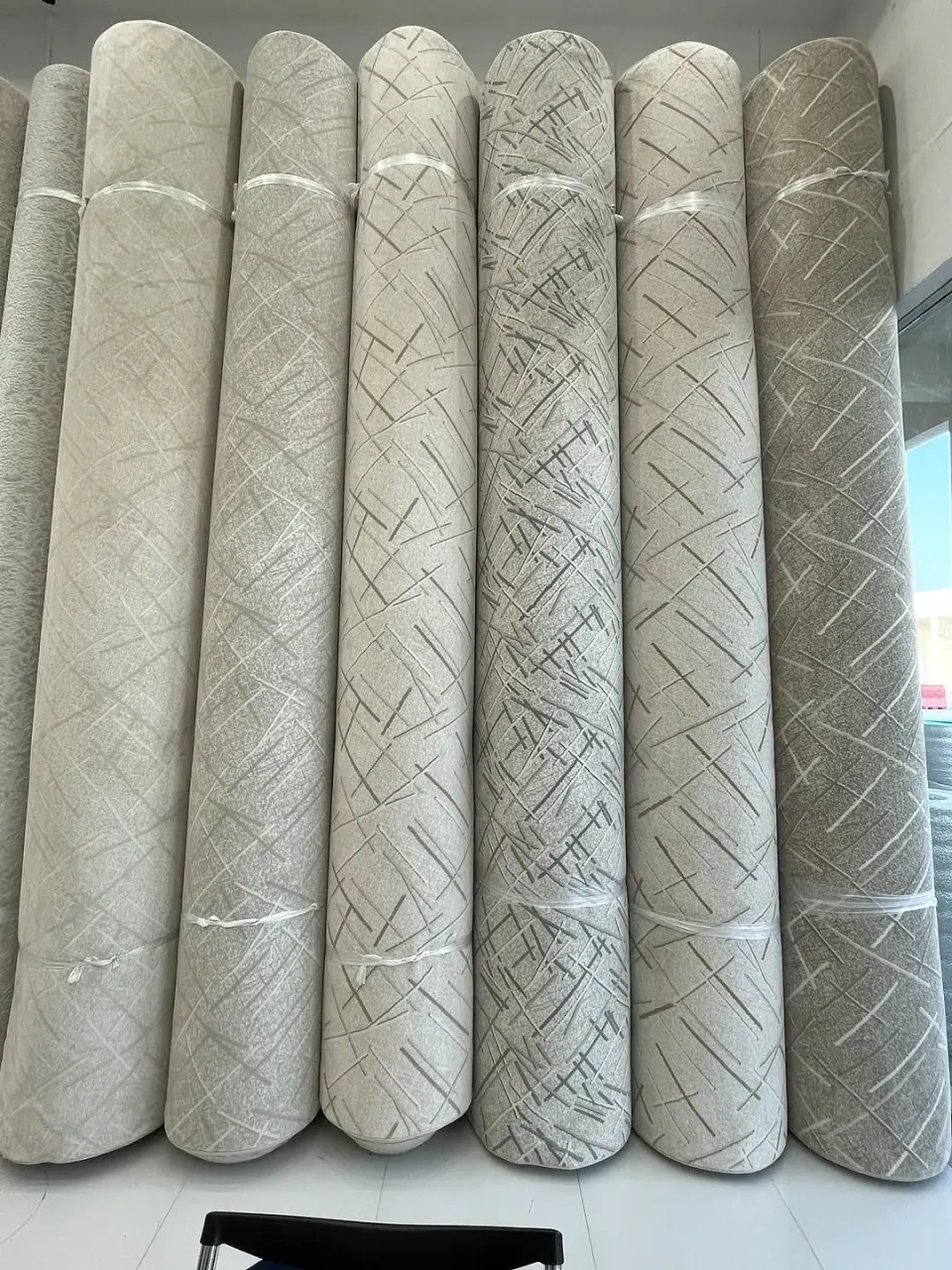
A few cases we often meet during visits in Riyadh.
It needs a resilient yarn at good density or carpet tiles, because chairs press on fixed points all the time.
Soft polyester can be a comfortable choice while use is limited and traffic does not follow the same path.
It needs a fibre that recovers, and a mid-tone colour that hides neither dust nor footprints too plainly.
The colour sits in the sun for hours, so we ask about dye stability and test the sample in the same spot.
Tough carpet at suitable density in a calm colour, with organised prayer lines to arrange the rows.
We pick an economical, easy-clean material so the owner does not carry a high cost when tenants change.
The cheapest material can flatten in a corridor within a short time and cost more over the long run.
Bedroom carpet may not survive an office with rolling chairs.
A pretty colour on weak yarn loses its beauty with use.
Every fibre loses its look without regular vacuuming and periodic deep cleaning.
Start from the space, not the name: for a long corridor or an office with several staff pick something that stands up to traffic, and for a bedroom pick the softest. In every case place the sample in the room and watch it in daylight.
Then ask about thickness and density, which affect appearance after use more than most people expect. Because dust is a fact of life in Riyadh, also read the carpet care guide so you know how to clean it.
When comparing quotes, make sure each one states the fibre name, the fitting method and whether the underlay is included, because changing any of them may change the price. For the factors involved see carpet price factors.
We serve Riyadh city only and every visit is free with no obligation.
These are general tips, and we give you the supplier instructions for your type after fitting.
Regular vacuuming and periodic deep cleaning, and treat a spill as soon as it happens.
Avoid scrubbing stains hard so the soft fibres do not distort.
Treat oily stains with a suitable cleaner and do not let them dry in.
Avoid heavy wetting and read the supplier instructions before using any cleaner.
Put a mat at the entrance and protect the carpet from sand, which damages fibres most.
Rearrange furniture now and then so the same spots do not flatten.
Short questions that reveal a lot about the quality of a quote.
Ask for the technical name of the material, not a general phrase such as “premium fibre”.
This helps you compare two quotes with similar prices.
The dyeing method explains colour stability and behaviour in sunlight.
The backing affects stability, insulation and the life of the carpet.
A good supplier gives clear instructions instead of general promises.
Trying before buying prevents most colour mismatch problems.
No single material is best for every space. Nylon suits heavy use, polyester suits softness and comfort, and polypropylene suits damp areas and general use. We choose with you based on the space.
Not necessarily. Polyester is excellent for colour and softness and suits lightly used rooms, but it is usually less resilient than nylon in busy corridors.
It can be used in some areas, especially those with moisture, but it is less soft, so it may not suit bedrooms for people who prefer a soft feel.
Wool is a wonderful natural fibre but costs more and needs more careful care. Many customers prefer synthetic fibres for easier upkeep.
Ask the supplier for the technical name of the material and request a sample labelled with the yarn type, and do not rely on general wording in the quote.
Yes, depending on the yarn and the dyeing method. If the space is near a large window mention it during the visit.
Yes, we show samples of several materials during the free visit so you can compare them in the light of the actual room.
Yes, we supply and fit inside Riyadh once the type is agreed, and prepare the floor when needed.
Tell us the type of place and how many people use it and we will arrange the visit and quote inside Riyadh.
How to read specifications and compare quotes.
Which pile shape suits your use.
Regular cleaning that keeps the look.
Why it happens and what to do.
A practical comparison of the two.
Ventilation and simple steps after fitting.
Causes and how to reduce it