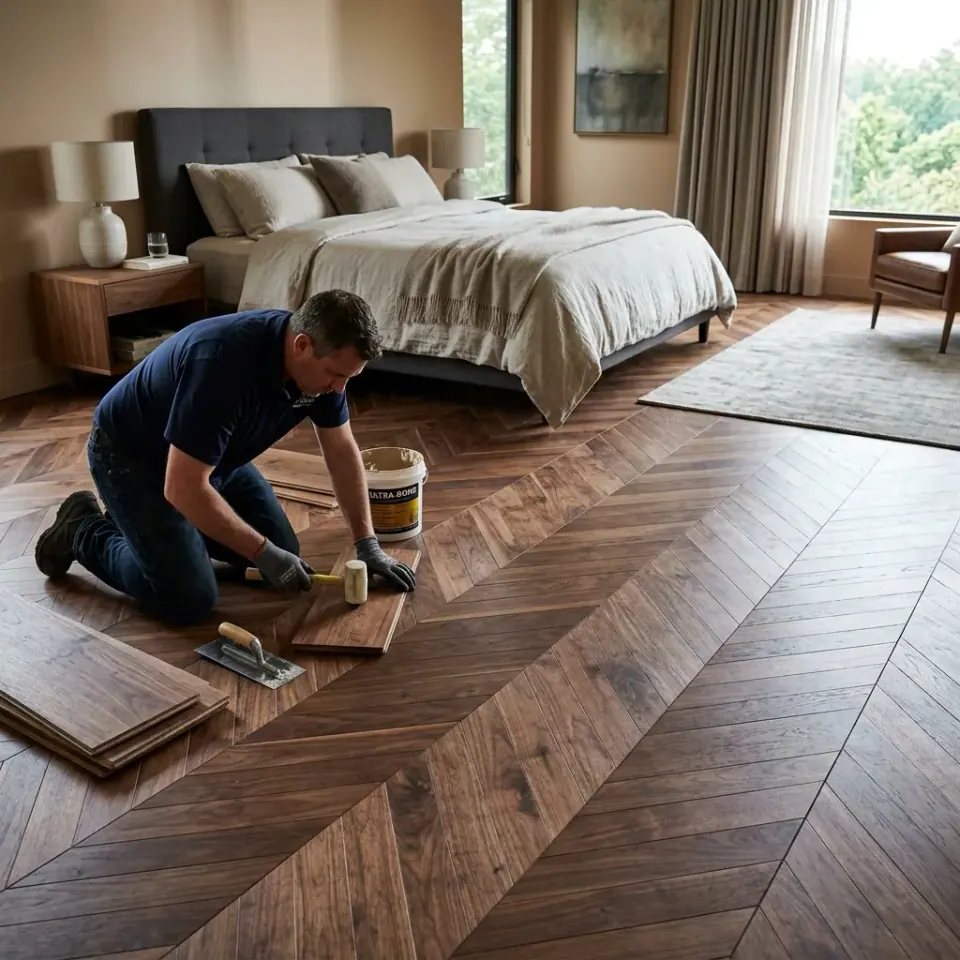
Solid wood
A plank of natural timber through its full thickness. It reacts more to humidity and heat changes, but it can be sanded more than once depending on thickness.
Solid parquet is a single piece of timber; engineered parquet is layered with a real wood face. Each suits different humidity, heat, subfloors and budgets. We explain the differences plainly, then visit and recommend what fits.
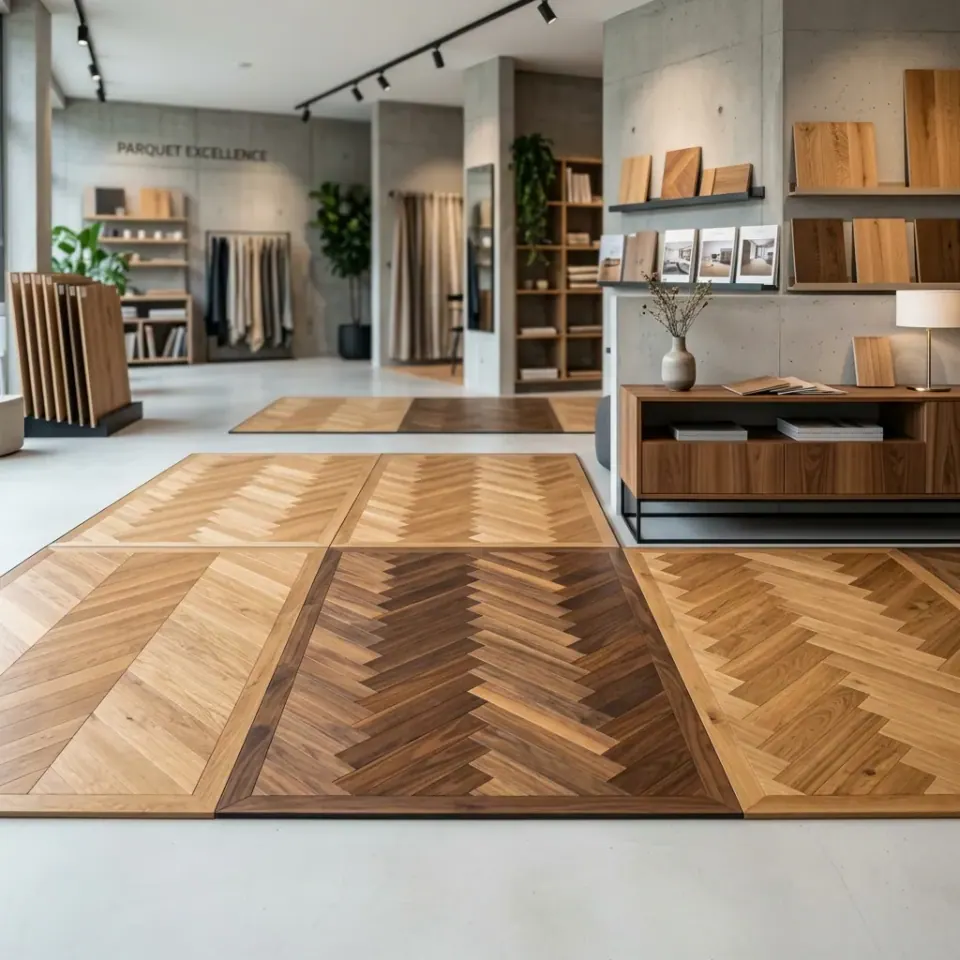
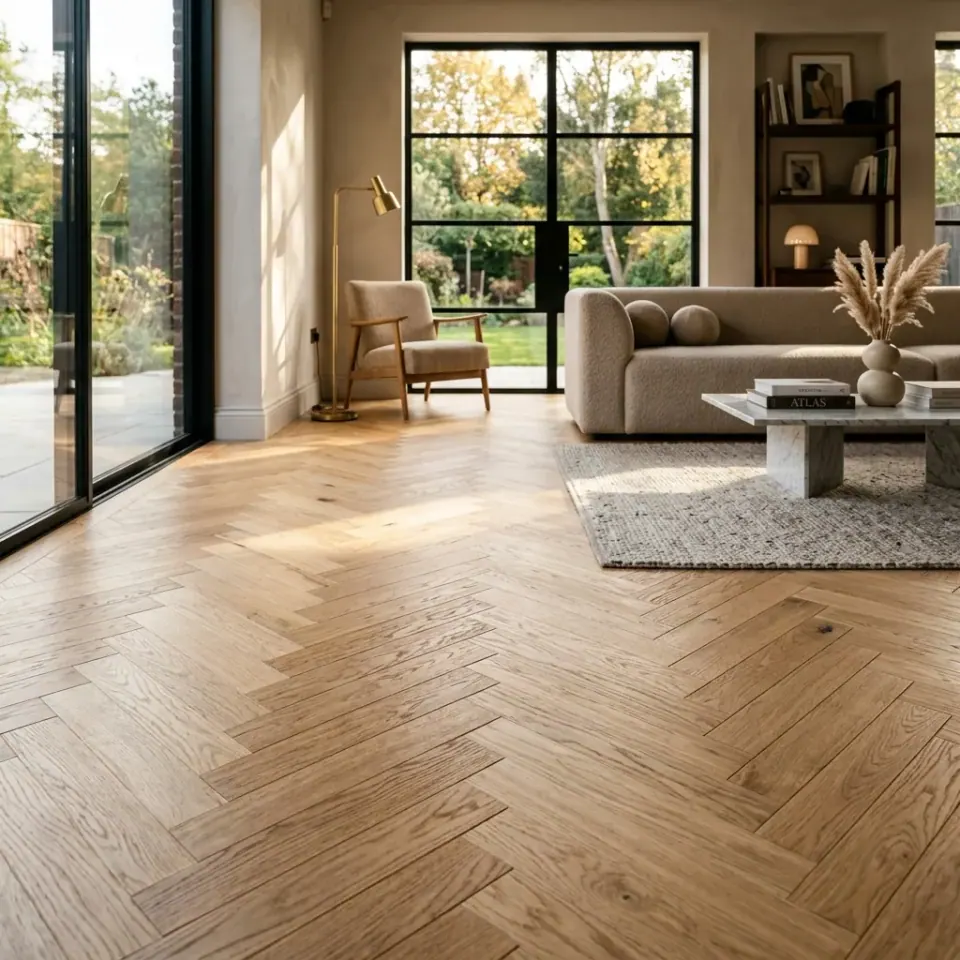
Before the detailed comparison, see parquet versus laminate if you have not settled on the product family, then continue here for the difference inside wood parquet.
A plank of natural timber through its full thickness. It reacts more to humidity and heat changes, but it can be sanded more than once depending on thickness.
A real wood face over layers of other wood or fibre. It holds shape better as conditions change, but how often it can be sanded depends on the thickness of the top layer.
A board of compressed wood fibre with a printed or coated surface. It differs from both in nature and price. Read the HDF parquet guide.
A trade label for imported types. What matters is the actual specification, not the name. See German parquet.
Both usually give a real wood face. The visual differences are in grain pattern, colour and finish.
Solid is normally glued or nailed depending on the subfloor; engineered may be floated or glued. The subfloor and product decide the method.
Wood reacts to humidity and heat: it swells slightly when humidity rises and shrinks as it dries. Riyadh air is dry most of the year, but indoor air conditioning and moisture from the subfloor, washing or leaks can change that.
Wide solid planks are more prone to dimensional change, and gaps can open in very dry conditions. They need a very dry subfloor and better humidity control.
Cross-layered construction reduces movement, so it is usually more stable. It still cannot tolerate standing water; see waterproof flooring if the room is damp.
Damp concrete harms any wood floor. Test before installing, and read concrete subfloor moisture testing and expansion gaps and heat.
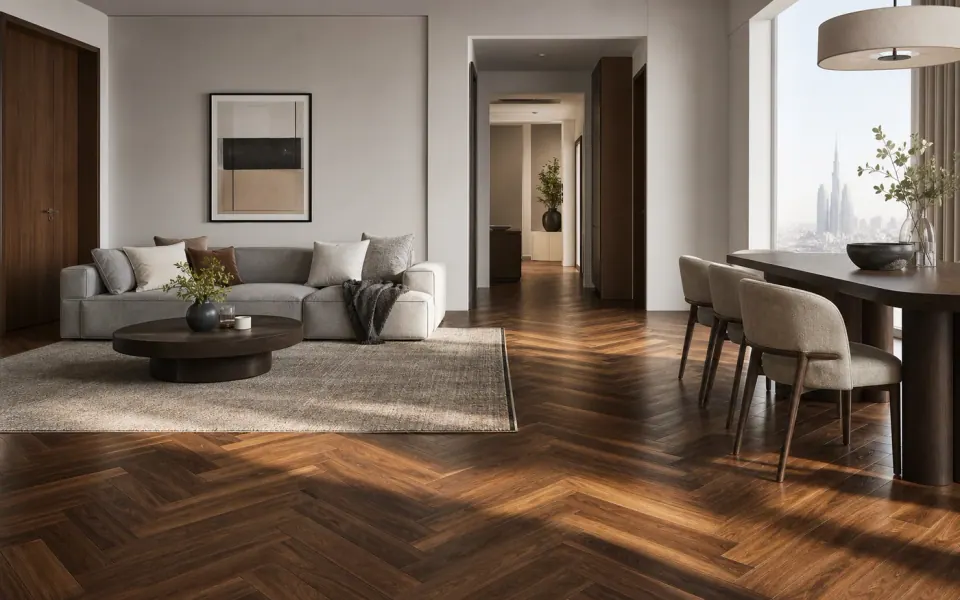
A refined look for large living areas.
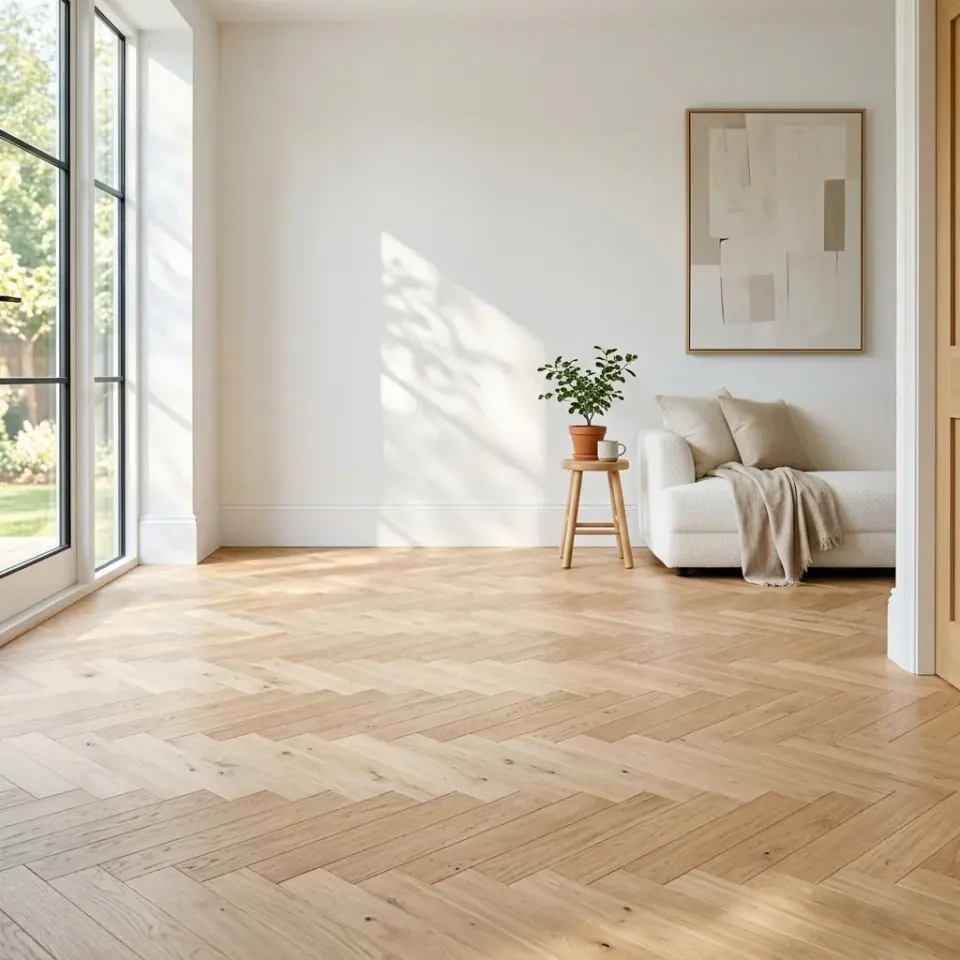
Brings out natural light and suits smaller rooms.
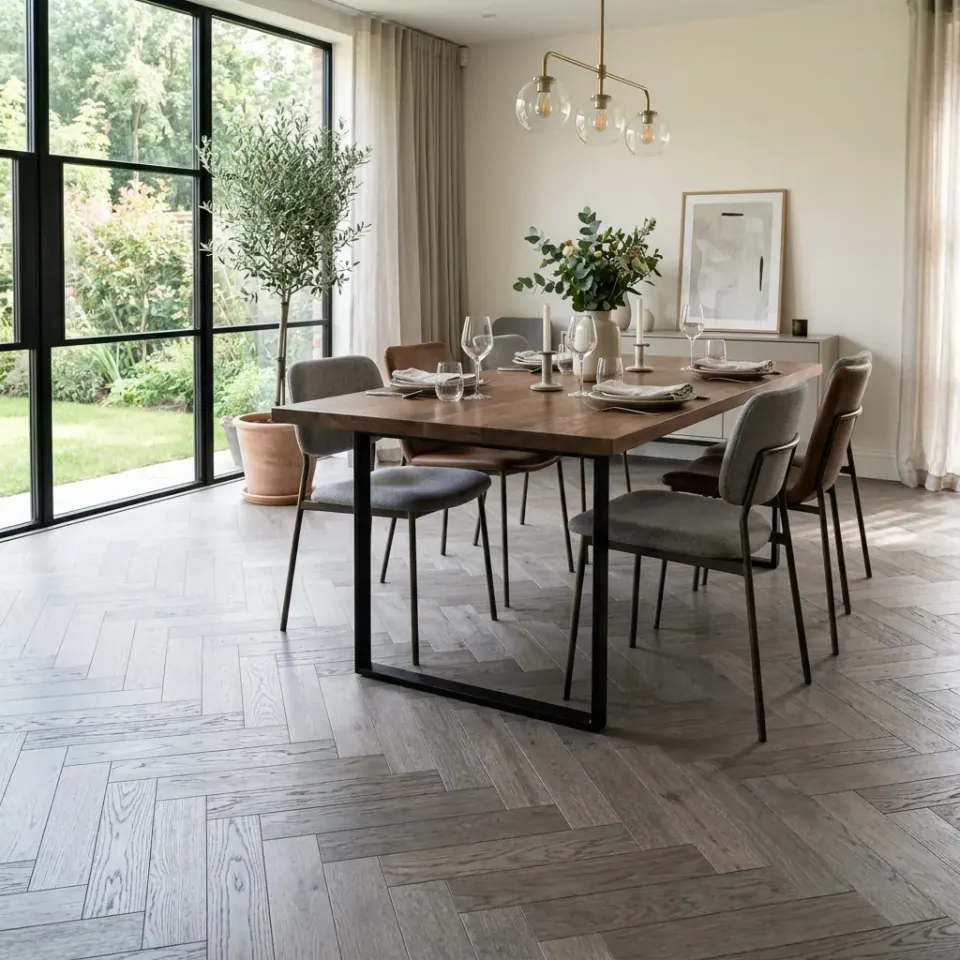
A contemporary tone for dining rooms and majlis.
Tell us the area, the subfloor and where the room is, and we will reply with a clear recommendation.
We measure the wood layer on top to see how many sandings are possible.
We remove stains, fix minor defects and re-fix loose boards.
We sand the face in gradual passes until we reach clean wood.
We apply a protective coat or oil depending on type and colour.
We advise on cleaning after handover and how long to keep heavy furniture off.
| Solid wood | Engineered wood | |
|---|---|---|
| Stability with climate | More affected by humidity change | Usually more stable |
| Re-sanding | Several times depending on thickness | Limited by the top layer |
| Installation | Glue or nail depending on subfloor | Floating or glued depending on type |
| Direct water | Does not tolerate it | Does not tolerate it either |
These are general differences and specifications vary by product. We show you the actual data for each sample.
No type is best everywhere. The right one depends on the room, how it is used, the existing subfloor and the budget.
They need an elegant look that tolerates walking and furniture. The more stable option often suits when the concrete is dry.
Less traffic and more comfort. See bedroom flooring.
Scratches are more likely, so a face that can be sanded later helps.
Natural wood in either form is not for a wet kitchen or bathroom. Read kitchen and bathroom vinyl instead.
We talk about factors, not figures: thickness of the wood layer, type, origin and finish. See what affects parquet prices.
We see the same mistakes from people comparing types, and a visit avoids most of them.
A name does not tell you the top-layer thickness or the quality of the layers. Ask for the real specification.
Any wood floor suffers from rising damp. Test before ordering.
Wood moves, so a gap at the walls is essential. See expansion gaps.
Too much water harms every kind of parquet. Use a barely damp cloth, and read parquet maintenance and repair.
Use felt pads under furniture, wipe spills at once and avoid mopping with lots of water. Every so often have the boards and edges checked.
If surface scratches appear they may be treated by polishing or sanding depending on type. Read parquet sanding and polishing.
Enter length and width to get the area in square metres with a waste allowance, then send it to us on WhatsApp for a quote.
There is no single answer. Engineered is usually more stable and solid can be sanded more. We decide after checking the subfloor and moisture.
Yes, a limited number of times set by the thickness of the top layer. We measure it at the visit.
No. All natural wood floors react to direct water and high humidity.
In some cases, after confirming the surface is flat and dry. We decide after the visit.
We show what is available at the visit and tell you plainly if what you want is not in stock.
The name alone is not enough; what matters is specification, thickness and finish. See German parquet.
Send the area and a photo on WhatsApp or call us. See parquet price factors.
Send a photo of the place and we will reply with a recommendation and a time.
Care and repair.
Renewing the face.
Causes and treatment.
Oak, walnut and more.
Work out the metres.
What affects price.
Beauty and warmth versus moisture, scratches and care.