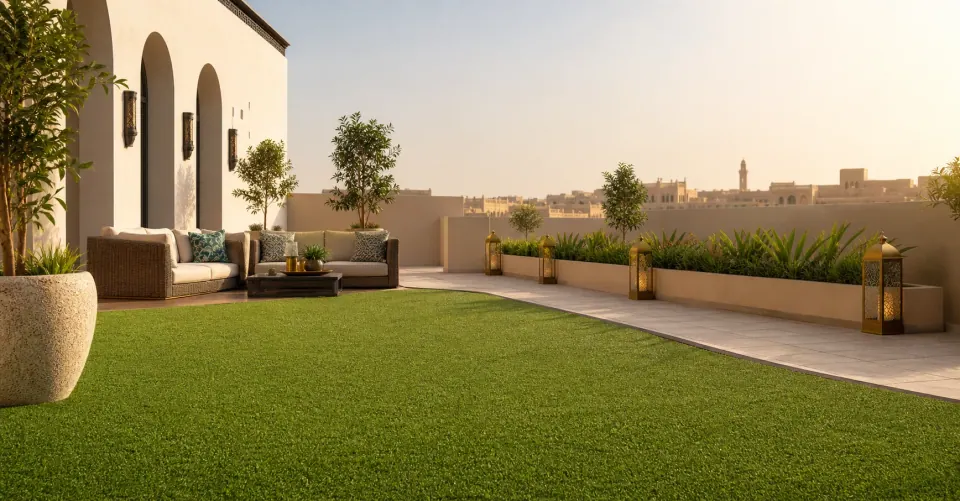
The same line is walked every day
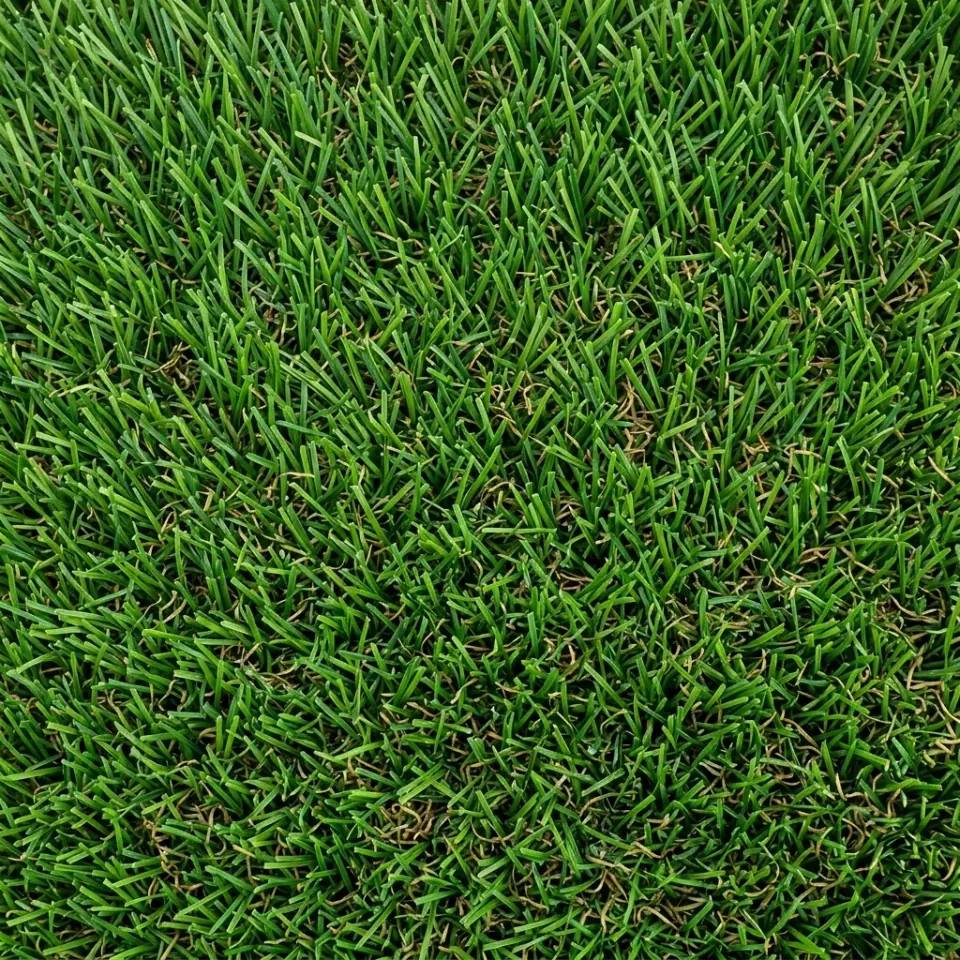
Feet follow one line, so a long pile flattens quickly. We lean towards a short or medium pile with good density.
The entrance and the path are the most walked-on parts of a garden, so they need a short, stable turf over a compacted base with good drainage and fixed edges. We visit, measure the route, then recommend the pile and fixing method.
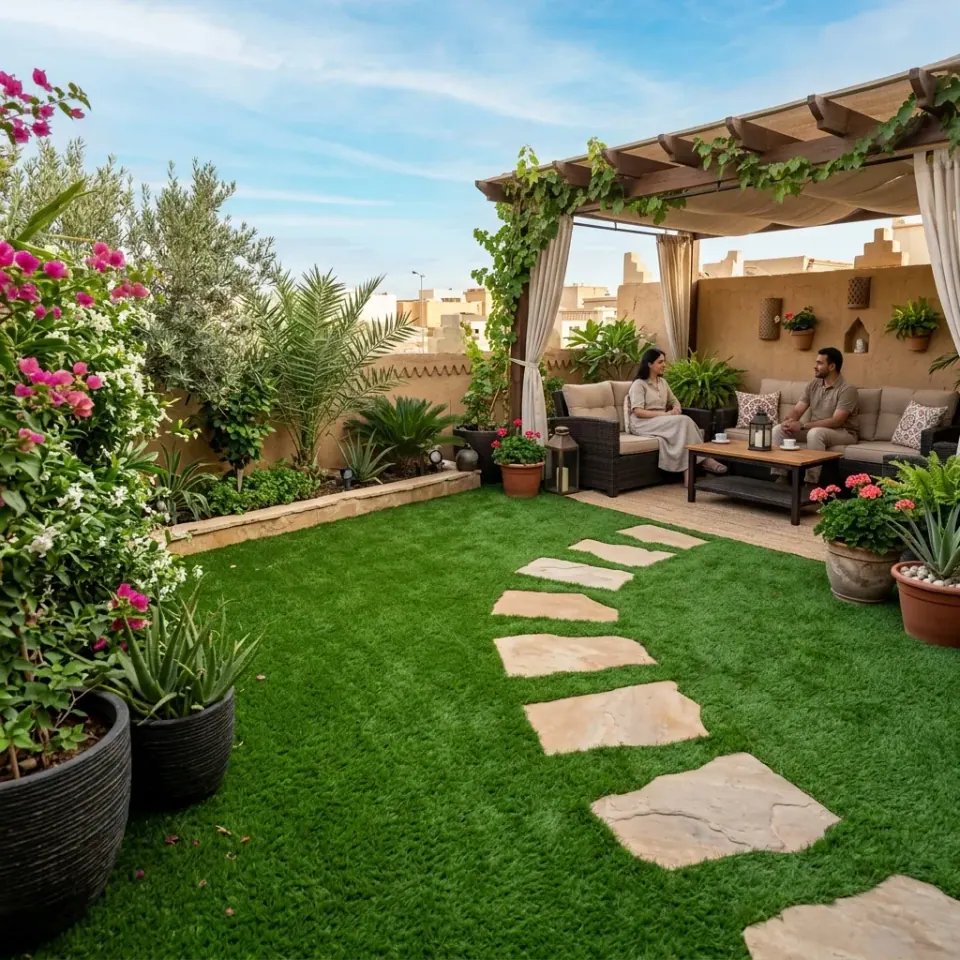
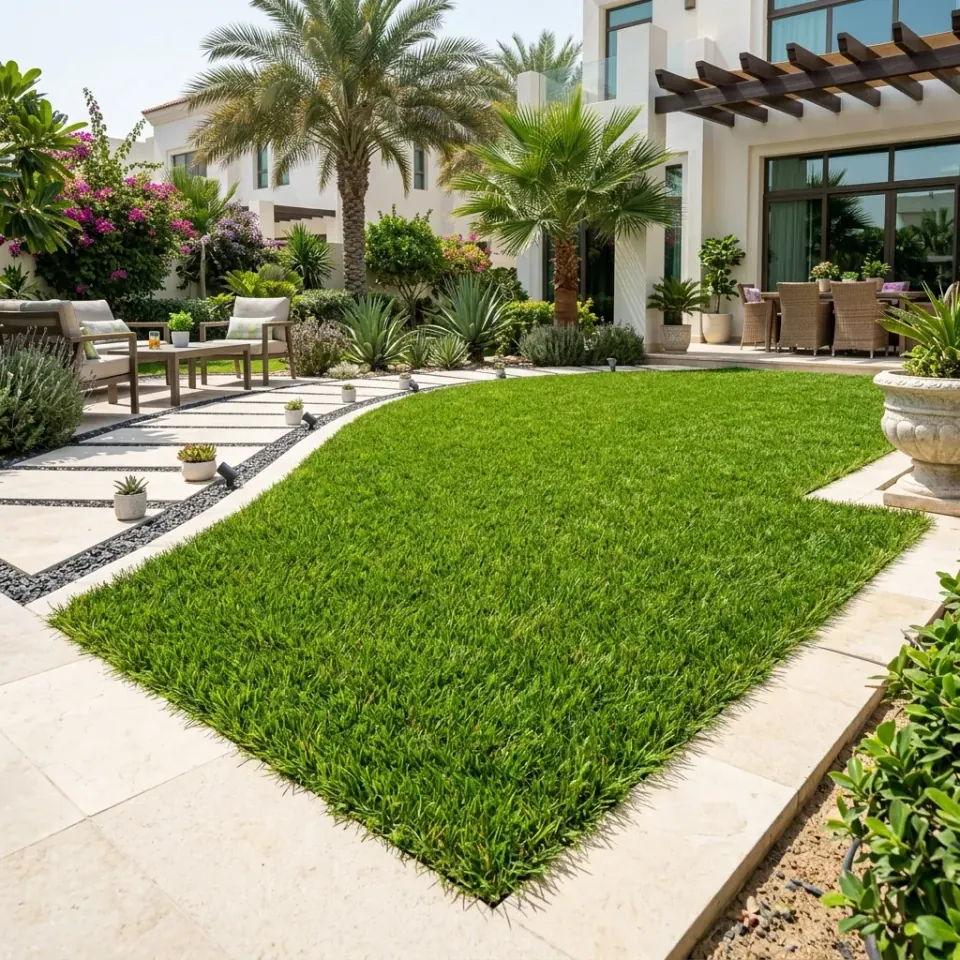
Turf laid for a seating area is not the same as turf for a path everyone uses daily. Before the details, see garden and villa grass and then the differences below.
Feet follow one line, so a long pile flattens quickly. We lean towards a short or medium pile with good density.
A path is a strip with two long edges, and any unsecured edge lifts over time. We fix edges with pins or a border depending on the ground and design.
Standing water on a path is a slip risk and harms the base. We look at the slope and drainage points before laying.
Turf warms in direct sun. For exposed entrances we pick colour and height with care and advise on cooling with water. See artificial grass in summer heat.
The entrance is the first thing a guest sees. Even colour and neat edges give a tidy impression.
Grass meets tile, stone or bare soil. We choose the right edge for each junction so there is no annoying height step.
The best height is the shortest that still looks good. The shorter the pile, the less it flattens, and the easier it is to walk on and clean. A longer pile looks softer and more natural but shows footprints sooner.
The most used on paths. It copes with shoes, suitcase wheels and children, and stays neat with light brushing or vacuuming.
Sometimes used at the sides of a path or next to a seating area, but not on the line everyone walks.
Height alone is not enough: a dense turf with a strong backing lasts longer. Read grass quality, density and yarn and the pile heights guide.
Several shades of green look more natural than one flat colour. See grass colours and types.
A narrow route with two clear edges needs careful fixing.
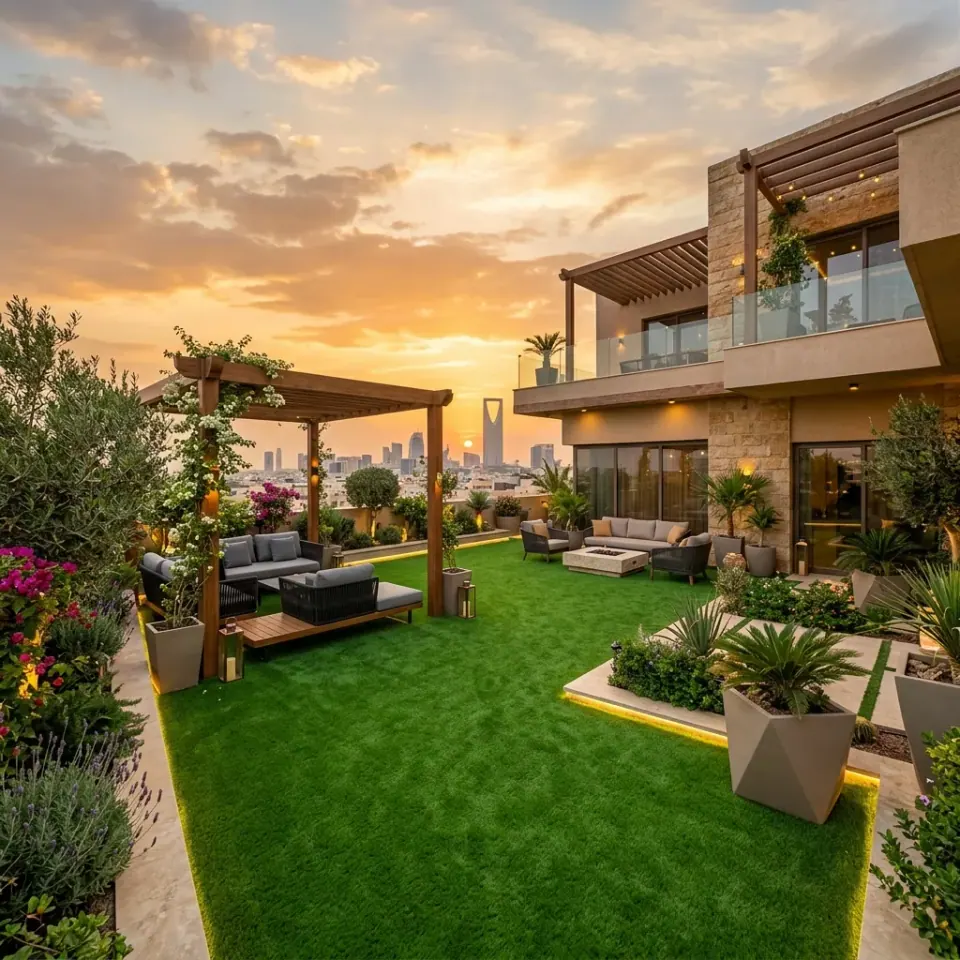
A tidy entrance that suits the façade.
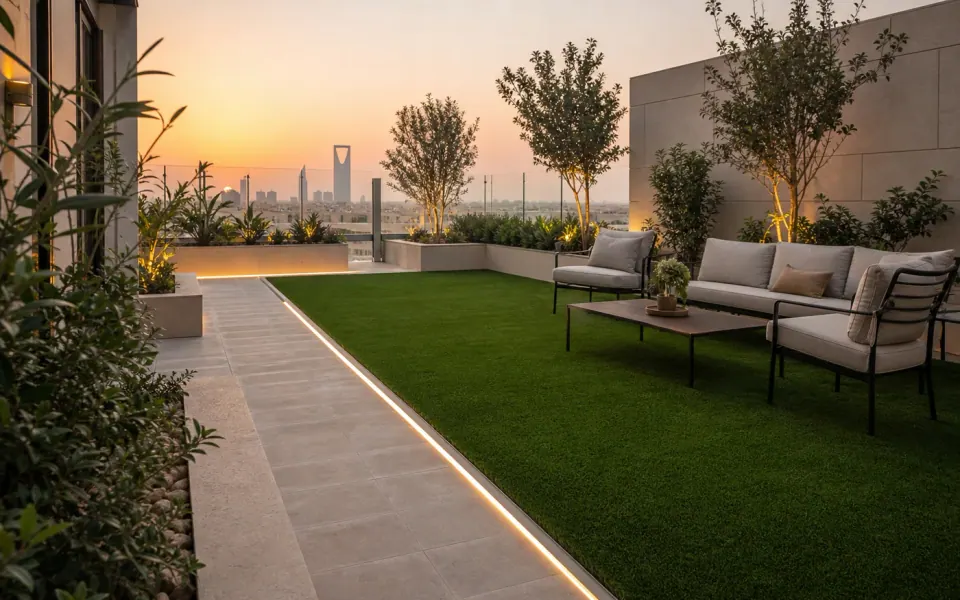
A grass strip with side lighting for the evening.
Tell us the rough length and width and the current surface, and we will reply with options and a visit time.
We measure the route and note slopes, drainage points and the current surface.
We remove what is needed, level the ground and compact a suitable layer.
We confirm water runs away and add outlets or slope where required.
We roll out the turf, trim the ends and join pieces where needed.
We secure the edges, treat junctions with tile or stone and clean up.
| When it is used | Note | |
|---|---|---|
| Tile or marble edge | Where the path meets a tiled entrance | Fixed to the hard edge, keeping any height step small. |
| Metal or plastic border | Open edges on bare soil | Keeps soil out and holds the turf in place. |
| Natural stone or block | Decorative path | Gives a decorative look and protects the edge. |
| Stepping stones in the turf | Long path | Reduces walking on the grass at the busiest points. |
More on joins and edges in seams, joining and edging and drainage and base.
Most path problems show up months after laying rather than on day one, and most could have been avoided.
Uncompacted soil settles and leaves dips and waves in the route. We compact a suitable base layer before laying.
Standing water causes odour, base damage and an unsafe surface. We check which way the water runs and fix it.
An unfixed edge lifts and trips people. We secure it according to the neighbouring surface.
It looks lovely on day one then flattens along the walking line. We prefer shorter for a path.
Dust and leaves collect on a path. Light weekly sweeping or vacuuming keeps it looking good; see artificial grass maintenance.
We do not quote a price before the visit because each path is different. The main factors: area and edge length, grass type, height and density, ground condition and whether it needs levelling or removal, drainage work, borders and edging, and junctions with other floors.
Read what affects artificial grass prices, then send us measurements and a photo and we will prepare a quote after the visit.
Light weekly sweeping or vacuuming removes dust and leaves. Near trees, expect more care in leaf-fall season.
You can rinse the turf with water from time to time, which clears dust and cools the surface in summer. If you have pets, see artificial grass with pets.
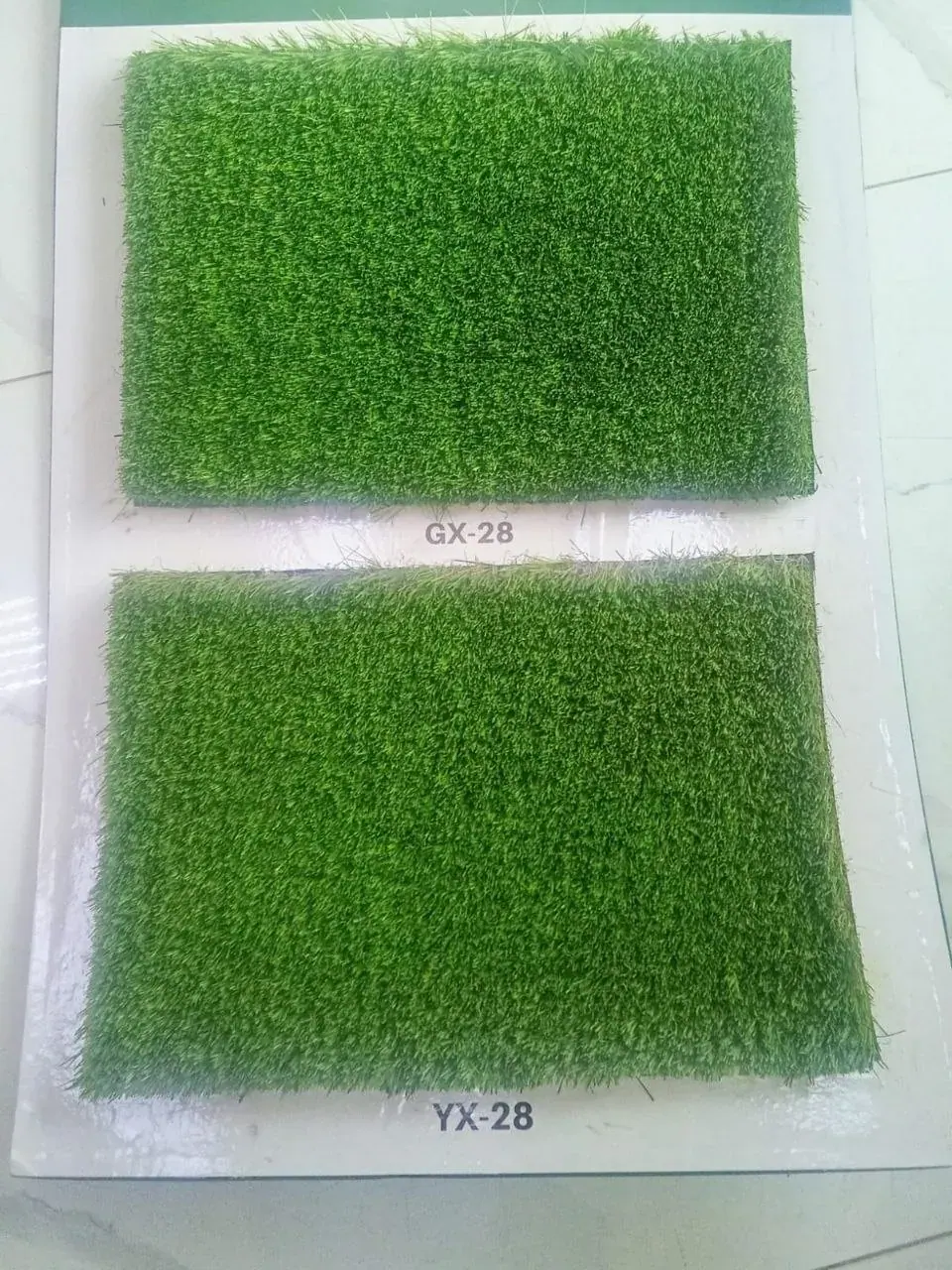
If the goal is walking only, a short pile is best; for sitting, use a longer pile in a separate area.
The choice depends on heat, budget and look. See the comparison of grass, gravel and paving.
Areas near water need better drainage and more cleaning.
A new route can be joined to existing turf if you plan the extension now.
Enter length and width to get the area in square metres with a waste allowance, then send it to us on WhatsApp.
Usually a short to medium pile, since it takes repeated walking and stays neat. We recommend after the visit based on use.
Yes, if it is dense, laid on a compacted base, and the pile is short along the walking line.
We fix them to suit the neighbouring floor, with pins, a border, or by tying them to the tile.
Yes. We look at slopes and outlets so water does not collect.
Turf warms in direct sun. You can spray it with water; see our page on grass in summer heat.
In some cases yes, after checking the surface and drainage. We decide at the visit.
Send a photo and the measurements on WhatsApp or call us. See artificial grass price factors.
Send a photo of the place and we will reply with options and a time.
Dealing with heat.
Cleaning and care.
Fix it neatly.
For outdoor spaces.
What affects price.
Measure yourself.