
Uncleared soil
Leaving live plant roots under the grass lets them regrow and push the surface up.
Weeds poking through the fibres or along the edges are a common problem when grass is laid over unprepared soil. Proper preparation before laying costs far less than redoing the job months later.
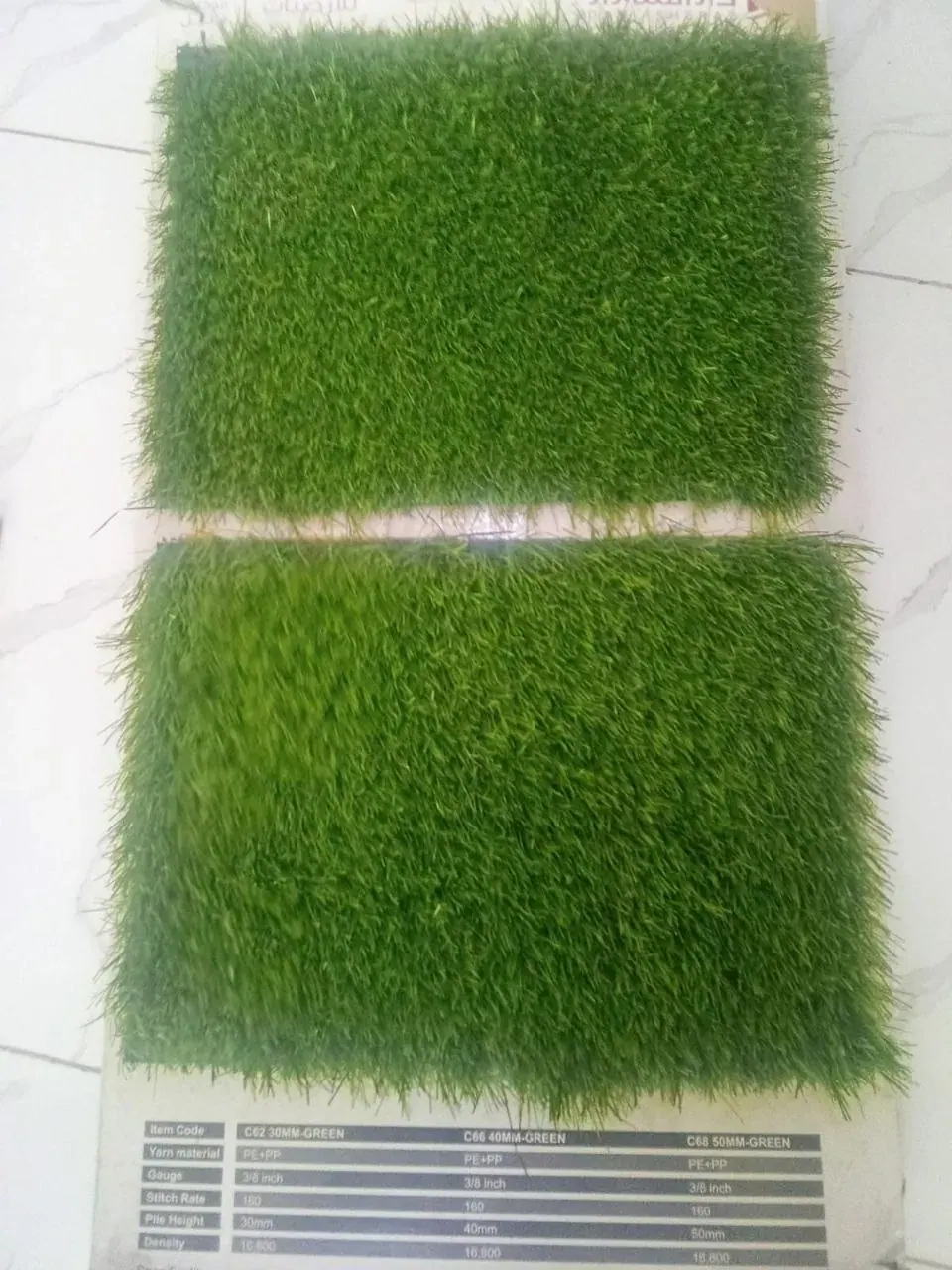
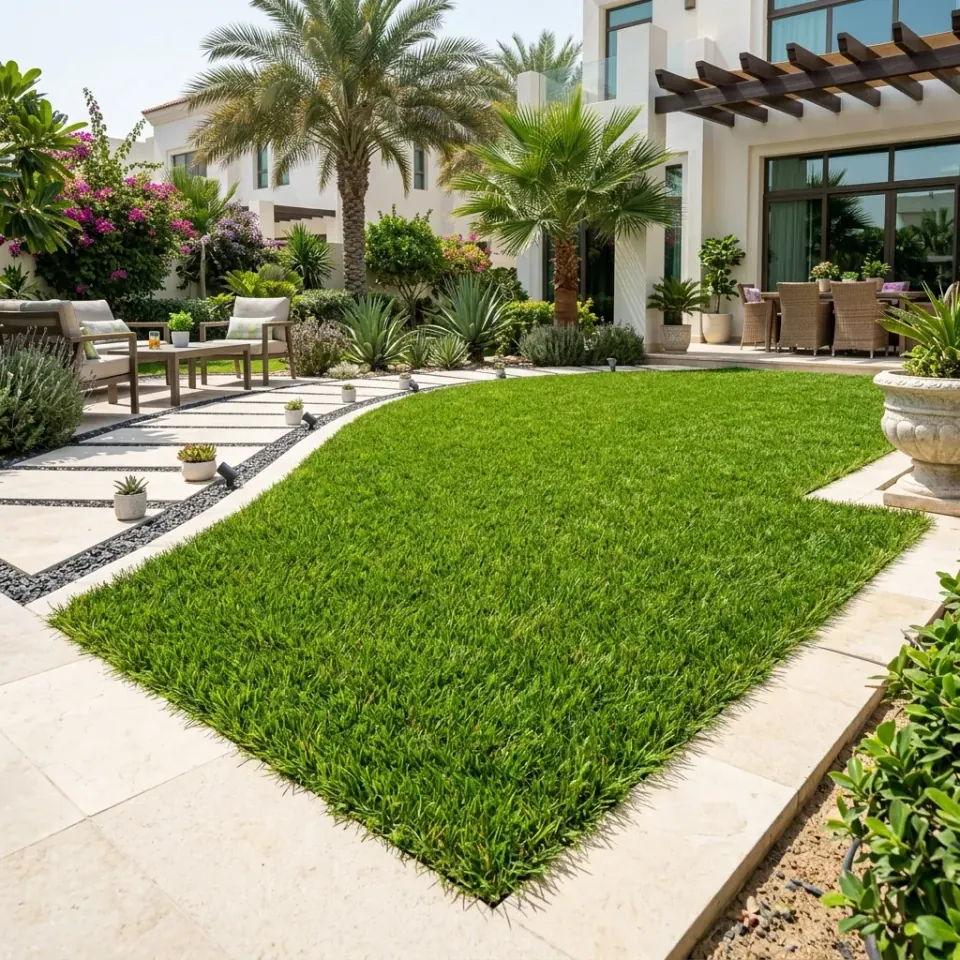
Artificial grass itself does not grow, but weed seeds arrive by wind, birds or carried soil and may find a way in through drainage holes and seams if soil lies beneath.
Leaving live plant roots under the grass lets them regrow and push the surface up.
Skipping a geotextile layer over the soil leaves an open path for roots.
Poorly fixed edges can let weeds grow around the perimeter or between grass and wall.
A layer of dust and soil on the grass can sprout seeds if left uncleaned.
The best answer is prevention at installation, because treating weeds later means lifting the grass. This is the method we recommend.
Existing plants are removed with their roots and the ground is levelled; if a weed killer is used it must follow the manufacturer's instructions and be applied with care away from plants you want to keep. The soil is then compacted according to its type.
A water-permeable membrane is laid over the compacted soil and pinned down, stopping roots from growing upward while letting water drain. Overlap the edges and leave no gaps between sheets.
A layer of crushed stone or compacted sand over the membrane gives a level surface and good drainage and is the foundation of a successful job. Read about it in artificial grass base and drainage and laying over tiles, concrete and soil.
Well-fixed edges and good seam tape or fixing stop plants creeping in. See seams, joining and edging and our artificial grass installation page.
We remove plants, roots and debris and inspect the ground.
We set suitable falls for drainage and compact the ground to avoid settling.
We cover the surface with overlapped geotextile and pin it down.
A compacted, level layer protects the membrane and improves drainage.
We join seams, fix the edges firmly and check for gaps.
| Method | Weed prevention | Note |
|---|---|---|
| Lay directly on soil | Poor | Best avoided |
| Geotextile only | Moderate | Needs good base and edges |
| Membrane plus compacted stone base | Good | The most common method |
| Over concrete or tiles | No soil beneath | Needs proper drainage |
If small plants show along the edges, pull them out with their roots early before they spread, and clear accumulated dust with a brush or water. Avoid strong chemicals that may affect the fibres until you are sure they are suitable.
If weeds keep returning at one spot it may point to a gap in the membrane or an unfixed edge, so inspect the area. See routine cleaning advice in artificial grass maintenance.
In gardens that once held natural lawn or shrubs, leftover roots are common and the site needs deeper clearing before the membrane goes down. Courtyards with sandy soil may sprout weeds after seasonal rains, so do not skip the membrane just because the ground looks dry.
On roofs and balconies there is no soil, but accumulated dust can sprout a few seeds in seams; periodic cleaning is enough. If trees stand nearby, their roots or seeds may reach the edges, so leave a gap or dig a suitable barrier.
Do not ignore stray irrigation either: water pooling near edges from nearby sprinklers encourages plants, so adjust irrigation to keep the edges dry.
Dense plants, strong roots or soil treatment add work.
Membrane type and stone base depth affect both cost and quality.
More edge length and seams mean more materials and labour.
Equipment access and the scale of work in a courtyard or on a roof set the price after a site check.
Yes if it is laid straight onto soil with roots or seeds, which is why we recommend clearing, a geotextile membrane and a stone base.
It helps a lot but does not replace a good base and fixed edges; full preparation is best.
It may be used before installation following the manufacturer's instructions. Avoid applying it casually after installation without checking suitability.
Usually a gap between grass and wall, an unfixed edge, or soil and seeds collecting on the perimeter.
Practically yes since there is no soil beneath, but dust and seeds can collect on top and need cleaning.
Pull them with their roots and check the membrane and edges at that spot; if they persist, a section may need lifting.
Send photos of the ground and area on WhatsApp and we will suggest the right preparation after a visit.
Send photos of the ground and area on WhatsApp or call us and we will suggest the right preparation.
Use and purpose.
Density and yarn.
Pricing factors.
Covering fences.
UV and sun tolerance.